
A damp patch near a chimney breast can have several possible sources, and working out which one it is matters, because the repair for each is completely different. Brickwork, leadwork and the surrounding roof covering can all cause similar-looking symptoms indoors, which is why proper leak detection starts with ruling things out systematically rather than guessing.
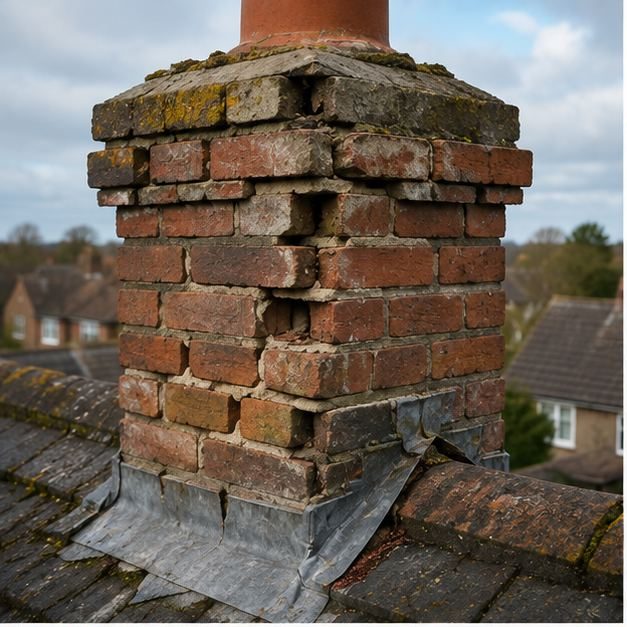
Brickwork issues tend to show a pattern that worsens gradually and is often linked to prolonged wet weather rather than a single storm, since porous or spalling brick soaks up moisture over time rather than letting it straight through in one go. Leadwork failures, by contrast, often produce leaks that appear more suddenly, and are more closely tied to specific weather events like heavy rain or high winds that expose a gap in flashing that had otherwise been holding.
Roofing itself, separate from the chimney, can also be the actual cause even when the damp patch appears near the stack. A slipped tile, a failed section of underlay, or a problem with the roof covering close to the chimney junction can mimic a chimney leak convincingly, particularly on the many pitched roofs across Barton Hill where the chimney sits close to a valley or junction in the roofline.
What makes this genuinely tricky is that water doesn't necessarily show up directly below where it enters. It can track along a rafter, run down the inside of a chimney breast, or follow a felt lap for some distance before finding a route through the ceiling below, meaning the visible stain and the actual source can be a metre or more apart.
Once the source is identified, it's worth having it set out clearly, in plain terms, rather than left as a verbal explanation on site. A short written summary of what was found and what repair is recommended gives you something to refer back to, and it's particularly useful if more than one area of the chimney or roof needs addressing over more than one visit. Where a leak proves genuinely difficult to pin down, a more deliberate test, such as running water over specific sections of the roof and chimney one at a time while checking inside, can help isolate the exact point of entry rather than relying on weather to reveal it naturally. It takes longer than a quick visual check, but for a leak that's resisted more obvious fixes, it's often the quickest way to a lasting answer. It's worth being wary of anyone offering a quick diagnosis without actually getting up to roof level, since a confident guess from the ground is far more likely to lead to a repair that misses the real cause entirely.
Because of this, proper leak detection usually needs someone up at roof level, checking brickwork, flashing, soakers and the surrounding roof covering together rather than in isolation. We carry out free inspections across Barton Hill specifically to trace leaks back to their actual source, so the repair that follows fixes the real problem rather than the nearest symptom.
Get a Free Quote for Chimney Repairs in Barton Hill
Every chimney is different — the fastest way to get an accurate answer is a quick chat with our team.