
Chimney waterproofing gets mentioned a lot in roofing conversations, but it is often misunderstood — a breathable waterproofing treatment applied to sound brickwork can genuinely extend the life of a stack, but it is not a substitute for repairing mortar, lead flashing or flaunching that has already failed. For homeowners in Lawrence Weston weighing up whether it is worth doing, the honest answer depends entirely on the condition the chimney is in to start with.
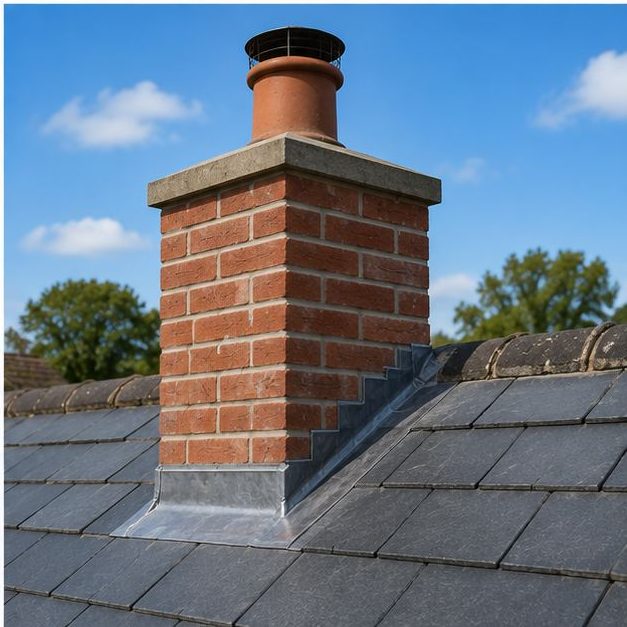
The treatment itself is usually a clear, breathable silicone-based product applied to the brickwork and pointing once any necessary repairs have been carried out. Done properly, it reduces the amount of rainwater the brick and mortar absorb, which in turn cuts down the freeze-thaw cycling that causes spalling bricks and crumbling joints over time. Because it is breathable, moisture already inside the wall can still escape, which matters a great deal — a non-breathable coating trapping damp inside older brickwork can actually make things worse rather than better. The finish is invisible once dry, so it does not change the appearance of the stack, which matters on a terrace where the roofline is on view to the whole street.
Where waterproofing genuinely earns its keep is on chimneys that are structurally sound but exposed to the weather more than the rest of the roof, which describes most stacks in Lawrence Weston given how far they project above the roofline. Applied to good brickwork with recently repointed joints, it can meaningfully slow the rate of future deterioration and reduce how often repointing is needed.
It is important to be clear about what waterproofing cannot do. It will not seal a gap in lead flashing, fix cracked flaunching around the pots, or stop water finding its way in through a genuinely failed joint — these need proper repair first. Treating a chimney with active leaks or visible damage as if a waterproofing spray will solve the problem usually just delays a repair that is going to be needed anyway, and can mask a problem while it continues underneath. We would rather tell a homeowner honestly that waterproofing is not the answer for their particular chimney than sell a treatment that will not actually solve what is going wrong.
The sensible order of operations is therefore to have the chimney properly inspected first, carry out any repointing, leadwork or flaunching repairs that are needed, and only then consider waterproofing as a way of protecting that work and extending the gap before the next round of maintenance is due.
If you are considering waterproofing for a chimney in Lawrence Weston, Brunel Roofing Bristol can inspect it first and give an honest view on whether it is the right next step or whether repairs should come first, with a free quote either way and all work covered by our 15-year guarantee.
Get a Free Quote for Chimney Repairs in Lawrence Weston
Every chimney is different — the fastest way to get an accurate answer is a quick chat with our team.