
Tiles rarely fail for one reason alone. Age, weather, movement and past repairs all play a part. This guide explains what slips and cracks tiles on Pucklechurch homes and what we do about it.
A tile that has slid out of line or split in two is easy to spot from the lane, and it is tempting to leave it. But each one is a way in for water. Understanding why it happened tells you whether you have one odd tile or a roof that is starting to tire.
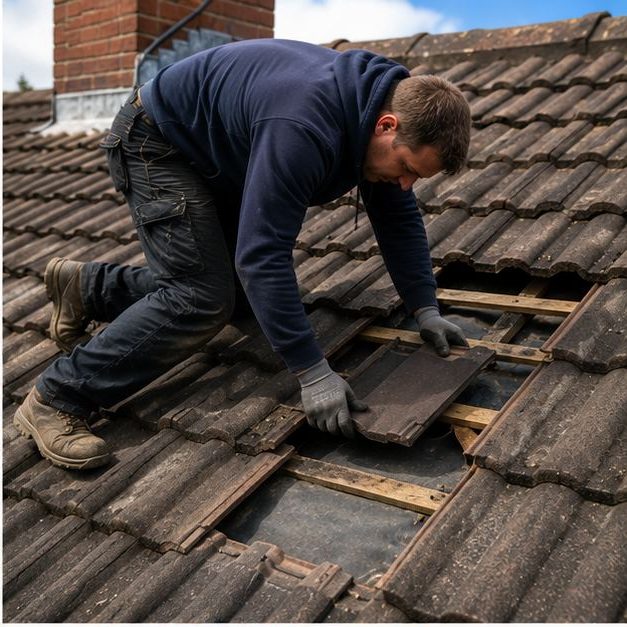
Nails and clips wear out first
Most tiles are held by a nail through a hole near the top, sometimes with clips as well. Over time the nails corrode or the timber battens soften around them. The tile then loosens and can slide down a little, or lift in the wind, leaving a gap that rain can run through. Older village roofs show this often.
Often a single slipped tile is the visible end of a larger pattern. If one nail has failed, its neighbours were fixed at the same time and may be close behind, so we check the whole run of tiles around it. Fixing one tile in isolation can leave the cause in place.
Frost and moisture crack tiles
Tiles soak up a little water. When a hard frost follows a wet spell, that moisture expands and can crack the face or flake it away. Clay and older concrete tiles are both affected. The cracks are often hairline at first, so a tile can look sound from the ground and still be letting water through.
- Hairline cracks that open further after cold snaps
- Flaking or crumbling tile faces
- Tiles with a hollow sound or visible chips
- Water stains in the loft beneath a single patch
Movement in old and new roofs
Older stone and brick cottages have roof timbers that have shifted with the building, so tiles sit unevenly and rub or ride up on each other. Later infill homes can have lighter structures that flex in wind. Either way, a roof that moves slowly shakes tiles loose along the weaker courses.
The countryside edges of the village see open skies and exposure to wind from several directions. Even a well-fixed tile gets lifted and dropped repeatedly, and over time that wears the nail hole until the tile can ride up. Wind is a steady wearer, not just a storm event.
Treading, birds and past repairs
Tiles also crack when someone walks on them, which is why we advise against anyone going on the roof. Birds and squirrels can lift edges, and an earlier patch with the wrong tile type can sit badly and put stress on its neighbours. The trouble spreads quietly if left alone.
What we do and what you can check
From the garden, look for gaps, lifted tiles or tile pieces in the gutter or on the ground. From the loft, look for daylight and damp. Then call us for a proper look. We replace broken tiles, refix loose ones, and tell you honestly if the pattern points to wider wear.
Keep an eye out after a storm. Tiles lying on the lawn or drive, or a sudden damp mark inside, mean a repair is due. Photograph anything you see and note the date, which helps us trace what happened and when. Then ring us rather than going up to look.
Frequently Asked Questions
Can one cracked tile cause a leak?
Yes. Water can run through a crack, land on the felt and travel along it before dripping into the loft or a ceiling. One tile can be enough, particularly in heavy rain or wind, so it is worth having it dealt with promptly.
Why do tiles slip on an older roof?
Usually because the nails or timber battens have worn, so the tile no longer holds firmly. Settlement in the roof structure of older houses adds to it. We refix or replace the tile, and check neighbours for the same weakness.
Is it safe to replace a tile myself?
We would not recommend it. It means working on a sloping, fragile surface at height, and a poorly seated tile can slip again. Ring us and we will make it safe and check what caused it.
Talk to our team about roof repairs in Pucklechurch
Every roof is different — the fastest way to get an accurate answer is a quick chat with our team.