
A dry verge swaps the mortar line at a gable edge for a fixed tile-end finish. The change is visible but usually tidy. This guide covers how it looks on Pucklechurch cottages and newer homes.
The roof edge at a gable is the first thing you notice when you look up at the house. Old mortar tends to be grey, patched and uneven. A dry verge gives a crisper line. Whether that suits your house depends on the roof, the street and what you want to see.
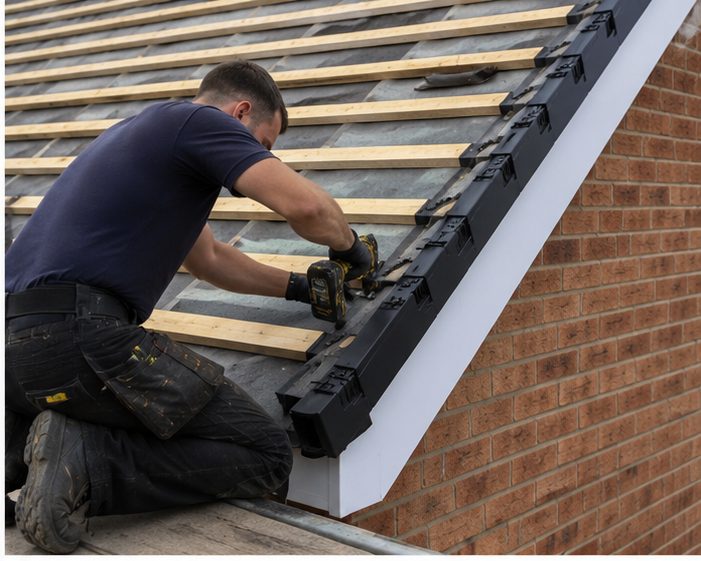
The edge you see today
A mortar verge is a strip of mortar between the last tiles and the gable wall. Over time it cracks, stains, grows moss and breaks away. Patching often leaves different colours and textures in a single run. It shows up quite plainly from the road or the garden.
From a distance, the biggest change is that the gable edge looks sharper and more consistent. Close up, you notice the tile-end pieces sit in a regular rhythm, where old mortar rose and fell unevenly along the run. A mixed run of repairs makes the whole gable look older than it is.
What a dry verge looks like
A dry verge uses a continuous edge unit with tile-end or cap pieces, usually in a colour chosen to match the roof. The result is a neat, even line without exposed mortar. It looks more modern than a traditional mortar edge, but on many roofs it blends in well.
Colour is the part owners ask about most. The units are made in shades to suit common roof tiles, but a weathered roof may look a touch different next to new parts at first. That evens out as the weather works on them. Weathering softens any difference over time.
On older cottages
Stone and brick cottages round the village centre often have roofs with a lived-in look, and some owners prefer to keep a traditional character. A dry verge changes that edge, so we talk it through, show the options and check the tile profile. It will not suit every older roof, and we say if not.
- Tile-end pieces matched to the roof covering where possible
- Colour options to suit common tile finishes
- A straight, even line along the gable edge
- No grey mortar strip to stain or crumble
On later infill homes
Newer houses in the village often have concrete tiles with standard profiles. These are the easiest to match with dry verge units, and the finished look is clean and consistent. Where a house has several gables, doing them together keeps the appearance even across the whole property.
Practical points before you decide
Appearance is only part of the story. A dry verge also means no mortar to fall on paths, better wind resistance at the edge and a seal against birds and insects. It may need planning or Building Regulations checks — we advise before work starts. We can describe the change before we start.
If you are unsure, we can talk through it at the house and look at the gable from the garden together. Seeing the actual roof helps far more than describing it, and there is no pressure to choose a dry verge if the traditional edge suits you better.
Frequently Asked Questions
Will a dry verge match my existing tiles?
Units come in colours made to suit many common tile types, but a perfect match is not always possible with an older or weathered roof. We discuss the closest options and what the edge will look like.
Does a dry verge look out of place on an old cottage?
It can look different from a traditional mortar edge, so it is a judgement call. Some owners value the practical benefits more than the look. We talk it through honestly and do not push it where it does not suit.
Is the gable end itself affected?
The wall below is not changed, but the edge of the roof along it is renewed. We check the gable wall and bargeboard at the same time and tell you if anything else needs attention. We talk through the details with you.
Talk to our team about dry verge systems in Pucklechurch
Every roof is different — the fastest way to get an accurate answer is a quick chat with our team.