
Tall stacks, parapets and steep slopes make storm damage hard to judge and risky to inspect. Keep to the pavement and the loft, record what you find and call us before more rain arrives.
After a gale, a Clifton terrace can lose slates, shed pieces of a chimney stack or loosen lead without anything obvious showing from the front door. The roofs are high, steep and exposed on their edges. The safest response is calm and careful: check what you can from the ground and loft, write it down, then call us.
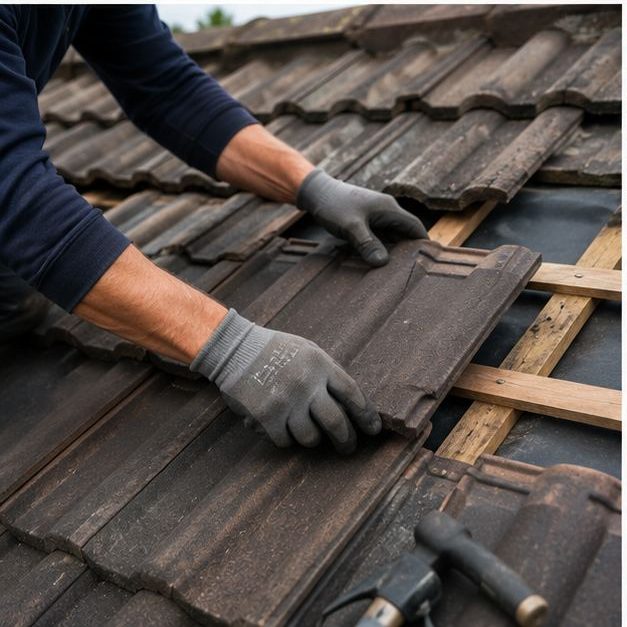
Keep everyone clear first
Fallen slates and masonry can land well away from the house, on pavements, steps and parked cars. Look before you step out, and keep people and pets back from the front and back of the property. If a stack looks unstable or leans, keep clear of the area beneath it and call us straight away.
Steep terraced roofs shed debris in unexpected directions, and a slate that leaves the roof at the back may land on a neighbour's side. If damage might affect next door, mention it to them and share what you have seen, since stacks and parapets are often shared structures.
Looking up from the ground
Use binoculars from a safe spot, ideally across the road or from a garden. Terraced roofs are seen at a steep angle, so look along the ridge as well as up the slope. Stacks, parapets and the line where roof meets wall are worth the most attention. Do not go up to take a closer look, however tempting.
- Slates missing or slipped from the slope
- Chimney pots or stack tops out of line
- Lead flashing lifted or hanging loose
- Parapet copings or gutters displaced
Checking inside
Leaks after a storm often show later than the wind. In the loft, check for daylight, wet timbers and drips, especially around chimney breasts and the lowest points of the slope. Look at top-floor ceilings and the walls below parapets. Put bowls under drips, move belongings and note which room is affected.
Photographs and notes
Take dated photographs of anything on the ground, anything visible on the roof and anything inside. Keep fallen pieces where they landed until we have seen them, if it is safe to do so. These records help us judge the damage and help you explain things to anyone you need to notify. Never attempt a temporary fix from above.
- Photograph debris where it landed
- Record stains and drips with the date
- Keep a note of when you first noticed each one
- Keep broken pieces for us to see
Having it looked at properly
Storm damage rarely stops at the obvious. Wind works at ridges, lead and chimney pointing as well as slates, so we look at the whole roof and explain what is urgent and what can wait. We will tell you whether repair is enough, and describe the work in writing before it starts, including the access needed on such high, steep slopes.
On tall, steep houses the access arrangements are a large part of any repair, so ask how the work will be reached and made safe before anything is agreed. Good access is part of doing the job safely, and it affects how the work is described in writing, so it should never be left vague.
Frequently Asked Questions
Can I cover a damaged area myself?
No. On steep slopes and behind tall parapets, roof access is dangerous, and storm-damaged slates and stacks can move without warning. We can advise on what to do indoors and arrange safe access for a temporary fix.
Should I worry about a leaning chimney stack?
Yes, treat it seriously. Keep clear of the ground below it and call us promptly. Stacks are tall and heavy, and wind can loosen pointing and masonry without any dramatic sign. We inspect it from safe access and explain what is needed.
What if damage only shows weeks later?
That happens. Water can sit in timbers and show up after a later spell of rain. If a stain appears after a storm, tell us about the earlier weather, so we look for storm-related causes first.
Talk to our team about roof repairs in Clifton
Every roof is different — the fastest way to get an accurate answer is a quick chat with our team.