
Crumbs of mortar on a step or pavement mean the verge bedding is breaking up. On steep terraced roofs, repeated repointing often just repeats the problem.
The verge is the roof edge at a gable, traditionally sealed with a strip of wet mortar. On tall Georgian and Victorian houses in Clifton, that strip sits high up, exposed to wind and frost, and gets little attention until pieces land below. Understanding why it fails explains why repointing so often disappoints.
What mortar is asked to do
Mortar on a verge bonds the edge tiles to the gable wall and closes the gap beneath them. It is rigid, while the roof and wall move slightly with weather and age. That mismatch is the root of the trouble, because rigid material cannot follow movement for long without cracking.
How it breaks up
Rain enters hairline cracks and freezes, widening them. Wind pulls at the edge, loosening the bond. Dust or damp under the original bedding stops it gripping. Once a piece falls, the neighbouring mortar loses support and follows. On steep slopes, fallen pieces drop to pavements, steps and garden paths below.
On a tall gable, the fall from the verge to the ground is long, so even small pieces can be a nuisance on a pavement or step. Larger lumps of bedding take part of the edge tile with them, and the roof then needs more than pointing.
- Frost opening cracks in the bedding
- Wind loosening the bond at the edge
- Poor adhesion to dusty or damp tile edges
- Movement between roof and gable wall
Why repointing often fails
Repointing replaces the symptom but leaves the cause. The same wind, frost and movement act on fresh mortar, which cracks along similar lines. If a verge has been repaired repeatedly, the method itself is the weak point. Each repair on a high gable also means scaffold or specialist access, which adds disruption.
We would rather tell you the verge needs a different method than keep returning to repeat the same repair. That is an honest answer, and it saves repeated scaffold on a house this tall. We will show you photographs of the gable edge, so you can see the cracks and gaps for yourself before choosing.
Falling mortar as a warning
Loose mortar often means the tiles beneath are less secure than they look. Once the bedding goes, wind can lift an edge tile and rain can enter the roof edge. If you see debris on a drive, path or step, keep clear of the area below the gable and call us. Please do not try to knock loose pieces away.
- Mortar crumbs on paths and steps
- Edge tiles sitting slightly crooked
- Staining on the gable wall below the verge
- Gaps showing between tile and wall
What a dry verge changes
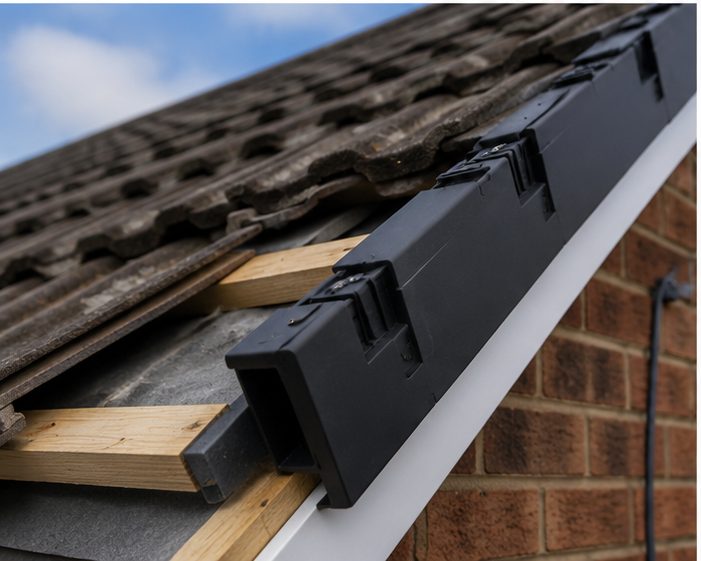
A dry verge replaces wet mortar with mechanically fixed verge units and tile-end or cap pieces. There is nothing to crack, the edge resists wind and weather, and birds and insects are kept out. It is fixed to the tile maker's guidance and suits repairs where mortar has failed. It will not cure a roof failing elsewhere, so we look at the whole slope first.
Frequently Asked Questions
Is it dangerous when mortar falls from a high verge?
It can be, particularly over pavements and steps. Keep clear of the area and call us. Loose bedding can also mean the edge tiles are less secure than they look from below. Please do not try to knock loose pieces away from a ladder.
Can mortar be repaired once and left?
Sometimes it holds for a while, but if the same verge has failed before, it will probably fail again. A dry verge removes the mortar altogether and is worth considering where repairs keep repeating.
Will a dry verge suit a tall terraced house?
Often yes, but compatibility depends on the tile profile, which we check on site. Safe access is arranged first. Some work may need planning or Building Regulations checks — we advise before work starts.
Talk to our team about dry verge systems in Clifton
Every roof is different — the fastest way to get an accurate answer is a quick chat with our team.