
Heavy rain finds weaknesses that a light shower never reaches. On the steep, exposed roofs of Arnos Vale the cause is usually a small fault a long way from the stain.
A roof that stays dry for weeks and then drips during a downpour is not being awkward. Driven rain pushes water sideways and upwards under tiles, flashings and verges that cope perfectly well in a drizzle. In Arnos Vale, with steep slopes and open gables, wind and rain often arrive together, and the real entry point can sit well away from the ceiling mark.
Why the leak only shows in a downpour
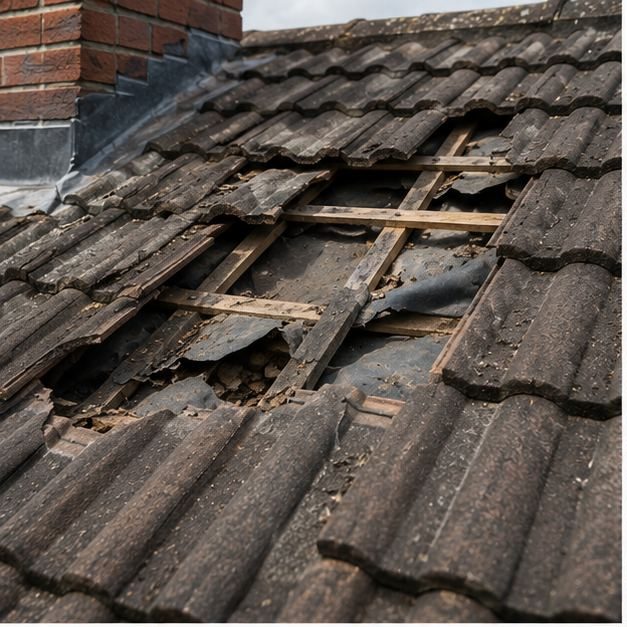
Rain falling gently runs down the roof and off the gutter. A heavy, wind-driven storm does something different: it forces water under the lap of a tile, through a hairline gap beside a chimney, or past a worn flashing. Once inside, the water follows a rafter or the roofing felt downhill, sometimes for a good distance, before it finds a gap to drip through. The wet patch is the end of the journey, not the start.
What Arnos Vale roofs are up against
Many homes here are Victorian villas and older terraces on sloping ground, and the gables stand up proud of their neighbours. Those edges and the ridge take the full force of a westerly storm. Older stone and brick houses also have chimneys, party walls and abutments where lead and mortar have had a long time to crack and lift. Each junction is a place water can get in.
What we check, starting indoors
Before anyone goes near the roof we look at what you can see from inside, because it narrows the search quickly. With a torch in the loft we look for daylight through the covering, dark or stained timbers, damp insulation and wet felt. We note where the staining is worst and trace it uphill, then match it to the outside. Only then do we inspect the roof itself for slipped tiles, failed pointing and tired flashings.
- Daylight showing through the roof covering
- Dark, damp or stained rafters and sarking boards
- Wet or compressed insulation below the stain
- Mould or a musty smell in the roof space
Typical repairs once the source is found
The fix depends on the fault. Slipped or cracked tiles are replaced or refixed. A ridge with crumbling mortar is re-bedded. Lead flashings and valleys that have lifted or split are redressed or renewed, and verge or gutter-edge repairs deal with the gable ends. We tell you plainly whether the roof can be repaired or whether the covering is past it, and we show you what we found so the judgement is not a guess.
What to do while you wait
Keep an eye on the ceiling from inside and move belongings out of the way. A bucket and a towel are fine, and photographing the stain after each storm helps us place the leak. Please do not go up to look yourself: wet slopes and steep pitches are dangerous. Call us for a proper look, and tell us which storms bring the water in, as wind direction often points straight to the cause.
- Move furniture and electrics away from the wet area
- Note the date, wind direction and how heavy the rain was
- Take clear photographs of the stain from inside
Frequently Asked Questions
Can a small leak wait until the weather improves?
A small leak can do a lot of quiet harm to timbers and insulation, so it is better looked at early. A temporary measure may be possible while we plan the proper repair. Call us for a proper look rather than waiting for the next storm to make it worse.
Why is the stain nowhere near the damaged tile?
Water runs along rafters, battens and the felt beneath the tiles before it drips, so the stain and the entry point can be a long way apart. We trace it back uphill from the loft side, which is why an inside check comes first on every leak.
Will I need a new roof?
Not usually. Most heavy-rain leaks come from a few tiles, a ridge, a flashing or a verge, and those are repairable. If the covering is failing across a wide area we will say so, show you why, and explain the choices honestly.
Talk to our team about roof repairs in Arnos Vale
Every roof is different — the fastest way to get an accurate answer is a quick chat with our team.