
Yes, in many cases, but not every roof suits it. The tile profile, the state of the edge and the rest of the roof all decide whether a dry verge is the right repair.
Gable ends on Arnos Vale's older houses stand out on the slopes and take the brunt of the weather. When the mortar along the edge cracks and drops onto the path, owners ask whether something better can be fitted without redoing the whole roof. Often it can, provided the existing tiles and the edge underneath are suitable.
What fitting to an existing roof means
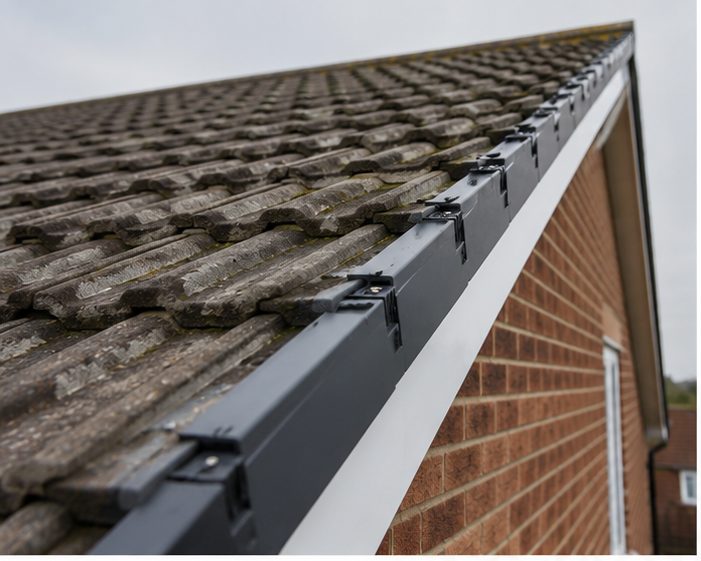
A dry verge replaces the wet mortar at the roof edge with mechanically fixed verge units and tile-end or cap pieces. On an existing roof we remove the failed mortar and any loose end tiles, check what is under them, then fix the new components in place. The main roof covering stays where it is. The work is aimed at the edge, not at replacing the slope behind it.
Why compatibility depends on the tile
Dry verge components are made to suit particular tile shapes and sizes. A profile that fits one roof may not sit properly on another, and older or mixed tiles can complicate things. We check the tile type on site and fixing is carried out to the tile maker's guidance. If a standard system does not suit, we will say so rather than force a poor fit.
- Tile profile and depth at the roof edge
- Condition of the end tiles and battens
- Width and overhang of the existing verge
- Whether the gable wall top is level and sound
What we check before starting
Before anything is fixed, we need to know the edge is sound. We look at the battens and the felt at the verge, the top of the gable wall, and the tiles for cracks or slippage. If water has been getting in through failed mortar, the timber beneath may be damp. Any repairs needed there are done first, so the dry verge is fixed to something solid.
When a dry verge is not the answer
A dry verge deals with the edge. It will not cure a roof that is failing elsewhere, such as a tired covering, broken ridge or worn flashings. If the main slope is in poor condition, we say so and may suggest repairs or a re-roof, with the dry verge fitted as part of that work. Fitting it onto a roof that is otherwise worn out would be money badly spent.
First signs that point to it
The usual first warning is mortar on the path, drive or in the gutter below the gable. You may also see gaps along the edge, tiles at the verge sitting out of line, or birds nesting in the opening. These can be spotted from the ground. Please do not climb up to look; call us for a proper look and we will tell you whether a dry verge fits. Some roof alterations may need planning or Building Regulations checks, and we advise before work starts.
Frequently Asked Questions
Will a dry verge look different from the old mortar edge?
It does look a little different, with a neat, uniform line along the gable instead of rough mortar. Colour and finish options depend on the tile, and we talk you through what suits your roof before we start.
Do I need scaffold for the verge work?
Usually access is needed, and on sloping sites with steep ground around a gable it is often scaffold. We arrange that as part of the job and explain how it will be set up so you know what to expect.
Can part of a gable edge be done on its own?
Yes, a failed section can be repaired without redoing the entire roof, provided the components suit the existing tiles. If the rest of the edge is also tired, doing the whole length at once usually gives a better result.
Talk to our team about dry verge systems in Arnos Vale
Every roof is different — the fastest way to get an accurate answer is a quick chat with our team.