
Small roof faults are simple to fix and expensive to ignore. In Eastville, with older terraces and many flat-roofed extensions, a routine look pays for itself in avoided damage.
Roof maintenance saves money in a plain way: it stops small faults becoming big ones. A tile that has slipped costs little to replace, while a winter of water behind it can mean damp timbers and ruined plaster. In Eastville, where houses range from Victorian terraces to later infill with extensions, regular checks catch problems early.
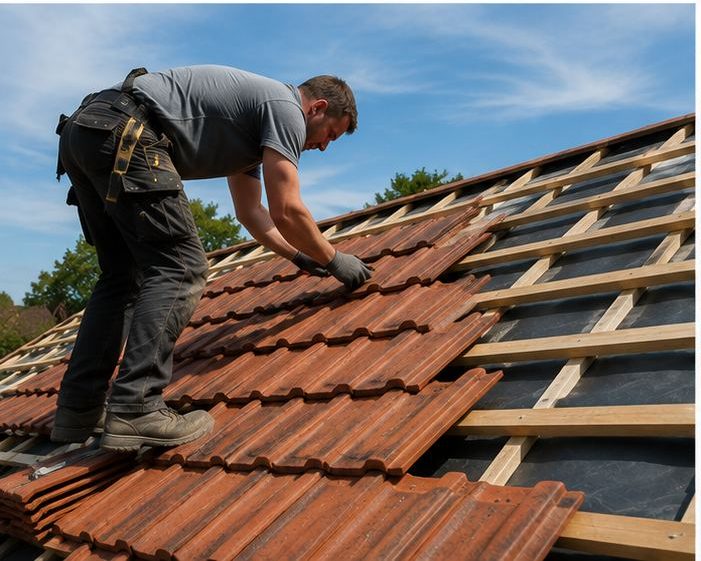
The pitched roof
Regular checks pick up slipped tiles, worn ridge bedding, tired flashings and blocked valleys while they are still minor jobs. We look at the covering from close up and the felt from the loft. A short list of small repairs now is far easier than a long list after a bad winter. Moss that is left to build up holds water against the covering. Photographs from the loft make the picture clear, and we share them with you.
Rear extensions and flat roofs
Flat roofs need attention more often than pitched roofs. Outlets block, small splits open and edges lift. Many Eastville homes have rear extensions with flat roofs, and a small repair at the right time can add a lot of life to them. We look at falls, joints and upstands as well as the surface. Small repairs to flat roofs are worth doing before the surface fails across a wider area. A flat roof that ponds for long enough will eventually need more than a repair.
- Outlets and gutters kept clear of leaves
- Small cracks or blisters repaired before they spread
- Edge trims and upstands checked
- Ponding spotted early and the areas around it
Gutters, fascias and the eaves
Clear gutters carry rainwater away from walls and keep fascias dry. Leaking joints and sagging brackets are quick to fix and troublesome to leave. Timber boards that stay damp rot, and replacing a rotten fascia is a bigger job than re-sealing a joint. Eaves checks are quick and worthwhile. Re-sealing a joint is a short job compared with replacing rotten boards. Fascia boards that stay dry need far less attention over the seasons.
Knowing what can wait
A good inspection separates urgent from non-urgent. Active leaks and open flashings come first. Moss and cosmetic wear often can wait. With that list, you can plan work around your budget and the weather instead of reacting to emergencies. That is where most of the saving comes from. We write it down in order of priority so nothing is lost. Setting priorities protects your budget from nasty surprises.
After weather and between visits
Storms and hard frosts are worth a look afterwards. From the ground, check for slipped tiles, sagging gutters and debris. Photograph anything odd and keep a note of the date. Please stay off the roof. If something looks wrong, call us for a proper look and we will advise what is needed. A quick walk round the outside after each stormy spell takes minutes. Keeping a simple record of storms and repairs helps us see patterns.
Frequently Asked Questions
Do I need maintenance if there are no leaks?
Often yes. Many faults give no sign inside until damage is done. A check finds loose tiles, worn flashings and blocked outlets early, and tells you the roof is in good order if it is.
Is it less costly to wait until something breaks?
Rarely. Waiting turns a small repair into a bigger one because water has more time to get in. Planned work is also easier to schedule than an urgent call-out after a storm. We explain it plainly and put it in writing.
What does a maintenance visit include?
A look at the whole roof: covering, ridge, flashings, gutters, fascias and flat sections, plus the loft if possible. You get a written list of what we found, what is urgent and what can wait.
Talk to our team about general roofing services in Eastville
Every roof is different — the fastest way to get an accurate answer is a quick chat with our team.