
There is no single interval that suits every roof. Age, exposure and previous repairs all change the answer, and checks after bad weather matter as much as any regular routine.
A roof is easy to forget because it sits out of sight. In Chipping Sodbury, exposed Cotswold-edge weather and a mix of older stone and brick buildings and newer estates mean roofs age at different rates. A regular, sensible routine of ground checks and occasional professional inspections catches small faults before they become expensive ones.
What the right interval depends on
Older roofs, roofs on exposed sites and roofs with a history of repairs deserve closer attention than a newer, sheltered one. Tall chimneys, lead flashings and flat sections all add points of failure. Rather than a fixed date, think in terms of regular looks, plus an inspection whenever something changes.
Exposed ground matters most. A roof on the Cotswold edge takes more wind and driven rain than one tucked in a sheltered street, and older buildings tend to have more movement, more lead and more places for water to find a way in.
Checks you can make yourself
From the ground, look at your roof a couple of times a year and after any spell of bad weather. Use binoculars if you have them. In the loft, look for daylight, damp timbers and stained felt. Do not climb onto the roof or a ladder to look closer: if something seems wrong, call us.
- Gaps, slipped tiles or a crooked ridge line
- Gutters overflowing, sagging or pulling away from the wall
- Damp patches on ceilings and upstairs walls
- Daylight, drips or stained felt in the loft
After storms and before winter
High winds and heavy rain are the most common triggers for damage. A check after a storm finds problems while they are small, and an inspection before winter means any faults are dealt with before the worst weather. Two sensible dates in the calendar, one in autumn and one after winter, give most roofs the attention they need.
Moss and leaf debris collect over time, particularly in gutters and valleys, so the gap between inspections should shrink where trees overhang or the roof has a history of blocked drains. Check the gutters from the ground after leaf fall, and tell us if you see water spilling over the edge during rain.
What a proper inspection covers
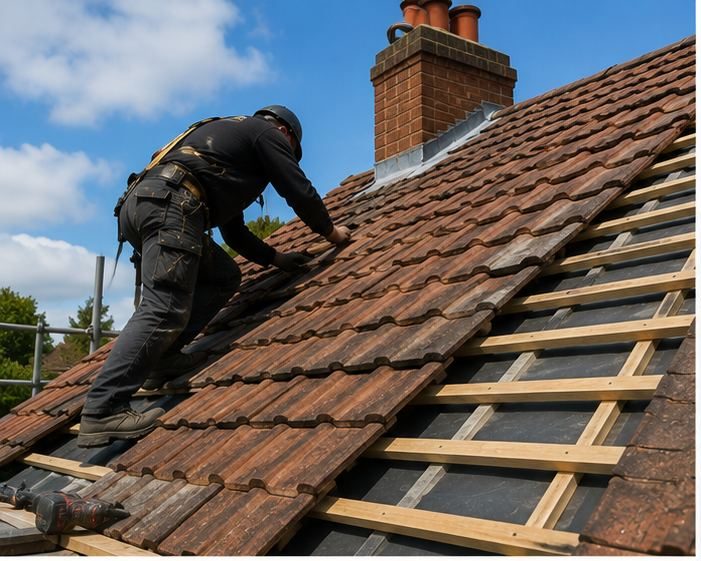
We look at the whole roof rather than just the part that seems to be leaking. That includes coverings, ridge and hip bedding, verges, lead flashings, chimneys, gutters, fascias and soffits, and any flat sections. We also check the loft side. You get a clear explanation of what is urgent and what can wait.
- Tiles or slates, ridge, hips and verges
- Flashings, valleys and chimney details
- Gutters, fascias, soffits and downpipes
- Flat sections, outlets and the loft side
Acting on what is found
An inspection is only useful if the findings are clear. We describe what we found in writing, say what needs doing soon and what can be left, and talk through repair or replacement honestly. Moss and debris removal can be part of the plan. Some work may need planning or Building Regulations checks — we advise before work starts.
Frequently Asked Questions
Do new roofs need inspecting?
They need less attention, but a quick look after the first winter is sensible. Settling, fixing problems and workmanship issues often show early. After that, a ground check twice a year and a look after storms is a good habit.
Should I inspect the roof myself?
Only from the ground and the loft. Roofs are dangerous, and walking on them can crack tiles. Keep to binoculars, a torch in the loft and a note of anything you see, then call us for a proper look.
Is moss a problem that needs removing?
Moss holds moisture against the covering and can block gutters. It is worth removing carefully, and we do it as part of the whole-roof view. Please do not pressure-wash or scrape it yourself, because that can damage the tiles.
Talk to our team about general roofing services in Chipping Sodbury
Every roof is different — the fastest way to get an accurate answer is a quick chat with our team.