
The Cotswold edge takes the wind hard. After a storm, the first jobs are staying off the roof, checking from the ground and loft, and getting the damage looked at before more water gets in.
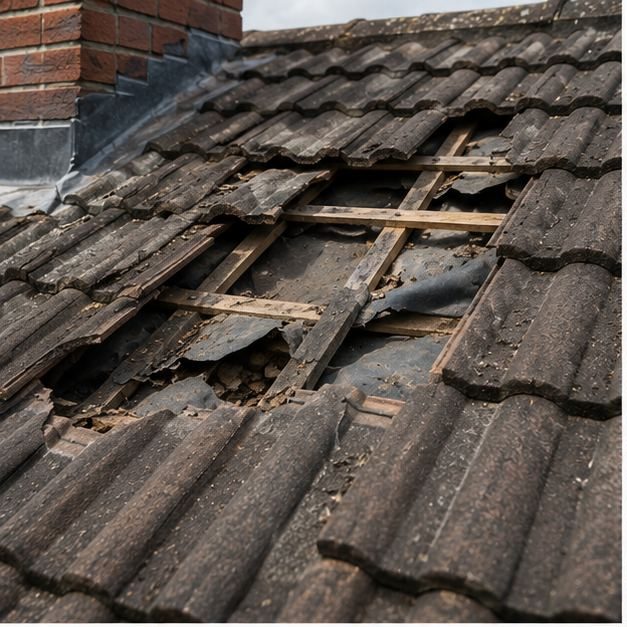
Roofs on the Cotswold edge take more than their share of gales, and Chipping Sodbury's mix of older stone and brick buildings and newer estates means damage turns up in different forms. The right response is calm and methodical: stay safe, look from the ground, check the loft, record what you see, then have the roof properly inspected.
Start with safety, not the roof
Once the wind drops, look around the garden, drive and pavement for fallen tiles, slates, ridge pieces or lengths of guttering before anyone walks through. Keep children and pets clear of the area. Do not climb up to look. A roof that has just been hit by weather is the worst place to be standing, and most damage can be judged from the ground.
What you can see from the ground
Stand back far enough to see the whole slope, and use binoculars if you have them. You are looking for gaps in the pattern of the covering, tiles sitting crooked, a ridge line that is no longer straight, and gutters hanging away from the wall. On older buildings along a main street, chimney pointing and lead work are also worth a glance.
- Gaps or dark patches where tiles or slates used to be
- Ridge or hip pieces that look out of line
- Gutters sagging, loose or full of debris
- Debris from the roof lying in the garden or drive
Checking the loft and ceilings
Water often arrives hours or days after the wind. With a torch, look in the loft for daylight where there should be none, damp patches on timbers, wet or stained felt, and drips on insulation. Upstairs, check ceilings and the tops of walls for new stains. Put a bowl under any drip and move belongings out of its path.
Record it and limit further damage
Take clear photographs of everything you can see from the ground and in the loft, with the date on your phone. These help you explain things to us and to anyone you notify about the loss. Do not try a temporary fix from above. If water is coming in, we can advise on what can be done safely to hold the weather out until repairs are made.
- Photograph fallen pieces where they landed
- Note when you first noticed each problem
- Keep damaged items, such as broken tile, for us to see
- Write down any ceiling stains and where they sit
Getting a proper look and a straight answer
Storm damage is rarely just the one tile you can see. Wind lifts coverings, loosens ridge bedding and works at flashings, so we look at the whole slope, the edges and the lead. We will explain what is urgent, what can wait and whether a repair is enough, then agree the work with you in writing before we start. Some work may need planning or Building Regulations checks — we advise before work starts.
Frequently Asked Questions
Should I go up and cover the hole myself?
No. Wet, windy conditions make roof work dangerous for anyone without the right access and training. Keep to ground and loft checks, protect belongings indoors with sheets and buckets, and call us. We can explain what temporary measures are sensible and arrange a safe visit to deal with it.
Is a missing tile or two really an emergency?
It can be, because the felt underneath is not meant to take weather for long. Water follows timbers and may only show as a stain far from the gap. It is better to have it looked at soon than to wait for the next spell of rain.
What if I cannot see anything from the ground?
Hidden damage is common. Slipped tiles, lifted ridge bedding and cracked lead do not always show from below. If the loft shows damp or daylight, or ceilings have stained, treat that as proof something is open and ask for a proper inspection.
Talk to our team about roof repairs in Chipping Sodbury
Every roof is different — the fastest way to get an accurate answer is a quick chat with our team.