
There is no single interval for every roof. A sensible pattern is a regular ground-level look, a proper inspection when something changes, and a check after any serious weather.
Roofs fail slowly, then quickly. A small gap or loose flashing costs little to fix, but the same fault left alone for a few winters can rot timbers below. On Fishponds streets, with older terraces beside later extensions, a regular check by someone who knows roofs saves a good deal of bother compared with a surprise leak.
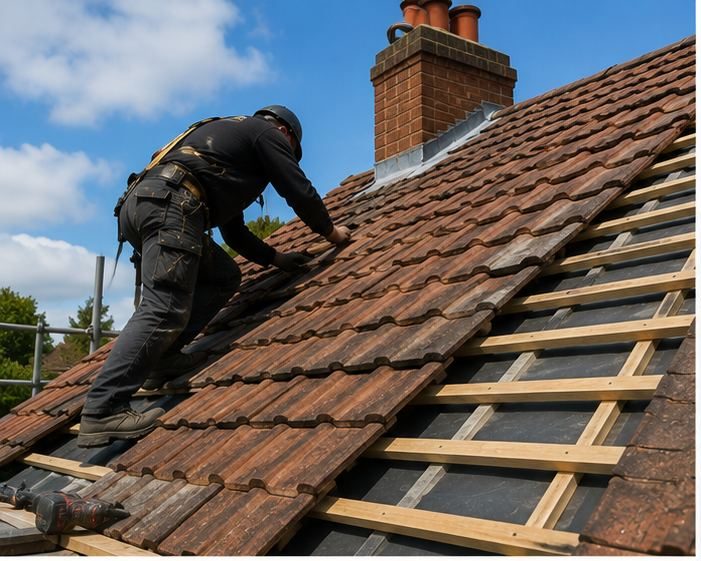
A routine look from the ground
Twice a year is a reasonable habit for you personally: spring and autumn, walking round the house and looking up. You are checking for slipped tiles, sagging gutters, moss build-up, stained walls or blocked downpipes. Never climb onto the roof to do it; binoculars from the garden do the job.
Keep a simple note of what you see each time and the date it was checked. Comparing this season with the last tells you whether a stain is growing or a gutter is sagging further, which is far more useful than a single glance.
When a professional should look
A proper inspection every few seasons catches small faults early, and sooner on older roofs. A roofer can see the ridge, valleys, flashings and flat-roof details that you cannot, and can check the loft for daylight, damp timbers and stained felt. Older terraces and mixed-age extensions benefit most.
- Tiles or slates out of line or missing
- Cracked or lifted mortar at ridge, hip or verge
- Damp patches or stains on ceilings and walls
- Gutters overflowing, sagging or full of moss
After storms and big changes
Check after strong wind or heavy rain, and after building work such as a loft conversion, new extension or aerial installation. These events move or crack parts of the roof that were sound before. If you have bought a house, inspecting the roof early tells you what is urgent and what can wait.
Extensions with flat roofs deserve their own look. Water collects on them, outlets block and edges lift, so we check these separately from the main pitched roof and explain which parts are due attention soon. None of this needs doing from on top of the roof by you.
Inspecting the loft
A torch in the loft on a bright day shows daylight through gaps, and after rain it shows dripping timbers or wet insulation. Look for dark stains, damp smells and signs of nesting. If anything looks off, call us for a closer look rather than going further onto the roof or poking at it.
What a good inspection tells you
A useful inspection gives you a plain list: what needs doing now, what is worth planning and what is fine. We explain it in simple terms, so you can decide what to do and when, rather than being pushed toward a big job.
You do not need to arrange anything dramatic. Many inspections end with a short list of small jobs, such as re-fixing a few tiles or clearing a gutter, which keeps the roof sound and avoids a larger repair later. It is a calm, practical way to look after the house.
Frequently Asked Questions
Do new roofs need inspecting?
Yes, though less often. A look after the first winter catches any settling or fixing issues while they are small, and then a regular schedule keeps small things from becoming larger ones. Ask us if unsure.
Can I inspect the roof myself?
You can check from the ground and in the loft, but do not climb on the roof. Binoculars and a torch show a lot, and a roofer can then deal with anything that needs a closer look at height.
What does an inspection cover?
We look at the coverings, ridges, hips, verges, flashings, chimneys, gutters and any flat roofs, then check the loft where we can. You get a plain explanation of what we find and what is urgent.
Talk to our team about general roofing services in Fishponds
Every roof is different — the fastest way to get an accurate answer is a quick chat with our team.