
After a storm the first job is keeping everyone safe, then recording what you can see from the ground. Here is what to do, what to leave alone and what a proper repair involves on Fishponds homes.
A bad night of wind and rain can leave a roof looking fine from the front door and damaged where you cannot see. In Fishponds the mix of terraces, semis and extended houses means storm damage shows up in different places. Start calmly, from the ground, and work outwards.
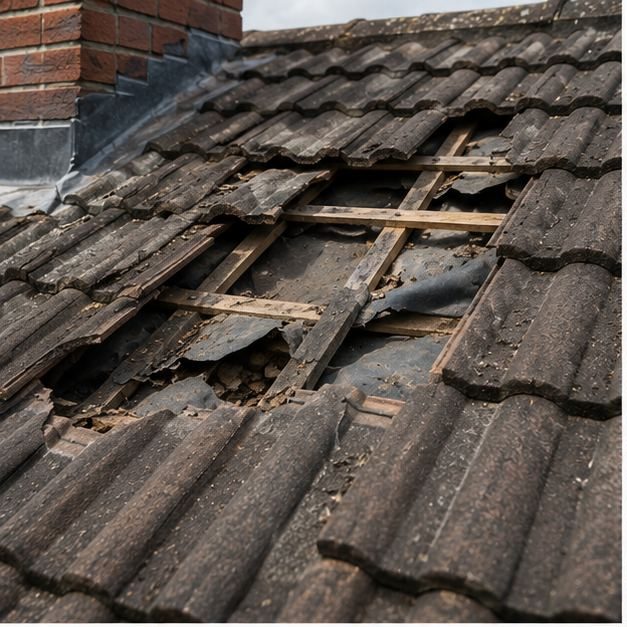
Start with safety, not the roof
Check the garden, path and street side for fallen tiles, slates or ridge pieces before anyone walks out. Keep children and pets away from any debris, and be wary of loose items still hanging at the edge. Stay off the roof and off ladders; broken coverings are slippery and a fall is the real danger after a storm.
If something is hanging dangerously over a pavement or a neighbour's path, keep people clear and call us straight away. On a busy street that matters more than anywhere, and we can make the area safe before the proper repair is planned and agreed with you.
What you can see from the ground
Walk round with a torch or binoculars and look along the roof lines for gaps, tiles sitting out of line, a sagging gutter or a ridge that looks uneven. On terraces, look at the back as well as the front, because wind often strips the sheltered side. Photograph everything, with wide shots as well as close ones.
- Gaps or dark patches in rows of tiles or slates
- Gutters pulled away or hanging low at one end
- Debris on paths, drives, flat roofs and in side passages
- Bargeboards or fascia boards twisted or split
Checks inside the house
Go into the loft with a torch and look for daylight where there should be none, wet insulation, dripping timbers or damp felt. Check ceilings below for fresh brown stains, and put a bowl under any drip. Water can run along rafters before it shows, so a stain is often some way from the actual opening.
Temporary protection and what we do
If water is coming in, we can often make the roof weathertight first, with a temporary covering or a quick fix to the worst spot, then plan the full repair. The repair itself usually means replacing broken tiles or slates, re-fixing loose ones, re-bedding ridges and hips, and putting lead flashings back in place. We tell you what is urgent and what can wait.
We explain what we find in plain terms, show you photographs of the damaged areas where we can, and agree the work before it starts. Some damage is a single visit's repair; some needs materials ordered, and we tell you honestly which it is.
Records, neighbours and the next storm
Keep your photos, notes and any loose pieces you have safely collected, as your insurer will ask for them. Terraces and semis share roof lines and gutters, so it is worth letting a neighbour know if you can see damage on their side. Once repaired, a proper look after the next big blow catches small problems early.
Frequently Asked Questions
Should I go up and check the roof myself?
No. Wet or damaged coverings are unstable and a fall causes far worse harm than the storm did. Check from the ground and from inside the loft, take photographs, and call us for a proper look at the roof itself.
Can a roof leak without any visible damage?
Yes. A lifted tile, disturbed flashing or shifted ridge can let water in while looking normal from below. The water then travels along felt and timbers before it shows as a stain, so the leak can appear well away from the damage.
Is all storm damage an emergency?
Not always. Active leaks and loose pieces that might fall need quick attention. Minor slippage, a small gutter fault or a worn ridge can usually be booked in. We look at the whole roof and tell you plainly which is which.
Talk to our team about roof repairs in Fishponds
Every roof is different — the fastest way to get an accurate answer is a quick chat with our team.