
Neither answer is right for every roof. Repair makes sense when the problems are local and the structure is sound; replacement when faults are widespread. Here is how we judge it.
On a Redland villa or terrace, an old roof often has a mix of original and later work. Deciding whether to repair or replace is a judgement about the whole roof, not just the patch that is leaking. This guide sets out what we look at and how we explain the answer.
What points towards repair
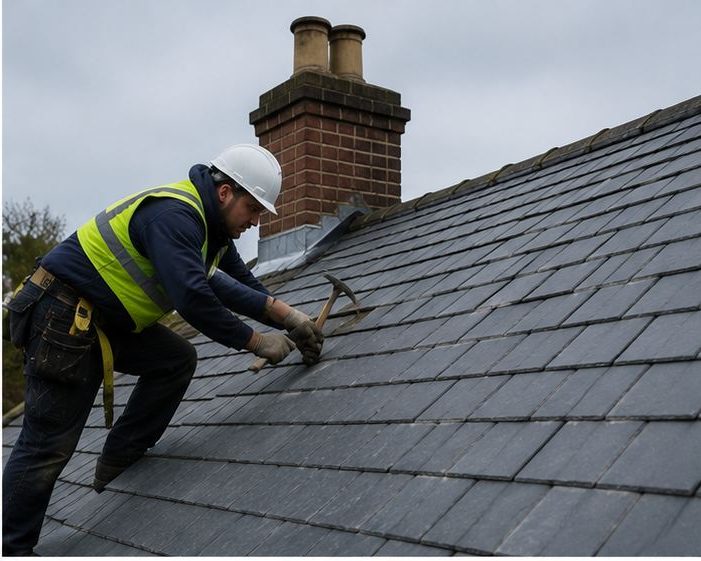
A roof that is basically sound but has a handful of slipped tiles, a worn ridge, a damaged flashing or a leaking valley is a repair job. The timbers are dry, the felt is largely intact and the problems are in specific places. Fixing them is quicker and keeps the original covering.
Repair also suits roofs where the main covering is attractive and worth keeping. Original tiles and slates on a Victorian or Edwardian house can often be reused, matched or reset, and keeping them may suit the character of the street as well as the roof.
What points towards replacement
Widespread problems tip the balance: many tiles crumbling or cracked, felt that has perished, battens that are rotten, or repairs that keep reappearing in different places. When each fix reveals another fault, a new covering is often the more sensible route.
- Tiles or slates failing across large areas, not just in a few spots
- Felt that is torn, brittle or missing under the covering
- Rotten battens or rafter ends found in the loft
- Leaks that return soon after each repair
The part you cannot see
The loft tells much of the story. We look for daylight, damp or stained timber, sagging, and the state of the felt. A roof that looks fine from the street can be failing underneath, and one that looks rough can be sound. We report on both sides.
Chimneys, gutters and the details
On older houses, much of the trouble sits in the detail: tall chimneys, lead flashings and lead-lined gutters. Those can often be repaired or renewed without touching the main covering. We separate the details from the whole roof so you do not replace more than you need to.
How we put the choice to you
We explain what is urgent, what can wait and what each route involves, with photographs. Where repair is right, we say so. Where replacement is right, we say that, and why. You decide with the facts in front of you and without pressure.
If you are weighing up a sale, a move or a bigger project, tell us. A repair that is right for a house you are staying in for a long time may differ from the best choice for one you plan to sell, and a clear conversation makes the decision easier.
Frequently Asked Questions
Can I repair now and replace later?
Often yes. A sound repair can buy time while you plan a bigger job. We will tell you if a repair is likely to hold, and if it is only a short-term fix on a roof that is near the end of its useful life.
Does replacing mean stripping everything?
Usually the covering and battens come off and the felt is renewed, but the extent depends on what we find. Sound rafters stay. Details like chimney flashings and lead gutters may be renewed or repaired separately.
How do I know if an old roof is nearly finished?
Signs include widespread slipping or crumbling tiles, repeated leaks, daylight in the loft and sagging. One sign alone is not conclusive. A proper look from us in the loft and on the roof gives a clearer answer.
Talk to our team about general roofing services in Redland
Every roof is different — the fastest way to get an accurate answer is a quick chat with our team.