
Blisters, cracks and splits show a flat roof covering being pushed past what it can take. Here is what causes each fault, what we look at and when a repair is enough.
Flat roofs on extensions, porches and bay tops across Redland's older houses take plenty of weather. Sun, trapped moisture and building movement all leave marks on the covering, and each fault looks a little different. Knowing which one you have helps decide whether a repair will hold.
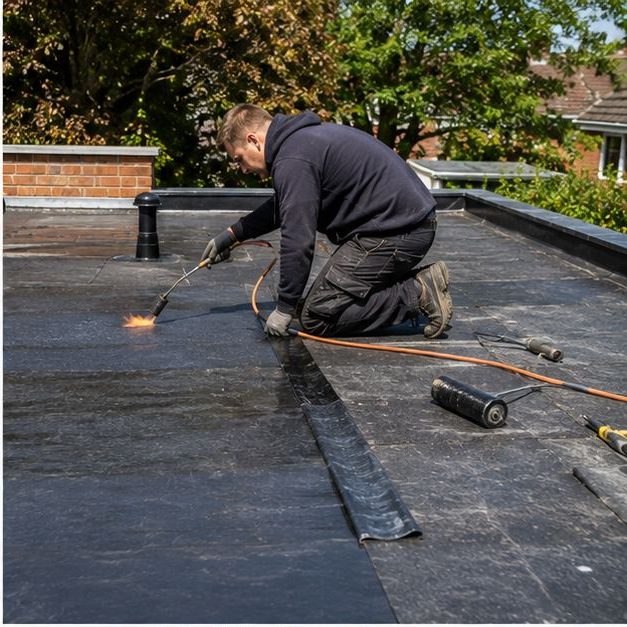
Blisters: trapped moisture or air
A blister is a raised bubble where moisture or air has been caught beneath the covering and expanded in the sun. Small dry ones can be watched; those that have split let water in. We open one carefully to see whether the layer below is wet before deciding what to do.
Blisters often gather on the sunny side of a roof, or where the deck was damp when the covering went down. A few small ones are one thing; a spread of them suggests moisture is trapped across the roof, and that points towards a bigger repair than a single patch.
Cracks from movement and age
Coverings stiffen with sun and age, then crack along the lines where they bend: at upstands, around outlets and along the edge. Buildings move a little too, especially where an extension joins an older house. A crack at a joint is often a sign of movement rather than simple wear.
Splits and failed joints
Splits tend to follow a seam or a line of stress, and joints that were never well bonded open first. A long straight split across the roof suggests the deck is moving beneath it, while ragged ones near a corner point to wind lifting an edge. We look for the cause before sealing.
- Seams where two sheets or layers have pulled apart
- Straight splits running across the roof
- Edges lifted by wind and left unsealed
- Tears near outlets where the covering is stretched tight
When the deck or insulation is the cause
Sometimes the covering is only the symptom. A damp deck pushes bubbles up from below, and a deck that flexes cracks whatever sits on top. Poor falls leave water standing, which ages the covering faster. If we find soft boards or wet insulation, a repair on top would only hide the problem.
Ask us to show you photographs of what we find underneath. Wet insulation, a discoloured deck or a blocked outlet explains a great deal, and seeing it makes the repair-or-replace decision much easier to follow. Nothing should be covered over until the cause is understood.
Repair or replace
Where the roof is mostly sound we repair: cut out the blister, bond a patch, reseal a joint or renew an edge trim. Where faults are widespread, a string of patches stops being sensible and a new covering is the honest answer. We tell you which applies and why, with the reasons in plain words.
Frequently Asked Questions
Is a blister always a leak waiting to happen?
Not always. An intact blister is not letting water in, but it is a weak point that can split under foot or in frost. We check whether it is damp inside and whether others are forming nearby before saying if it needs attention.
Can I seal a crack with a tube of sealant?
Sealant from a shop rarely lasts on a moving roof, and reaching the roof is not something we want you to attempt. A proper repair bonds new material to a clean, dry surface. Call us and we will look at what is causing the crack.
Why did my new-looking flat roof split?
Often the cause is not the covering itself but what is beneath it: a moving deck, a poorly bonded seam or standing water. A split on a fairly new roof is worth having looked at promptly, so the fault can be traced and put right.
Talk to our team about flat roofing in Redland
Every roof is different — the fastest way to get an accurate answer is a quick chat with our team.