
The honest answer is that it depends on how much of the roof is failing. A few local faults suit a repair; wear spread across the whole covering usually points to replacement.
Owners of older Yate homes often wonder whether to keep patching or take the plunge on a new roof. Repairs make sense when the problem is limited and the rest is sound. When faults keep reappearing in different places, the roof is usually telling you something larger.
When repair is the right call
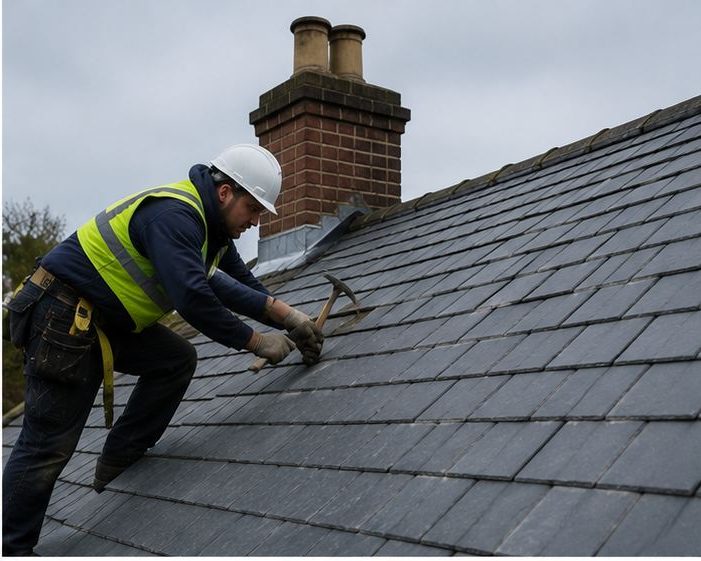
A few slipped or cracked tiles, a worn ridge bed, a failed flashing or a damaged verge are all local faults. If the battens, felt and the bulk of the tiles are still in good order, repairing the problem area is sensible and avoids unneeded cost. A good roofer will tell you when that is the case, even though it means a smaller job. A repair also buys time to plan a larger job properly, rather than rushing a decision after a storm.
Signs it is more than a patch
If repairs keep popping up in different spots, or you see wide wear, the covering as a whole may be reaching the end of its useful life. The loft often tells the story better than the outside, and the signs below are worth looking for.
- Tiles crumbling, flaking or going soft on the surface.
- Many slipped or loose tiles across a slope.
- Daylight, damp patches or stained felt in the loft.
- Battens that look dark, soft or split.
- Repeated leaks after earlier repairs.
What we check before advising
We look at the covering from the ground and with safe access, then at the loft for felt, battens and damp. We compare how much is sound against how much is failing. A repair that will hold is better than a replacement you do not need, but a patch on a failing roof wastes money. We look at the underside of the roof covering in the loft first, since damp felt and darkened battens tell us a lot about how long the roof can carry on.
Concrete tiled estates and older cores
Much of Yate has later estates with concrete tiles, where the covering can be sound for the main run but suffer at ridges, verges and flashings. Older homes in the core may have different coverings and different timbers. The same principle holds: assess the whole roof, then decide, rather than guessing from one leak.
How to compare the options
Ask for both choices in writing: what a repair covers and what it leaves, and what a replacement involves. Compare what is urgent and what can wait. Re-roofing may need planning or Building Regulations checks, and we advise before work starts. We would rather you understand the roof than feel steered either way. Our job is to explain, not push, and you are free to take the information away and decide at your own pace.
Frequently Asked Questions
Will repairing now make replacement harder later?
No. A sound repair keeps the roof weathertight and does not stop a later replacement. The only waste is repeatedly patching a roof that clearly needs renewing, which costs more in the end.
Can part of a roof be replaced?
Yes. If one slope is worn and the other is sound, replacing one section can make sense. We would discuss how the new and old areas meet, so the join is neat and weathertight.
How do I know if a roofer is exaggerating?
Ask to see photos or be shown the evidence from the loft. A genuine problem can be explained and pointed to. If you only hear that everything must go, ask for a second opinion.
Talk to our team about general roofing services in Yate
Every roof is different — the fastest way to get an accurate answer is a quick chat with our team.