
UPVC cladding over old fascia timber is possible, but only when what is underneath is sound. If the wood is soft or wet, covering it hides the problem and lets rot carry on.
Homeowners in Yate sometimes ask whether new white boards can simply be fixed over the old painted timber. It is a fair question, since it sounds quicker and tidier. The truth is that it can work, but only on timber in good condition, and we only know that after a proper look.
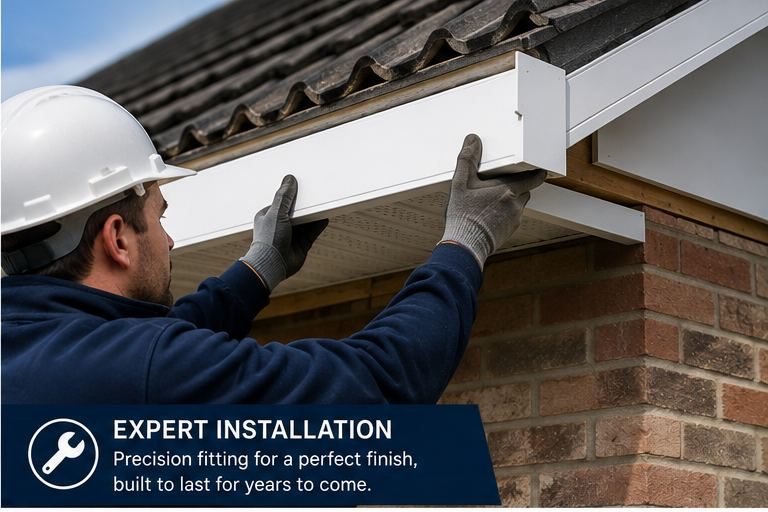
When capping over can work
If the existing fascia is dry, straight and firmly fixed, and the rafter ends behind it are healthy, a UPVC cover can go over it. This suits houses where the timber has simply gone shabby and needs freshening rather than replacing. Even then, we check the whole run before agreeing, not just the bit you can see. The same logic applies to bargeboards at the gable ends: if the timber is sound, a cover can work; if it is not, it should come off.
When it should not
Covering soft, flaking or damp timber traps moisture against it. The rot continues, out of sight, and eventually reaches the rafter ends. Gutter brackets fixed into rotten wood also lose their grip, which can send water straight into the eaves. These are the signs that tell us capping over is a bad idea.
- Spongy or crumbling timber when pressed.
- Peeling paint with dark staining underneath.
- Gaps where water has been getting behind the board.
- Sagging or uneven lines along the gutter.
- Loose gutter brackets that no longer hold.
Why removing is often better
Taking the old boards and gutters off lets us see the rafter ends, fix any damage and lay out the eaves properly. It also gives us the chance to fit vented soffits and strips so the roof space can breathe. The result is a straighter, firmer finish than boards fixed onto uneven old timber. It also lets us put right any gaps at the rafter ends before the new boards are fixed, which keeps pests and weather out of the eaves.
Older parts of Yate
In the older core of the town, we check what the existing soffit boards are made of before disturbing them. It is a precaution we take calmly and as standard on older properties, and we handle the boards accordingly. Newer estate houses are generally simpler, but the same checks on the timber still apply.
What we will tell you
After looking from the ground and, where needed, at the eaves with proper access, we say plainly whether capping over is sensible or whether replacement is the better answer. Both options get described in writing. UPVC is cleaned rather than painted, so very low maintenance later, and finishes include white, darker colours and wood-effect. Colour choices include white, a darker shade or a wood-effect finish, and the boards are simply cleaned when they need freshening.
Frequently Asked Questions
Is capping over quicker?
It can be quicker, but only if the timber is sound. If rot is hidden below, you pay twice when it fails. We would rather tell you honestly which route suits your eaves than sell the easier option.
Will the gutters need to come off?
Almost always, either way. Gutters are fixed to the fascia, so they come off for the work and go back or are replaced. It is a good time to check they flow and fit well.
Do I need scaffold for this?
Yes, usually. Safe access along the eaves lets us inspect, fix and finish properly. We arrange it as part of the job and will explain how access is being set up before we start.
Talk to our team about UPVC fascias and soffits in Yate
Every roof is different — the fastest way to get an accurate answer is a quick chat with our team.