
Blisters, cracks and splits are different symptoms of the same story: a covering working harder than it should. Knowing which one you have tells us whether a repair is likely to hold.
On a flat roof over a Yate garage, porch or small extension, the covering takes sun, frost and movement all year. When it fails, it shows as raised blisters, hairline cracks or open splits. Each points toward a different cause, and the cause decides whether we patch, repair or recommend replacement.
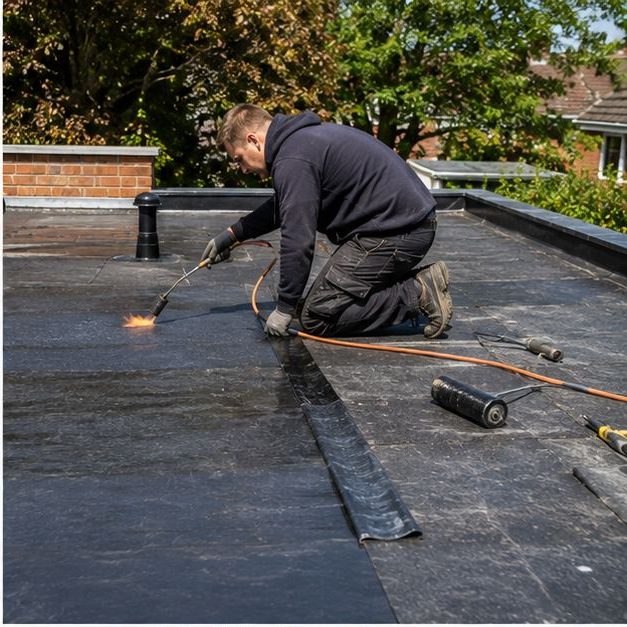
Blisters: moisture or air trapped below
A blister is a pocket where moisture or air has been trapped between layers. Warm sun then expands it and pushes the covering up. They are common where the deck was damp when the covering was laid or where water has crept in through a poor joint. A small, dry blister can wait; one that feels soft or spongy suggests water below. Photos taken from a window help us see how the fault has changed.
Cracks: age, sun and stiffness
Over time, covering dries out, loses flexibility and cracks at stress points, often along folds, around outlets and at changes of angle. Direct sun and cold nights make it worse. Crazed or alligator-skin patterns across a wide area tell us the whole surface is tired, not just one corner, which changes the advice. Hand-pressed patches over crazed areas rarely hold, because the surface around them keeps moving and cracking.
Splits: movement and poor joints
Splits tend to open where the structure moves: at the join with a house wall, along deck boards or where a garage roof meets a neighbouring structure. They also appear where upstands and flashings were badly detailed or poorly fixed, and the gap then lets water in under the surface. Photos taken from a window or the ground help us see how the fault has changed between visits.
- Movement between the roof and the wall it abuts.
- Deck boards shifting as they dry or rot.
- Poorly bonded seams and joints.
- Edges lifted by wind or foot traffic.
- Standing water gradually breaking down the surface.
What ponding has to do with it
Water that sits on a flat roof speeds up every other fault. If falls are poor or outlets are blocked, puddles stay for days, and the covering below them ages faster. Fixing the covering without improving drainage often means the same fault returns, which is why we check slopes and outlets whenever we look. Gutters and outlets on garage and porch roofs fill with leaves and moss, so a clear run is part of any lasting repair.
Deciding repair or replace
Local damage on an otherwise sound roof can be repaired, with the deck dried and checked first. Widespread blistering, crazing or splits suggest the covering has had its time. We show you what we find, explain the options and give a straight view rather than patching something that will not hold. You will get the findings in plain language.
Frequently Asked Questions
Can I pop a blister myself?
Please do not. Opening a blister lets water in and can spread the damage. Take a photo from where you can see it safely and ask us to look, because the cause needs sorting, not just the bump.
Are hairline cracks a worry?
They are a warning. A hairline crack may be fine for a while, but it is often an early sign of ageing or movement. Watching it and having it looked at before winter is sensible.
Why does the same split keep reopening?
Usually because the movement or drainage problem behind it has not been dealt with. A sealant bead over a moving joint will not last. A proper repair deals with the cause, not only the gap.
Talk to our team about flat roofing in Yate
Every roof is different — the fastest way to get an accurate answer is a quick chat with our team.