
Tall terraces with steep roofs, chimney stacks and parapets share a handful of familiar faults. Knowing them helps you spot trouble early and know when to call.
Kingsdown's steep Georgian and Victorian terraces share many of the same roofing problems. Tall chimney stacks, parapet walls and tight streets bring particular weak points, and because the roofs are high, faults often go unseen from the street until the damp shows inside. Spotting the usual suspects early keeps repairs small.
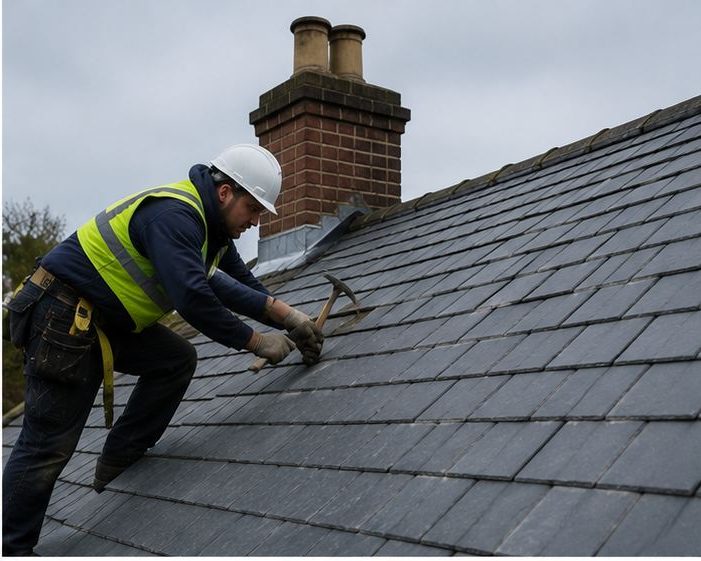
Chimney stacks and flashings
Stacks are the tallest, most exposed part of the roof. The lead flashing round the base can lift or split, pointing can crumble and the top of the stack can open up. Water entering here runs down the chimney breast or along timbers, and often appears as a stain well away from the stack itself. A damp patch on a chimney breast on the top floor is a classic sign of a flashing or pointing fault above.
Parapet and valley gutters
Where a roof sits behind a parapet wall, the gutter behind it is often lined in lead and easily blocked. A split lining or a clogged outlet sends water through the wall or down inside it. Valleys between roof slopes carry a large amount of water and can fail the same way. Lead that has split from heat and cold over time is a very common cause, and it can be repaired or renewed.
Slipped and broken coverings
Tiles slip, crack or go missing in storms, and old slates break. On steep roofs a gap shows up quickly as a leak. Ridge and hip bedding also cracks over time and lets water in. We deal with the individual pieces and check the roof around them while we are there.
- Slipped, cracked or missing tiles and broken slates
- Cracked ridge and hip bedding
- Failed mortar at gable and party-wall edges
- Gutters and fascia boards that have failed or rotted
Flat roofs on extensions and outbuildings
Rear extensions and small outbuildings often have flat roofs. These suffer from ponding, splits, blocked outlets and failed joints at walls. They may be small, but they leak just as easily as a pitched roof and are often forgotten until damp appears. Even a small extension roof can hide a lot of damage if the deck has been wet for a while.
What to do about it
Look from the ground for anything out of line, such as sagging gutters, tiles out of place or mortar on the path. Check the loft and top-floor ceilings for stains. Do not climb up yourself. Call us for a proper look, and we will explain what is urgent and what can wait. Photographs help us see the problem as it was when you noticed it.
Frequently Asked Questions
Which problem is most common?
Flashings and gutters round chimneys and parapets cause a great deal of trouble on tall terraces, because they are exposed, awkward to reach and often neglected until a leak appears. If in doubt, ask us and we will explain what we find.
Can I check my roof myself?
Only from the ground and inside. Look for stains, daylight in the loft and loose or fallen material. Do not go on the roof or use a ladder against it. We do the close inspection safely.
How often should a roof be checked?
There is no fixed rule, but a look after severe storms and a general check now and then catches problems while they are small. Tall terraces are worth checking more carefully because faults are hard to see.
Talk to our team about general roofing services in Kingsdown
Every roof is different — the fastest way to get an accurate answer is a quick chat with our team.