
An inspection follows the water from the stain back to its entry point. In Kingsdown that usually means the loft, the chimney stacks, any parapets and the junctions where one roof meets another.
Roofs in Kingsdown are steep, tall and tightly packed, with chimney stacks and parapets that give water plenty of places to get in. A proper inspection is a set order of checks, indoors first and then outside, so that the leak is traced to its real source and not guessed at from the stain on the ceiling.
Starting inside
We begin in the loft, if there is one, and in the rooms below. We look for daylight through the covering, damp or darkened timbers, stained felt and drip marks, and we note where the wet patch sits. A damp stain on a top-floor ceiling gives us a direction to follow, even if the opening is further up or across. Photographs from the hatch, taken before we arrive, are useful because they show how the loft looked while the leak was active.
Chimney stacks and flashings
Tall stacks are among the first things we look at on Georgian and Victorian terraces. The lead flashings round the base, the pointing on the brickwork and the condition of pots and the cement flaunching at the top all matter. Water finds a lifted or split flashing very quickly, then runs down inside the chimney breast or along the roof timbers. Chimney breasts shared with the neighbours add a further wrinkle, since the water can cross from one house into the next.
Parapets, valleys and gutters
Where a roof sits behind a parapet wall, the gutter behind it, often lined in lead, is a regular source of trouble. A blocked outlet or a split in the lining lets water spill through the wall or down inside it. Valleys between roof slopes and the junctions with neighbouring houses get the same scrutiny, since they carry large amounts of water in heavy rain.
- Lead flashings at chimneys and party walls
- Parapet gutters and their outlets
- Valley linings between the roof slopes
- Ridge and hip bedding along the top
The covering itself
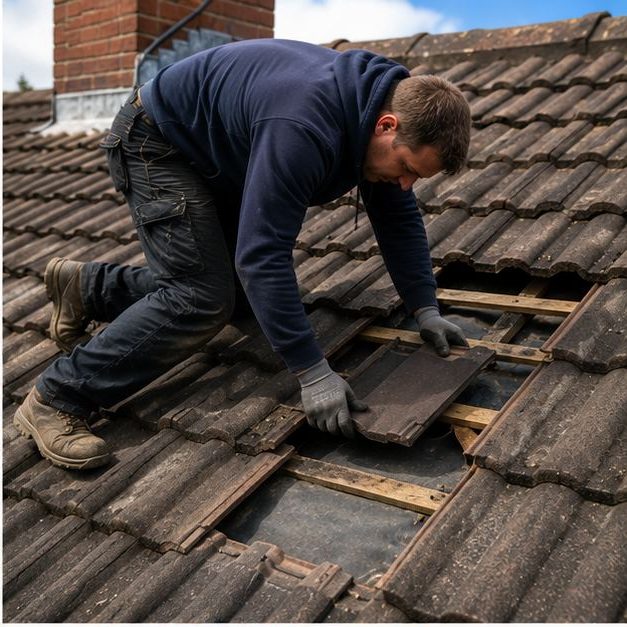
Next comes the tile or slate covering: slipped, cracked or missing pieces, broken slates and gaps at the edges. On steep roofs with limited access, we use ladders at ground level, tower access or a scaffold, so we can see properly and work safely. We explain what we find and show you photographs where we can. A steep roof can hide a slipped tile from the pavement, so close checks at height are what find the small faults.
What you get at the end
After the inspection, you should hear what is causing the leak, what is urgent and what can wait, and whether a repair will do or a bigger job is needed. Please do not climb up or lean a ladder against the roof yourself. If you can describe where and when the water appears, that helps us narrow it down. We would rather you had a clear picture and a plan than a long list, so we put the findings in order of importance.
Frequently Asked Questions
Will you need to get on the roof?
Often, yes, though we start with what can be seen from the ground and the loft. Steep terraces with tight access sometimes need a scaffold or tower so we can see and work safely. If in doubt, ask us and we will explain what we find.
Can a leak be found in the dry?
Usually, yes. Daylight in the loft, stained felt and damaged lead can be found without rain. If the leak only shows in particular weather, notes on when it happens help us narrow it down. If in doubt, ask us and we will explain what we find.
What should I do before you arrive?
Catch any drips safely, move belongings away and photograph any stains with the date. Look in the loft with a torch if you can reach it safely, and tell us what you saw and when it happened.
Talk to our team about roof repairs in Kingsdown
Every roof is different — the fastest way to get an accurate answer is a quick chat with our team.