
Pooling means the roof is not shedding water as it should. The cause is usually poor falls, a blocked outlet or a sagging deck, and each one calls for a different answer.
Flat roofs in Kingsdown sit on tall terraces behind parapets, over rear extensions, and on small outbuildings, often with limited access and restricted drainage routes. When water stays on the surface after rain, the roof is telling you something about its slope, drainage or deck, and it is worth working out which.
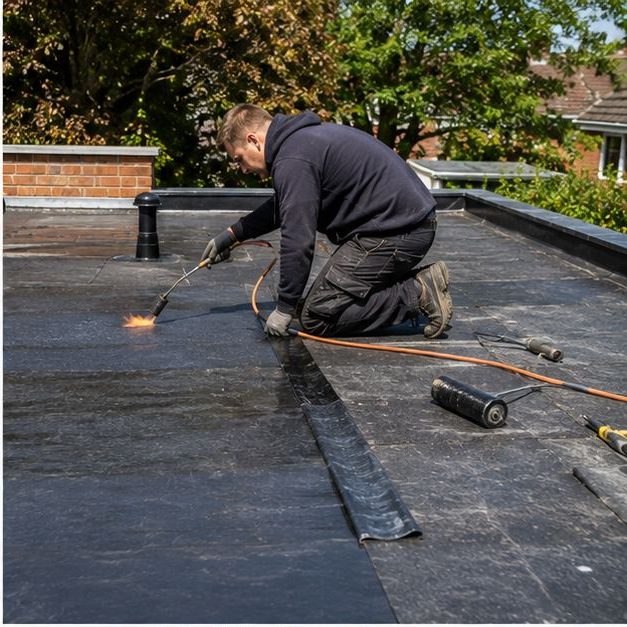
Falls that are too shallow
A flat roof is never completely flat. It is laid with a gentle fall so water runs to an outlet or gutter. If the fall is too shallow, or has been lost as the deck has settled, shallow pools form. They may dry out between showers, but the covering beneath stays wet, wears faster and is more likely to split. On a terrace the water may need to cross a parapet or party wall as well, which makes the drainage more complicated than it looks.
Blocked or poorly placed outlets
Outlets, hoppers and gutters clog with leaves, moss and debris, particularly behind parapets where nothing is cleared often. When the way out is blocked, water backs up and spreads. In some cases the outlet is simply in the wrong place, or sits above the lowest part of the roof, so water never fully drains. Leaves from nearby trees and general city grime build up quickly, so outlets that were fine last spring can be choked now.
A sagging or soft deck
Boards that have absorbed water for a long time soften and dip, forming a hollow that holds water. This makes the problem worse each wet spell, because the weight of the water bends the deck a little more. If we press the surface and it feels spongy or moves, we suspect the deck has started to fail and will want to look beneath the covering.
- Standing water more than a day after rain
- A visible dip or hollow in the surface
- Moss, algae or staining where water sits
- Soft or spongy feel when the roof is inspected
What we do about it
If the fault is a blocked outlet, clearing it may be enough. If the falls are poor, we can sometimes correct them with tapered insulation or new boards as part of a re-cover. If the deck has gone, those boards are replaced before the new covering. We will tell you honestly if a repair is enough or a re-cover is needed. Tapered boards can help here, because they create fall without the need to rebuild the structure beneath the roof.
Getting at it safely
On roofs behind parapets or at the back of tall terraces, access can be tight. We plan how we reach the roof, which may mean a scaffold or tower, before any work starts. Please keep off the roof yourself, and tell us if water has started to show in the ceiling below, which suggests the covering has failed. Bay tops, porches and dormers can pool in just the same way, so the same checks apply there.
Frequently Asked Questions
Is a little pooling normal?
Small damp patches that dry quickly are less of a worry, but water that sits for a long time wears the covering and finds weak points. If it stays after a couple of dry days, it is worth a look.
Can pooling be fixed without replacing the roof?
Sometimes. A blocked outlet or a local low spot may be put right with a repair. Where the whole roof has poor falls or a failing deck, replacement is more likely to solve it properly. If in doubt, ask us and we will explain what we find.
Could pooling cause a leak?
Yes. Standing water works at seams, joints and small splits, and the covering ages faster under it. A roof that holds water is more likely to leak eventually, so the pooling is an early warning. If in doubt, ask us and we will explain what we find.
Talk to our team about flat roofing in Kingsdown
Every roof is different — the fastest way to get an accurate answer is a quick chat with our team.