
The best roofing depends on the shape of the house and what the roof has to do. Filton's mix of inter-war, post-war and modern homes needs a different answer for each.
Filton has a varied housing stock. Inter-war garden-suburb estates sit alongside post-war streets and modern infill, mostly on wide roads with hipped roofs. That mix means no single roofing type suits every home. Here is how we think through the choice for each kind of property.
Inter-war houses
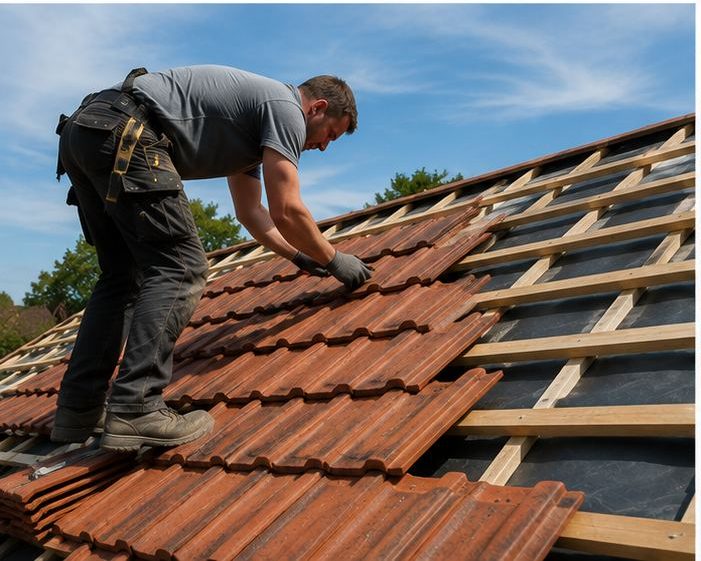
Many have hipped tiled roofs, often with clay or early concrete tiles, a chimney or two and a long run of eaves. Keeping the same type of covering preserves the look of the street, and sound tiles can be refixed and repaired. Where the roof is tired throughout, we explain what renewal would involve, including the underlay and battens. Chimneys on these houses are often worth checking while the roof is open. Chimneys and deep eaves are kept in mind.
Post-war houses and bungalows
Post-war roofs vary, from simple tiled hips to lower-pitched roofs. Concrete tiles are common and generally robust if properly fixed. Bungalows have larger roof areas relative to the house, so a roof problem affects more of the building. Loft space on bungalows can be turned into rooms, which affects roof windows and insulation. Bungalow roofs often reward a close look at the hips and ridges. Where the loft is used as a room, ventilation and insulation need thought as well.
- Check fixings and underlay on older tiled roofs
- Look hard at ridges and hips
- Consider roof windows if the loft is usable
- Keep gutters and fascias in step with the covering
Modern infill
Newer houses tend to have concrete tiles with dry-fixed ridges and verges. These are neat and generally low in upkeep, with faults typically at flashings, fixings and joints. Repairs use matching parts, and the aim is to keep the dry-fixed details working as designed. Check the verges, which are usually dry-fixed. The result is a roof that looks as it was designed.
Flat sections
Porches, garages, bays and extensions often have flat roofs. These need a covering suited to the shape and access, such as single-ply rubber, fibreglass or felt, with careful edges and upstands. Good falls and clear outlets matter as much as the material. We advise on repair or renewal for each case. We look at the deck as well.
Pulling it together
We look at the whole roof, the edges and the drainage, then explain what the house needs now and what can wait. The aim is a roof that suits the house, not a standard answer. Changes in materials or layout may need planning or Building Regulations checks — we advise before work starts. Where several parts need work, we say what order makes sense. We give you the reasons as well as the recommendation.
Frequently Asked Questions
Should I keep the same tiles as the rest of the street?
Keeping a matching covering preserves the look and the weight on the roof. If exact matches are unavailable, we find the closest and explain any difference before work starts. We suggest options and explain.
Is a hipped roof harder to maintain?
It has more joints, with hips and valleys that need to stay sealed. That means more places to check, but a sound hipped roof is as dependable as any other when its junctions are kept in order.
What roofing suits a flat extension?
It depends on the shape, access and falls. Single-ply rubber, fibreglass and felt systems all have a place. We explain which we would choose and why, and what the edges and upstands need. Falls and outlets matter.
Talk to our team about general roofing services in Filton
Every roof is different — the fastest way to get an accurate answer is a quick chat with our team.