
The right roofing is the one that suits the shape of the house, the weather it faces and how you use the space. Here is how that plays out in Hillfields.
Hillfields sits on a hill in east Bristol, with inter-war and post-war semis, short terraces and garages. Those roofs are exposed to wind and rain from several directions, and each type of building has different needs. This guide looks at pitched coverings, flat sections and the details that decide how well a roof does its job.
Pitched roofs on semis and terraces
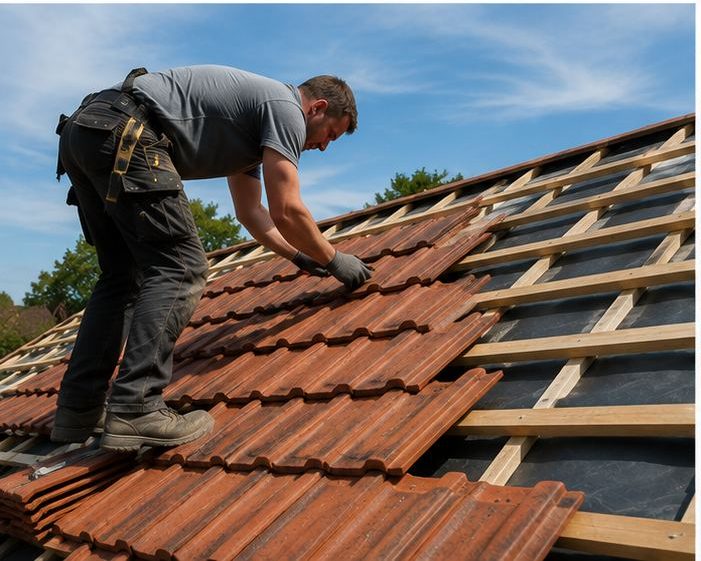
Most homes here have pitched roofs covered in clay or concrete tiles, and sometimes slate. For a straightforward re-roof, interlocking tiles are quick to lay and fit simple slopes well. Plain tiles give a finer look, and slate suits some houses. On a hill, fixing and edge details matter, because wind pulls at tiles and verges. Exposure is why edges and fixings get such close attention here.
- Interlocking concrete or clay tiles for simple slopes
- Plain tiles where a finer look is wanted
- Slate where the structure and style allow
- Strong fixing and proper edge details on exposed slopes
Underlay, battens and ventilation
The covering is only half the roof. Under it sit underlay, battens and the roof timbers. Fresh underlay and sound battens decide how well tiles are held and whether water that gets past is shed. Good ventilation at eaves and ridge keeps the roof space dry, and fascias and soffits with vents help. Skimping on these layers is a false saving.
Garages, extensions and flat sections
Garages and rear extensions often have flat roofs. Single-ply rubber, fibreglass and felt systems each suit different shapes, depending on edges, penetrations and access. Whichever is chosen, a firm deck, proper falls and well-made upstands and edge trims matter more than the label on the material. Garage roofs are often neglected until they leak. The deck underneath matters as much as the covering on top.
Edges, gutters and gables
Dry verges tidy gable edges and remove mortar that fails. New UPVC fascias and soffits give a clean, very low maintenance roofline with proper ventilation. Lead flashings round chimneys and party walls need to be right whatever the main covering. We look at all these details, not only the tiles. Each of them is part of keeping water out.
How we help you decide
We inspect the roof from safe access and from the loft, explain what is urgent and what can wait, and discuss repair against re-roofing. We give you a straight view on the whole roof rather than one slope. Where work may need planning or Building Regulations checks, we advise before work starts. Nothing is decided until you understand the reasons.
Frequently Asked Questions
Is it better to repair or re-roof a semi?
If the covering is sound and faults are local, repairs are sensible. If tiles, felt and battens are failing across the slope, re-roofing avoids repeat visits. We give you an honest view after inspecting. Cost is not the only measure.
Can I keep my existing tile type?
Often yes, subject to availability and fit. If an exact match is not possible, we discuss close alternatives that suit the house and the street, and check the roof timbers can carry the covering. Availability varies between makers, so we check before promising a match.
Do garages need a different type of roof?
Often they have flat roofs, which are covered with rubber, fibreglass or felt systems. Some garages have pitched roofs, which are treated like any other. We recommend based on the shape and condition of your roof. Garage roofs are often simple to deal with once the cause is known.
Talk to our team about general roofing services in Hillfields
Every roof is different — the fastest way to get an accurate answer is a quick chat with our team.