
The roof covering should suit the house, the wind and the surroundings. Here is how to think about tiles, slates and flat roofs on villas and terraces near the Downs.
Villas and terraces around the Downs are Victorian and Edwardian, with pitched roofs, bays and chimneys, and many sit exposed to the wind. The right roofing for one of them is not a catalogue choice. It follows from what is already on the roof, how it has weathered and what the house needs.
Start with what is there
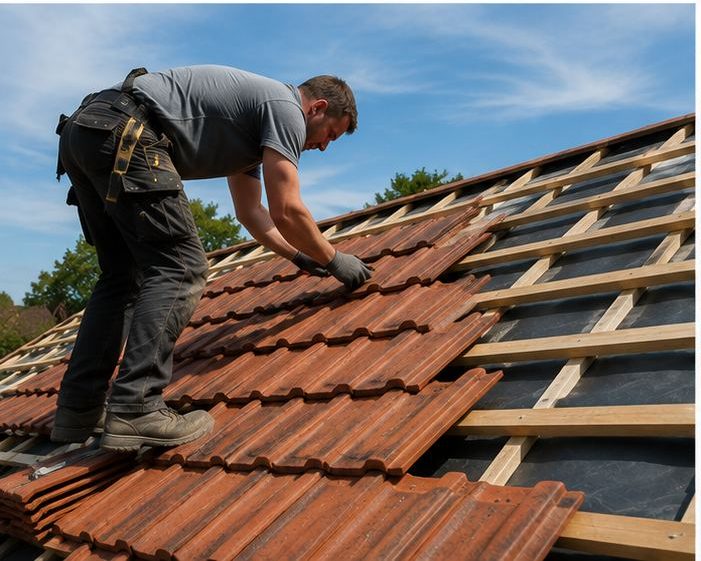
Most villas here have tiled or slated pitched roofs, and the sensible starting point is often to keep a covering that suits the house and the street, repairing it where it can be repaired. Replacing the whole roof is a bigger decision, and we explain why we would or would not suggest it.
The condition of the timbers below matters as much as the covering above. A good covering on weak battens or rafters will not last, so we look at the structure in the loft before suggesting anything about the surface. Both parts of the roof need to be sound.
Exposure and fixings
The open ground near the Downs means wind reaches many roofs with little shelter, so how a covering is fixed counts for as much as what it is. Tiles and slates should be nailed or clipped as required, ridges and edges secured, and verges can use a dry system rather than wet mortar.
- Secure fixing of tiles and slates in exposed positions
- Dry verge systems instead of wet mortar
- Sound ridge and hip fixings
- Edges and eaves finished properly
Trees and maintenance
Mature trees bring leaves, moss and falling branches. Gutters, valleys and flat roof outlets need to cope with leaf fall, and a covering that sheds debris easily is helpful. Regular inspection, moss removal and gutter clearing from safe positions help the roof stay in order whatever it is covered with.
Flat roofs and bays
Bay tops, dormers, rear extensions and porches are often flat on these houses. Single-ply rubber such as EPDM, fibreglass or GRP, and felt systems all have a place, depending on the shape and the edges. Good falls and insulation are part of getting it right.
We choose a covering for each roof on its merits, and explain why we chose it, so the decision is yours and based on facts. We will also tell you what to keep an eye on afterwards. Ask about it.
Making the decision
Ask for a written description of the work, with the covering named, how it will be fixed and how access will be arranged. Ask what is urgent and what can wait. Any change of covering may need planning or Building Regulations checks — we advise before work starts.
A short conversation about how you use the house, what bothers you about the current roof and what you would like to avoid in future usually makes the choice much clearer than a list of materials. That is often more useful than comparing samples.
Frequently Asked Questions
Is it better to repair or re-roof a villa roof?
It depends on how widespread the problems are. If the covering is mostly sound and faults are local, repair makes sense. If it is failing across the whole roof, a re-roof is the more honest answer.
Can a different covering be used from the original?
Sometimes, but weight, appearance and the roof structure all matter, and some streets prefer a consistent look. We check the structure and explain the options before anything is decided, including what suits the house.
Should I worry about moss on my roof?
Moss holds moisture and can block gutters and valleys, so it is worth dealing with. It should be removed by a roofer working safely, not scraped or jet washed by an owner from a ladder.
Talk to our team about general roofing services in The Downs
Every roof is different — the fastest way to get an accurate answer is a quick chat with our team.