
When a storm has passed and there's reason to think a Redcliffe roof might have been affected, knowing what a proper inspection should actually cover helps set expectations — whether you're checking things yourself from ground level first, or having a roofer assess the property professionally. A thorough inspection goes well beyond a quick glance up at the tiles. Knowing what should be checked also helps you ask the right questions if you do call in a professional, so you can be confident the assessment you're getting is genuinely thorough rather than a cursory look from the pavement.
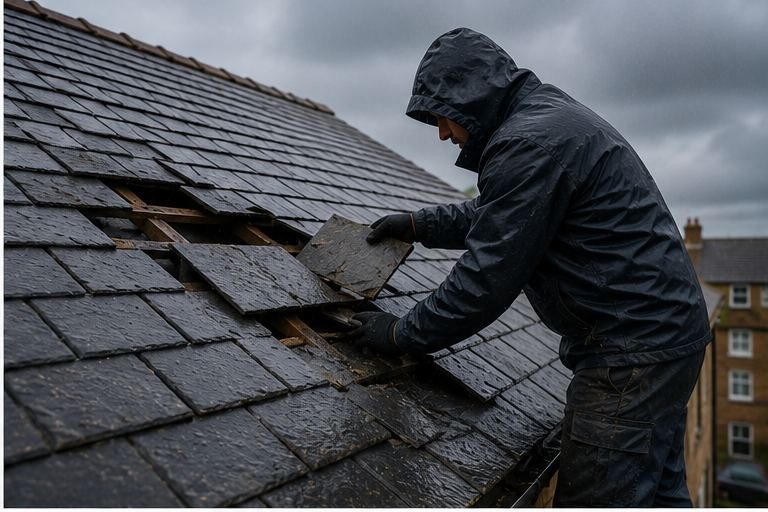
The roof covering itself comes first: tiles or slates checked for cracks, displacement, or missing pieces, paying particular attention to more exposed elevations and areas near chimneys or roof edges where wind tends to do the most damage. On period terraces across Redcliffe, this also means checking ridge tiles and hip details, which can loosen or shift without necessarily falling off entirely. Fixings are checked too, since a tile that looks correctly seated can still be loose enough to move in the next strong gust.
Junctions deserve specific attention — valleys, verges, and the abutments where the roof meets chimneys or party walls. These points are consistently where storm damage concentrates, since they involve more complex detailing than a simple, uninterrupted roof slope. A proper inspection checks flashing and pointing at each of these locations rather than assuming they're fine simply because nothing is visibly wrong from a distance. On a typical Redcliffe terrace there can be several such junctions on a single roof, each one worth checking individually rather than treating the roof as a single uniform surface.
Inside the property, the loft space should be checked for daylight showing through the roof structure, damp staining on timber or insulation, and any musty smell suggesting moisture ingress that hasn't yet shown up as a visible leak indoors. Ceilings in upper rooms are worth checking too, particularly directly beneath valleys, chimneys, or roof junctions where leaks most commonly first appear.
Guttering and rainwater goods are often overlooked but worth including, since storm debris can block or damage gutters in ways that lead to water overflowing against the building rather than being carried away properly — a problem that can look like a roof leak but actually stems from drainage rather than the roof covering itself. On terraced streets, shared or continuous guttering can also mean a blockage further along affects the flow past your own property, which is worth bearing in mind when trying to work out the cause of overflow.
Brunel Roofing Bristol offers free, thorough roof inspections for Redcliffe properties following storm damage, covering all of these areas and providing a clear, honest assessment of what — if anything — needs repairing. If nothing needs doing, we'll tell you that plainly rather than manufacturing work that isn't necessary, because trust matters more to us than a single job.
Need Emergency Roof Repairs in Redcliffe?
Every case is different — the fastest way to get an accurate answer is a quick chat with our team.