
Storm damage isn't entirely down to chance. While no roof is completely immune to genuinely severe weather, a fair amount of the damage seen after a storm traces back to problems that were already quietly developing beforehand, which means there's real value in a bit of preparation for homeowners across Shirehampton rather than simply dealing with problems as they arise each winter and hoping for the best. A little regular attention tends to be far cheaper, in both money and disruption, than dealing with an emergency once a storm has already found the weak point.
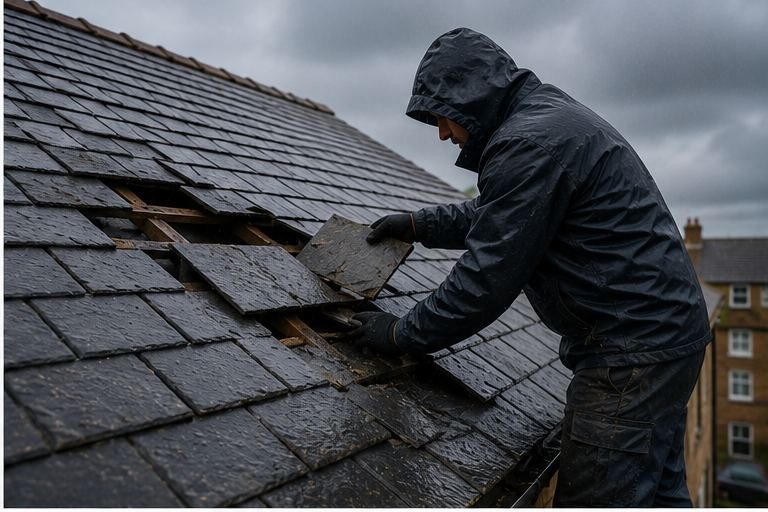
A periodic roof inspection is the obvious starting point, ideally before the winter storm season rather than after the first bad weather of the year has already caused a problem. Checking for loose or cracked tiles, deteriorating mortar on ridges and verges, and any early signs of flashing lifting around chimneys or junctions means these can be addressed while they're still minor and comparatively inexpensive to put right, rather than waiting for a storm to make the decision instead. An inspection is also a good opportunity to check the loft space itself for any early signs of damp, staining, or daylight showing through, since these can sometimes be spotted before a leak ever reaches a ceiling below.
Gutters and downpipes are worth clearing regularly too, since blocked guttering doesn't just cause overflow, it can force water back up under roof edges during heavy rain, creating a leak that has nothing to do with the tiles themselves at all. Removing moss build-up, which retains moisture and can work its way under tiles over time, is another straightforward maintenance task that pays off during storms rather than being a purely cosmetic exercise for kerb appeal. A build-up of moss and debris in valleys and behind chimneys can also trap water against the roof covering, accelerating wear in exactly the areas already most exposed to storm damage.
For roofs with traditional mortar-bedded ridges and verges, upgrading to a dry ridge or dry verge system is worth considering, since these mechanically fixed alternatives tend to hold up better under sustained wind pressure than mortar, which gradually weakens and cracks with age regardless of how well it was originally applied by whoever built the roof in the first place. The upfront cost of a dry verge or dry ridge upgrade is generally offset over time by fewer repeat call-outs after future storms, making it a sensible option for anyone re-roofing a section anyway.
Overhanging branches near the roofline are also worth trimming back where practical, since they're a common source of direct storm damage, either scraping against tiles in high wind or breaking off and landing on the roof outright during the worst of the weather, when a fallen limb can do a surprising amount of damage in a single moment of impact. Checking trees near the property after any particularly strong wind, even where the roof itself looks fine, is a simple habit that can flag a risk before it becomes a problem.
Brunel Roofing Bristol offers free roof inspections for homeowners in Shirehampton who want an honest assessment of how their roof would cope with the next storm, along with recommendations for any preventative work worth carrying out beforehand rather than after the damage is already done and needs fixing. A little preparation now can make a real difference to how a Shirehampton roof copes with whatever the next storm season brings.
Need Emergency Roof Repairs in Shirehampton?
Every case is different — the fastest way to get an accurate answer is a quick chat with our team.