
The two common opening styles for VELUX and similar roof windows suit different rooms. Here is how they differ and which tends to work in Brislington lofts and bungalows.
Roof windows open in two main ways. A centre-pivot turns on a hinge at the middle of the frame, while a top-hung hinges at the top and swings out like a sash. Brislington's semis and bungalows have lofts of quite different heights, and that, more than taste, usually decides which style works.
How a centre-pivot opens
The sash rotates around a pivot in the middle of the frame, so the top swings outwards while the bottom swings in. That makes it easy to reach the outside glass for cleaning. The handle sits at the top, so it suits a window that is above head height or a room with a fairly steep slope. Neither is better in every case.
How a top-hung opens
A top-hung window hinges at the top edge and opens outwards from the bottom, like a pushed-out awning. The handle sits at the bottom, within easy reach, and the view out is clear because the window rises as it opens. It suits a lower roof pitch and a window mounted lower in the slope. On a shallow slope the sash clears the roof neatly.
- Handle at the bottom of the frame
- Opens outwards and upwards from the base
- Suited to lower-set positions in the slope
- Gives a good view out when open
What the loft decides
Headroom is the main factor. In a loft conversion on an inter-war semi, a window in a steep slope near a bed or desk wants a handle you can reach, which points toward a top-hung. Where the sill height is higher, a centre-pivot opens neatly above head height. Furniture, stairs and the shape of the room all play a part. Sloping ceilings in a loft conversion make reach a real consideration.
Fitting them to the roof
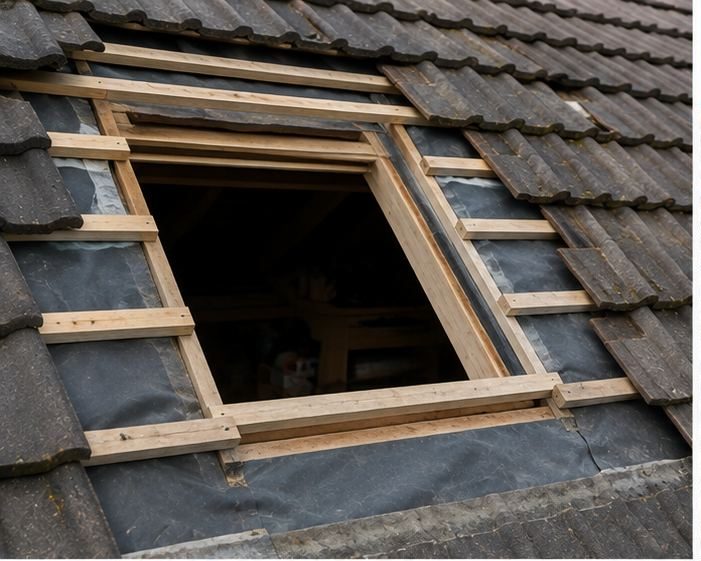
Whichever you choose, the window is matched to a flashing kit that suits the roof covering, so rain runs around the frame. Rafters may need trimming and doubling up around the opening, and the inside gets a lining with insulation and vapour control. A hipped roof can limit which slopes are practical, so we check the structure first. Getting this right at the start avoids awkward fixes later.
How we help you decide
We look at the room, the roof pitch and where the window will sit, then talk through which opening style is more comfortable to use day to day. Bungalow lofts and dormer rooms often favour one type; a plain loft room may favour the other. We explain the pros and cons without pushing either. The final choice is yours.
Frequently Asked Questions
Which type is better for ventilation?
Both give good ventilation. Centre-pivot windows open wide and allow a good through-draught, while top-hung windows open to a more controlled angle. For a room that needs fresh air quickly, think about how the window will actually be used. Weather and noise also play a part in how wide you open it.
Can I replace an old window with a different type?
Often yes, if the opening is the right size and the new window can be matched to the flashing and structure. Changing size or style may mean altering the rafters, so we check on site and advise before work starts. We never alter the rafters without explaining why.
Do roof windows need planning permission?
They may need planning or Building Regulations checks, and we advise before work starts. Because it depends on the property and the position of the window, we look at the specific house instead of guessing.
Talk to our team about VELUX and roof window installation in Brislington
Every roof is different — the fastest way to get an accurate answer is a quick chat with our team.