
Fitting roof windows to a loft conversion means cutting into the roof, supporting the opening, flashing it to the covering and finishing the inside. Here is how it goes and what to settle first.
A new loft room needs light and air, and in a house with a pitched roof the simplest source is a roof window. On a Fishponds terrace or semi, space and head height are tight, so planning the position matters. The fitting itself is straightforward when the detail is thought through first.
Deciding size and position
The window needs to suit the room, not just the roof. We look at where the floor, stairs and eaves fall, how high you will sit or stand under it, and the rafter spacing. Positions that line up with the structure are easier to build than ones that cut across it, and we discuss alternatives where it helps.
In a terrace the loft often runs across party walls, so the slope on your side is the only place a window can go. That limits the choices, and it is why we look at the roof and the room together before agreeing anything.
Opening the roof and supporting it
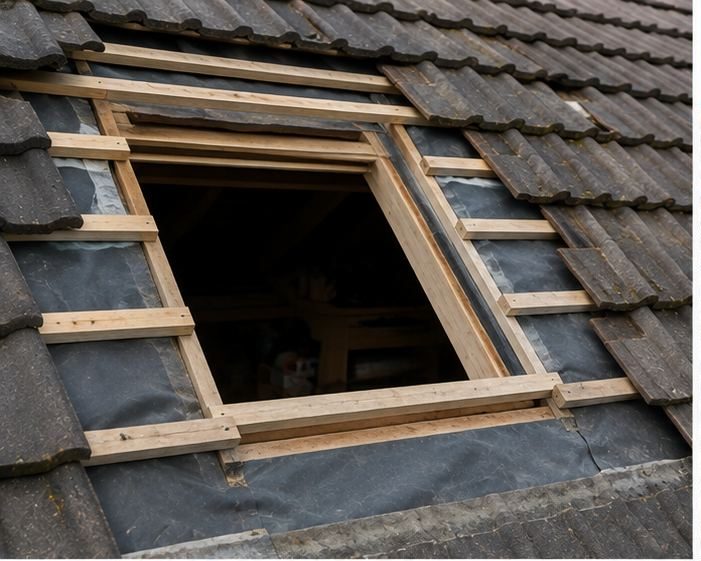
Tiles are lifted from around the opening, then rafters may need to be trimmed and doubled up so the load is carried properly. The new framing is fixed solidly and the opening kept watertight while we work. This is the structural stage, and the one where careful carpentry matters.
Weather protection during this stage is part of the job. The opening is covered each time work stops, and tiles are put back as soon as the framing is fixed, so the house below stays dry throughout. We also make sure the tiling around the opening is done tidily before the window goes in.
Flashing to the roof covering
Each roof window is matched to a flashing kit for the type of covering on your roof, whether that is plain tiles, interlocking tiles or slate. The flashing channels water around the opening and under the surrounding tiles. A window with the wrong kit can leak even if the glass is perfect.
- Kit chosen for the roof covering
- Underlay dressed into the gutter channel
- Tiles cut and re-laid neatly at the edges
- Weathering checked before the window is fixed
Lining, insulation and the inside finish
Inside, the opening is lined and insulated, with a vapour control layer to keep warm, moist air from reaching cold timbers. The sloping reveal is then plastered or boarded and decorated. Good insulation here makes the difference between a comfortable room and a draughty one with condensation.
Take care to plan the electrics and any heating at the same time as the lining, because cables and pipes run through the same spaces. Doing these together avoids opening finished plasterwork later. Good coordination here saves both time and mess for you and for the plasterer.
What else to settle early
Think about blinds, opening method and whether you want a window you can reach from the room. If the loft conversion itself needs approval, the work may need planning or Building Regulations checks — we advise before work starts. Agreeing these points early avoids changes once the opening is cut.
Frequently Asked Questions
Can roof windows be added to an existing roof?
Usually, yes. The roof structure is checked first, and rafters are trimmed and doubled up around the opening. The covering is cut and flashed to the window, then the inside is lined and finished.
Do I need scaffold?
Often yes, for safe access and to keep the roof protected while the opening is made. We plan access and weather protection before any tiles are lifted so the house stays dry. Ask us about the plan.
Will the window leak?
A correctly matched flashing kit and careful tiling around the opening keep water out. Leaks usually come from poor flashing or sealing, not the glass, which is why we take care at that detail.
Talk to our team about VELUX and roof window installation in Fishponds
Every roof is different — the fastest way to get an accurate answer is a quick chat with our team.