
A chimney stack rarely fails suddenly — it tends to be the result of small issues left unattended for years, gradually worsening until they turn into a leak, a crumbling joint, or worse. For homeowners in Lockleaze, a modest amount of regular attention is genuinely the most cost-effective way to keep a chimney sound, since catching problems early nearly always means a smaller, cheaper repair than waiting until something forces the issue.
The easiest starting point is a visual check from ground level, ideally a couple of times a year and again after any particularly severe storm. Binoculars help, but even a general look at the stack can reveal a lot: mortar joints that look patchy or dark with damp, a pot sitting at an odd angle, staining running down the brickwork, or debris in the gutter below that suggests material is coming off the stack. None of this requires climbing anywhere — it just requires actually looking up occasionally. A simple note of what the stack looked like at each check also makes it much easier to spot gradual changes that might otherwise go unnoticed from one year to the next.
Inside the house, it is worth keeping an eye on the chimney breast and any loft space near the stack for damp patches, discolouration, or a musty smell, since these often show up before a leak becomes obvious anywhere else. Catching this early, before the damp has spread through plaster or timber, makes for a much simpler repair.
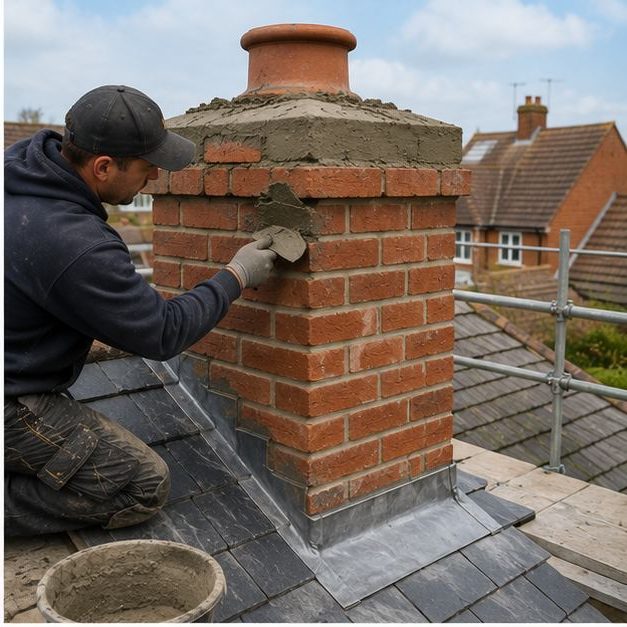
Beyond visual checks, a periodic professional inspection is genuinely worth having, particularly for the taller Victorian and Edwardian stacks common on terraces around Lockleaze, since the top of the chimney — the flaunching, pots and lead flashing — cannot be properly assessed from the ground and is where most maintenance issues actually start. An inspection every few years, or sooner if the property is older or has known history of problems, lets small issues get fixed while they are still small.
It is also worth thinking about disused chimneys specifically, since a flue that is no longer used but has not been properly capped is a common source of water ingress and bird nesting that gets overlooked simply because nobody is using the fireplace below to notice a problem developing. A ventilated cap allows a small amount of airflow to continue, preventing condensation building up inside the flue while still keeping rain and birds firmly out.
If it has been a while since your chimney in Lockleaze was properly looked at, or you simply want peace of mind before winter, Brunel Roofing Bristol offers free inspections with honest, no-pressure advice, and a 24-hour emergency call-out if anything urgent turns up.
Get a Free Quote for Chimney Repairs in Lockleaze
Every chimney is different — the fastest way to get an accurate answer is a quick chat with our team.