
A dry verge can often be added to a roof that is already up, but not always. It comes down to the tile profile, the edge construction and the state of what is underneath.
Many roofs in Emersons Green already have dry-fixed details, and where the verge mortar has failed, swapping it for a mechanical system is a sensible repair. It is not a bolt-on for every roof, though. We have to check that the tile, the edge and the timber below will accept the units and that fixing is secure.
Why people ask
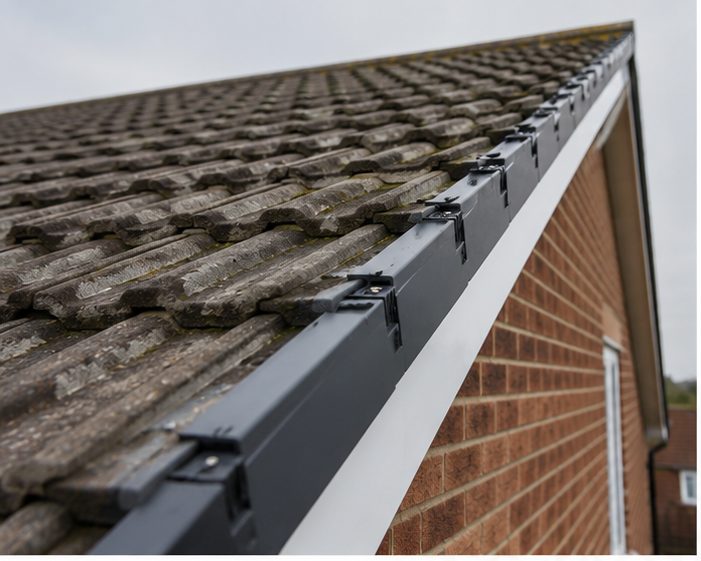
Wet mortar along a verge cracks, loosens and drops onto paths and drives. Falling bits are usually the first sign. A dry verge replaces that mortar with units fixed mechanically along the edge, so there is nothing to crack, and the edge is better held down in wind. It is a common repair on roofs where the edge has simply outlived its mortar.
What decides if it can be fitted
The main factor is the tile profile. The verge units are made to suit particular tile shapes, and the match has to be checked on site. We also look at how the edge was built, how wide the overhang is, and whether the tiles at the edge are sound. If the end tiles are cracked or the timber beneath is poor, that is dealt with first. We would rather tell you now that a different edge detail is needed than fit units that do not sit properly.
- Compatible tile profile and unit style
- Sound end tiles and edge battens
- Enough edge overhang and a firm timber fixing
- No hidden damage under the old mortar
What we do on a visit
We look at the verge from the ground and at close range, remove a small amount of old mortar to see what lies beneath, and check the underlay and the batten ends. Then we tell you whether the system fits, what needs doing first and what the finished edge would look like on your house. Photos of the verge and any fallen mortar help us before we visit.
How the work is done
The old mortar is taken away and the edge cleaned back. The underlay is checked or renewed at the edge, and the new units and tile-end pieces are fixed to the tile maker's guidance with the correct fixings. The ridge end is dealt with at the same time. The work is neat and does not need wet trades at height. Where the old underlay at the edge is worn, we renew it so the new units sit on a sound base.
What it will not do
A dry verge is not a cure for a roof failing elsewhere. If tiles are slipping across the slope or the ridge is loose, those faults still need repairs. We say what a new verge solves and what it does not, so you are not surprised. Some roof alterations may need planning or Building Regulations checks — we advise before work starts.
Frequently Asked Questions
Will a dry verge suit any tile?
No. The units must match the tile profile, and we confirm this on site before any work is agreed. Some tile types have a purpose-made system; others may not be compatible, in which case we explain the alternatives. Where one is not, we explain the alternatives.
Is a dry verge only for new roofs?
No. It suits new roofs, re-roofs and repairs where the old mortar has failed. Fitting it to an existing roof depends on the edge being sound enough to take the units. Check the tile profile first, because that is what decides it.
What is the first sign a verge has failed?
Pieces of mortar on paths, drives or windowsills are the usual first sign. You may also see cracking or gaps along the edge from the ground. Please do not climb up to look; call us instead. A photo of the mortar on the ground is useful too.
Talk to our team about dry verge systems in Emersons Green
Every roof is different — the fastest way to get an accurate answer is a quick chat with our team.