
Both can close a roof edge, but they behave very differently in wind. This guide compares a dry verge with traditional mortar for the exposed semis around Bishopsworth.
The verge is the roof edge at a gable. Traditionally it is bedded in wet mortar; a dry verge uses mechanically fixed units and tile-end or cap pieces instead. On higher, open ground where wind strikes hard, the difference is worth weighing carefully. Neither is right everywhere, so the choice should follow the roof in front of you.
How mortar behaves
Mortar is rigid, and a roof is not. As timbers move, tiles shift and weather cycles through frost and heat, the bedding cracks and pulls away from the tile edge. Pieces fall onto paths and drives, which is often the first sign. Mortar can be done well and last, but it needs re-doing, and a loose verge in wind can lose tiles. We see both done well and done badly, so we judge the actual roof.
How a dry verge behaves
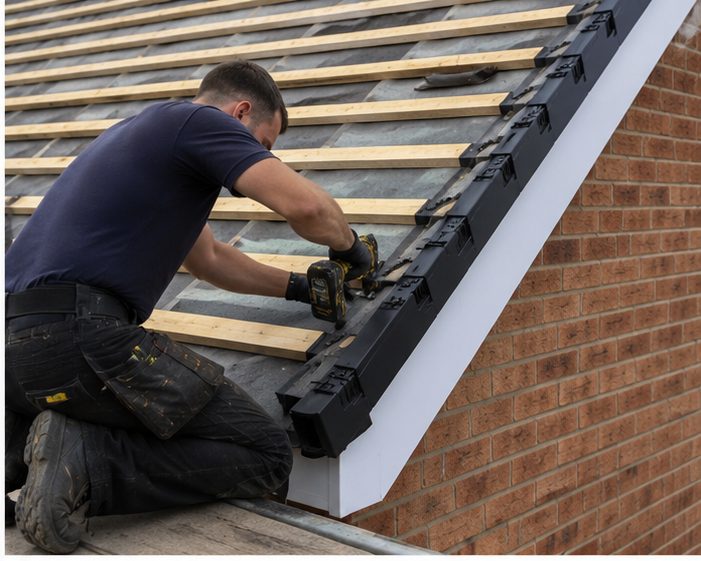
A dry verge is held with fixings, not adhesion. The units cover the edge and the tile-ends are closed off with cap pieces, so there is no wet joint to fail. Wind resistance at the edge is better because the units are secured to the roof. It is fitted to the tile maker's guidance, and compatibility depends on the tile profile, which we check on site.
- Mechanically fixed, not bedded in mortar.
- No wet joint to crack or crumble.
- Keeps weather, birds and insects out of the edge.
- Suits new roofs, re-roofs and failed verge repairs.
Where mortar still makes sense
Some roofs have tiles or details that dry verge units do not suit, and some owners value the traditional look. Mortar can also be a sensible patch if the rest of the roof is near the end of its life and a larger job is coming. We say so honestly rather than selling a dry verge for every roof. The decision should rest on the roof and its remaining life.
What it does not solve
A dry verge is not a cure for a roof failing elsewhere. If felt is perished, tiles are slipping across the main slope or battens are soft, a new verge will not stop the leak. We look at the whole roof, then tell you whether the verge is the right place to spend effort first. That is why the wider inspection comes first.
Making the choice
Think about exposure, tile type, the state of the existing verge and how long you plan to keep the roof. Ask any roofer how each option would be fixed, what it would look like and what upkeep you should expect. Scaffold or safe access is part of the plan. We show you photos of the existing edge and explain our reasoning.
Frequently Asked Questions
Is a dry verge more expensive than mortar?
Cost depends on the roof, the tiles and the access needed, so we explain it when we have seen the roof. It is better compared over the life of the work, including how often the edge would need re-doing.
Will a dry verge look different?
Slightly. The units and caps give a neat, consistent line and come in a range of colours to suit the roof. We show you the options so you can decide before work starts.
Can a dry verge be added without re-roofing?
Often yes, where the existing tiles suit the system. We check the tile profile and the edge condition on site. If it is not compatible, we explain what the alternatives are. We confirm this on site.
Talk to our team about dry verge systems in Bishopsworth
Every roof is different — the fastest way to get an accurate answer is a quick chat with our team.