
Fascia boards rot because water sits on them for too long. These are the usual causes on exposed Bishopsworth houses and what replacing them with UPVC involves.
The fascia is the board at the rafter ends that carries the gutter. It sits right where roof water arrives, so it gets wet more than most parts of a house. Timber rots where water lingers, and a fascia that never gets a chance to dry is a good candidate. Open, windy ground drives rain into boards that sheltered streets would spare.
Gutters that overflow or leak
The commonest cause is the gutter itself. A blocked, sagging or leaking gutter spills water down the face of the fascia or over its top edge. Joints that have opened drip steadily onto the same patch of timber. A fascia can go soft along a single stretch below a bad joint, while the rest looks fine. Gutters and roof edges work together as one system.
Paint that has failed
Painted timber relies on its coat. Once paint cracks and flakes, water enters the grain and stays. Hipped roofs and exposed sites mean the weather hits the boards from several directions, so the paint wears faster. Repainting over damp, soft wood only seals the problem in, which is why repainting every so often eventually stops being worth it. A new coat only helps if the wood underneath is sound.
Poor ventilation and condensation
A roof space that cannot breathe can send damp air out through the eaves, wetting the soffit and fascia from behind. Solid soffits with no vents are a common sign. Once the timber is damp from both sides, rot sets in faster. Ventilation is part of the cure as well as new boards. Fixing only one of the two rarely lasts.
- Dark staining on the soffit board underneath.
- Musty smell in the roof space.
- Condensation on the felt near the eaves.
- Soft spots that return after repainting.
Spotting rot from the ground
Look from below: peeling paint, dark patches, a board that bows or sags, or gutters that have started to pull away. A screwdriver test is for us, not for you on a ladder. If a board looks soft or cracked, call us so we can inspect it with the right access in place.
- Flaking or bubbling paint on the boards.
- Boards that bow, sag or split.
- Gutters pulling away from the wall.
- Green or black staining below leaks.
Replacing with UPVC
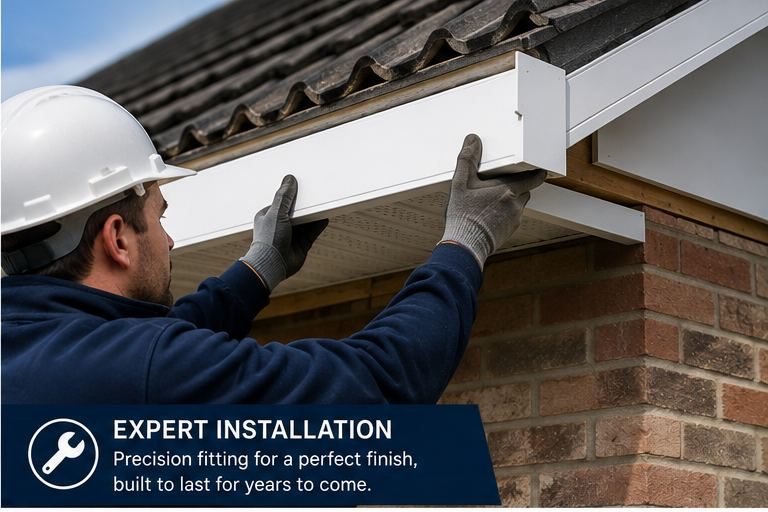
We remove the old boards and gutters, check the rafter ends and eaves, and fit new fascias and soffits, with vented soffits or vent strips so the roof space breathes. Gutters are refitted or replaced. UPVC is cleaned, not painted, and is very low maintenance. Older homes get their existing soffit boards checked for material before they are disturbed. Scaffold or safe access is arranged for the work.
Frequently Asked Questions
Can rotten fascia be repaired?
Small patches can sometimes be cut out, but if the timber is soft over a long stretch it is better to replace it. Repairs on rotten wood often fail. We look at the extent before advising.
Will new boards stop the rot coming back?
UPVC does not rot, but the cause must be dealt with too. Blocked gutters, poor ventilation and leaks at the roof edge all need attention so the rafters stay dry as well. Expect the work to be explained first.
What colours are available?
White is the usual choice, with darker finishes and wood-effect options also available. We can talk through what suits the house and the neighbours on your street. Any colour is checked on site against the house.
Talk to our team about UPVC fascias and soffits in Bishopsworth
Every roof is different — the fastest way to get an accurate answer is a quick chat with our team.