
Both finish the edge of a gable roof, but they behave very differently in wind and rain. Here is a plain comparison and when each one still makes sense.
The verge is the edge of the roof at a gable, and on the late twentieth century homes in Bradley Stoke it has traditionally been finished in mortar. That worked when new, but mortar is brittle and wet-laid. Dry verge units are fixed mechanically instead. Each has a place, so it helps to understand how they differ.
How a mortar verge behaves
Mortar bedding holds the edge tiles and seals the gap against the weather. Over time it shrinks, cracks and lets go, particularly in exposed spots. Pieces fall onto paths and drives. Once the bed is cracked, wind can lift the edge tiles and rain gets into the roof, so mortar needs repointing or replacing from time to time.
On estates with short verges and many gables, the amount of mortar adds up, and every length is a place where the bed can crack. A single storm can pull a few pieces loose, which is often how owners first notice the edge has been failing for some time.
How a dry verge works
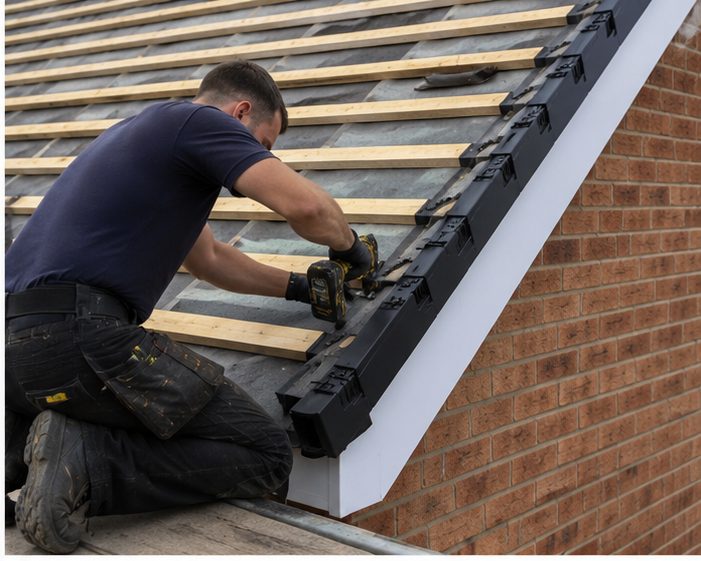
A dry verge uses purpose-made units screwed or clipped to the roof structure, with end and cap pieces to match. There is no wet mortar to fail. The edge is held down mechanically, which gives better resistance to wind, and the closed design helps keep birds, insects and weather out of the roof edge.
- No mortar to crack or fall out
- Edge held down by fixings, not by adhesion
- Units sized to suit the tile profile
- Neat, even finish along the gable
Where mortar still makes sense
On some roofs a tile profile has no compatible dry verge unit, or the existing edge is in good order and only needs a small local repair. Fresh mortar, properly done, can be a sensible repair in that case. We advise honestly, rather than pushing the newer option where it does not suit the tiles.
Where a dry verge is the better choice
Where mortar has failed more than once, or the roof is being stripped and re-laid, a dry verge is usually the better answer. It removes the repeating repair, and it suits new roofs, re-roofs and edge repairs. It is not a cure for a roof failing elsewhere, so we always look at the whole slope first.
Fitting follows the tile maker's guidance, which we check on site before ordering anything. If the units do not suit your tile, we say so at that point rather than forcing a poor fit that would only cause new problems along the gable edge.
Making the call
Look at the gable edge from the ground for cracks, gaps and debris below. Then ask for a written description of what each option would involve at your house. If any work may need planning or Building Regulations checks, we advise before work starts. Compare like for like, including how the old mortar will be taken off.
Frequently Asked Questions
Why does verge mortar keep falling out?
Mortar shrinks and cracks as it ages, and weather and movement work it loose. Wind pushing on the edge tiles speeds this up. Repointing treats the symptom, whereas a dry verge removes the part that keeps failing.
Is a dry verge more windproof?
Because the units are fixed mechanically rather than stuck with mortar, the edge is better held down in strong wind. It still depends on the tiles and the roof structure beneath being sound, which is why we check both.
Can I mix a dry verge with the original roof?
Yes, where the profile is compatible, a dry verge can be fitted to an existing roof when the mortar has failed. We assess the tiles on site and let you know if matching units are available.
Talk to our team about dry verge systems in Bradley Stoke
Every roof is different — the fastest way to get an accurate answer is a quick chat with our team.