
A dry verge is a good upgrade for the right roof, but it is not automatic. These are the checks worth making first so the new edge suits your tiles and your roof.
Gable ends with short verges are a feature of many Bradley Stoke homes, and wet mortar along those edges is a familiar source of trouble. A dry verge replaces it with fixed units. It works well, but only when it matches the roof beneath, so a few simple checks are worth making before you agree to anything.
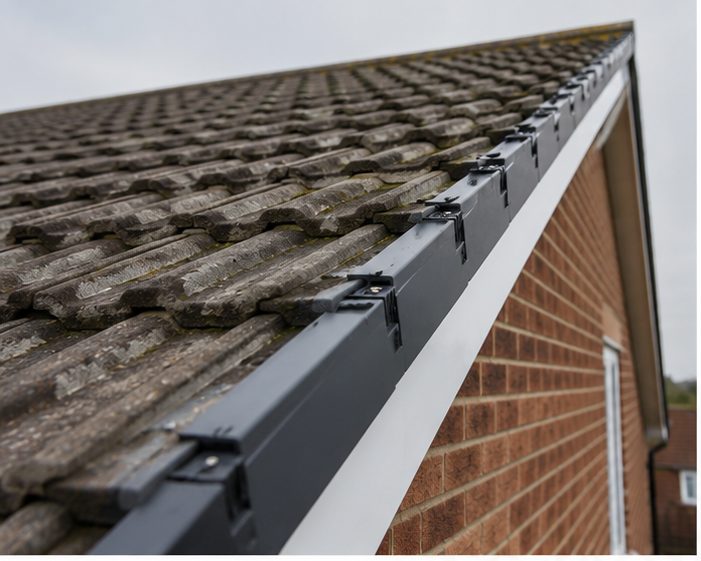
Start with the tile profile
Dry verge units are made to suit particular tile shapes, and the concrete tiles on estate roofs come in several. The unit has to sit correctly over the tile edge and fix to the rafter line. We check the profile on site and confirm that a compatible system exists before offering it. A near match is not good enough.
Porches, conservatories and short runs of verge on small gables all need measuring, since the unit length and end pieces vary with each gable. We take the measurements on site, so nothing is ordered on a guess and nothing arrives that does not fit.
Look at what the verge is doing now
Mortar on paths or drives under a gable is a typical first sign of failure. From the ground, look for cracks, gaps, loose edge tiles and staining under the verge. Also look inside the loft at the gable end for damp. If water has already been getting in at the edge, the timbers under it need checking as well.
- Mortar crumbs on the path or drive
- Edge tiles that look loose or uneven
- Visible cracks along the verge line
- Damp marks on the gable wall inside the loft
Check the rest of the roof
A dry verge is not a cure for a roof that is failing elsewhere. If the tiles are breaking up or the felt has gone, putting new edge units on top fixes one detail and leaves the real fault. We look at the whole slope first and tell you if the roof needs more than the edge.
On newer or recently re-roofed slopes, the verge can often be done on its own, without touching the main covering. We will tell you which case your roof falls into once we have seen both the edge and the slopes either side of it.
How it should be fixed
The units should be fixed mechanically in line with the tile maker's guidance, with proper cover to the edge and the correct cap or end pieces. Ask how the old mortar will be removed, what happens to the edge tiles and whether the work needs access equipment. Any work that may need planning or Building Regulations checks, we advise before work starts.
Questions for any installer
Ask which system and which tile it suits, how many fixings go into each unit, and whether they will show you the maker's fixing instructions. Ask what the verge will look like finished, including colour. A clear answer to each is a good sign. Vague answers about a one-size-fits-all product are not.
Frequently Asked Questions
Will a dry verge fit any tile?
No. The units are designed for certain tile profiles, and compatibility depends on the exact tile. We check this on site, and if no suitable system exists we will say so and suggest the best alternative.
Does a dry verge need maintenance?
Very little. With no mortar to crack and fall out, there is nothing to repoint. An occasional look from the ground for shifted pieces after a storm is enough, and anything wrong is for us to check.
Can a dry verge be fitted to an old roof?
Often, provided the tiles and timbers at the edge are sound. We check the verge area and the roof beneath. If the roof is wearing out generally, a re-roof with dry verge fitted at the same time is the better route.
Talk to our team about dry verge systems in Bradley Stoke
Every roof is different — the fastest way to get an accurate answer is a quick chat with our team.