
A leak is a symptom, and the stain on your ceiling is seldom directly below the fault. Here is the order we work in when we trace a leaking roof, from the loft outwards.
When water gets in, the first job is finding where it enters, which is often a different place from where it shows. On the concrete tiled homes common in Bradley Stoke, the culprit is frequently a small detail at an edge or junction rather than the main roof slope. We work methodically so we repair the cause and not just the stain.
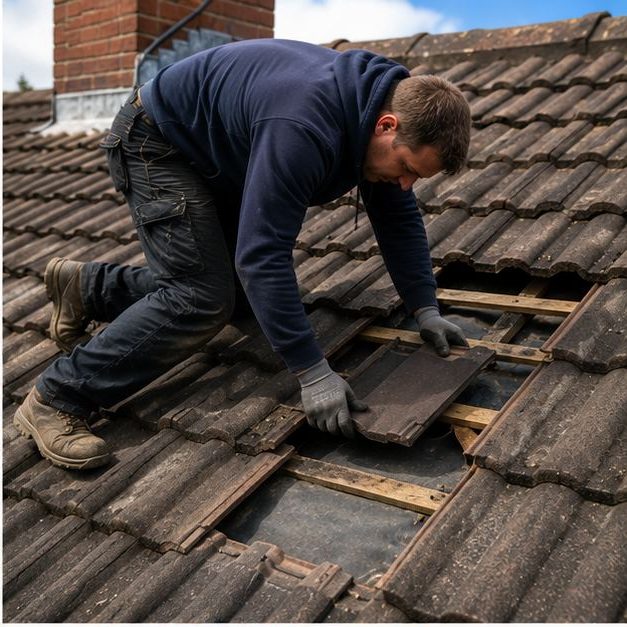
Starting inside, where the water shows
We begin with the damp patch and the room around it, then go into the loft. Staining, wet insulation and damp timbers show the water's path. Because it runs along rafters and underlay before dripping, we follow the marks upwards and sideways until we find the highest point where the timber is wet.
We also ask when the leak appears, whether in driving rain, after a long wet spell or only with wind from one side. That detail narrows down which slope and which junction to examine first, and saves guesswork once we are outside.
Reading the loft
Inside the roof space we look for daylight, rusted nail points, dark tide marks and disturbed insulation. A torch in a dim loft shows more than people expect. Condensation can mimic a leak, so we also look at ventilation and whether damp is spread evenly, which points to condensation, or concentrated, which points to a hole.
- Pinpoints of daylight through the covering
- Dark tide marks on timber and underlay
- Wet or flattened insulation under the leak
- Condensation spread across the whole roof space
Then the outside of the roof
With the loft clues in hand, we check the roof itself: slipped, cracked or missing tiles, the ridge and hips, and the line where the roof meets a wall or chimney. Those junctions rely on lead or sealant, and they fail more often than the tiles themselves. We note everything we find, not just the first likely cause.
Edges, gutters and extras
Estates like those here have short verges, porches and conservatories, and each adds joins where water can get past. We check the verge edges, the gutter line, valleys and the roof of any porch or conservatory abutting the house. A blocked or overflowing gutter can push water up behind the eaves.
What you should expect to be told
After the inspection you should get a clear explanation of where the water is getting in, what needs doing now, and what can wait. Be wary of anyone who offers a diagnosis without having been in the loft. If any work may need planning or Building Regulations checks, we advise before work starts.
Frequently Asked Questions
Can a leak be fixed without opening up the ceiling?
Often, yes. The repair is made on the roof where the water enters, not at the stain. The ceiling is only dealt with afterwards if it has been damaged, and it may well dry out once the source is sorted.
Why does my roof only leak in certain weather?
Wind-driven rain pushes water sideways under tiles and past weak flashings, so a roof may stay dry for weeks and then leak in one storm. That pattern is useful to us, because it narrows down which side and which detail to look at.
What can I check before you come?
From inside, look at the loft for damp patches or daylight, and note when the leak appears. From the ground, look for slipped tiles or overflowing gutters. Do not go up on the roof or a ladder to look. Leave that to us.
Talk to our team about roof repairs in Bradley Stoke
Every roof is different — the fastest way to get an accurate answer is a quick chat with our team.