
Crumbs of mortar on the path are the first sign that a verge is losing its grip. Repointing repeats the cycle, so it helps to understand why wet mortar keeps failing on an exposed gable.
The verge is the edge of the roof at a gable end, and on a traditional roof it is held by a strip of wet mortar. On exposed ground like the Cotswold edge, that strip takes constant punishment. When pieces start landing on the drive or path, the bedding has loosened and the tiles beneath it are next.
What the mortar is doing
Along the verge, mortar bedding holds the edge tiles down and fills the gap between tile and gable wall. It is rigid, while the roof around it is not. Every gust, every frost and every season of expansion and contraction asks the mortar to cope with movement it was never built to absorb.
On a gable that faces the prevailing weather, the edge sees the strongest wind and the most driving rain, so it is usually the first part of the roof to show wear and the first place we look. Looking at it from the drive often tells us a good deal before we go near the loft.
Why it cracks and drops
Rain soaks in, freezes and opens hairline cracks. Wind then pulls at the exposed edge, and the bond between mortar and tile gives way. Older repairs made with the wrong mix, or laid onto dirty surfaces, fail sooner. Once a section drops, the next piece loses its support and follows.
- Frost opening cracks after rainfall
- Wind pulling at the exposed gable edge
- Weak mixes or repairs laid onto dusty tiles
- Movement between roof structure and gable wall
Why repointing often does not last
Patching the same strip with fresh mortar treats the symptom. The cause, movement and weather at the edge, remains, so the new mortar cracks along the same lines. Where the verge has already been repaired more than once, that history tells us the method itself is the weakness, not the workmanship.
There is a further problem. Once mortar drops, rain and wind get under the edge tiles, loosen their fixings and make the next failure worse. What began as a bit of grit on the drive can turn into slipped verge tiles and damp in the gable end.
What a dry verge does differently
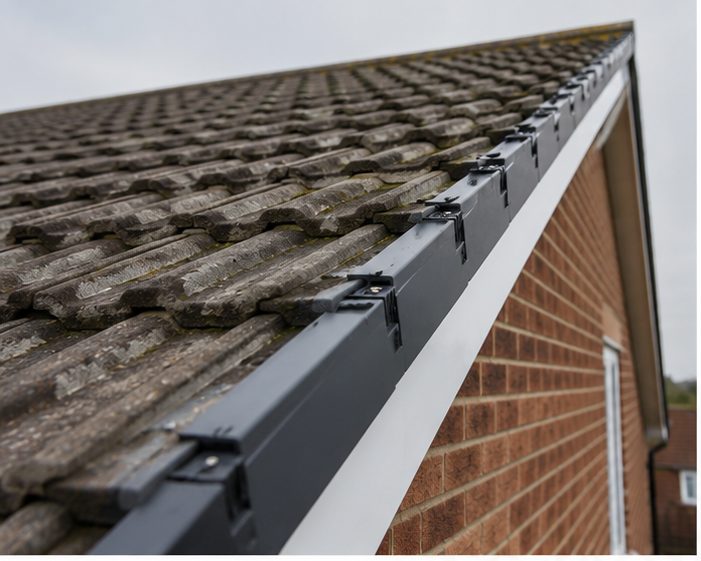
A dry verge uses mechanically fixed verge units and tile-end or cap pieces instead of wet mortar. There is nothing to crack or wash out, the edge resists wind lift, and weather, birds and insects stay out of the roof edge. It is fixed to the tile maker's guidance, and whether it suits your tile profile is checked on site.
Because the units are mechanically fixed, they hold the edge tiles down directly, which is the reverse of mortar that merely sits in the gap and relies on its bond to stay put. The result is an edge that does not depend on a bond that weather will eventually break.
What we check first
A dry verge is not a cure for a roof that is failing elsewhere, so we look at the whole slope, the ridge and the gable wall before suggesting it. If tiles are slipping across the roof, we say so. Where the problem is confined to the edge, a dry verge is often the lasting repair, and we agree it in writing first.
Frequently Asked Questions
Is loose mortar dangerous?
It can be. Lumps falling from height can hurt anyone passing below and loose verge tiles may follow. Keep the area clear and call us. Please do not knock it off or try to patch it from a ladder.
Can the existing verge simply be repointed again?
Sometimes, as a short-term measure. If the same stretch has failed before, repointing usually fails again. A dry verge removes the mortar entirely, so it is worth considering if the verge has needed repeated attention.
Will a dry verge fit my tiles?
That depends on the tile profile and how the roof is built. Verge units are made for particular profiles, so we check on site that the right system suits yours before recommending it.
Talk to our team about dry verge systems in Chipping Sodbury
Every roof is different — the fastest way to get an accurate answer is a quick chat with our team.