Where dry verge fits in Clifton
Clifton is mostly Georgian and Victorian terraces and villas, many with slate roofs, steep slopes and hipped or parapet-edged outlines, and often few exposed gable edges. Dry verge units are made for particular tile profiles, so in Clifton we always check the covering before suggesting one. That check comes first, and it takes only a short visit on site.
Where a house does have a gable, such as a villa end, a rear extension or a later infill roof, the steep slope puts extra load on the edge. If the mortar has failed, loose edge slates or tiles can slide, and crumbs of mortar on a path below are often the first sign. We secure the edge before more of it comes loose.
Because many buildings here are listed or in a conservation area, appearance counts. We discuss the look of the finished edge with you beforehand, and if a dry system will not suit the roof covering, we say so plainly and suggest a traditional detail instead. That conversation happens before anything is ordered, so the finished edge looks as you expect.
Verge work we handle in Clifton
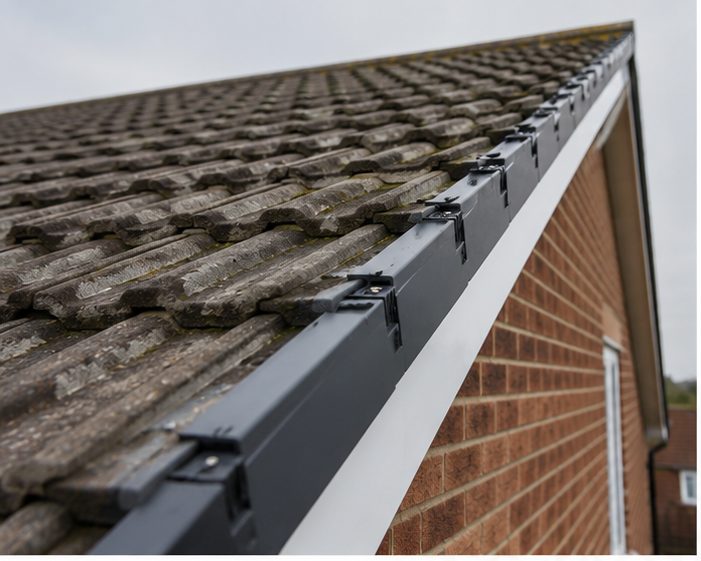
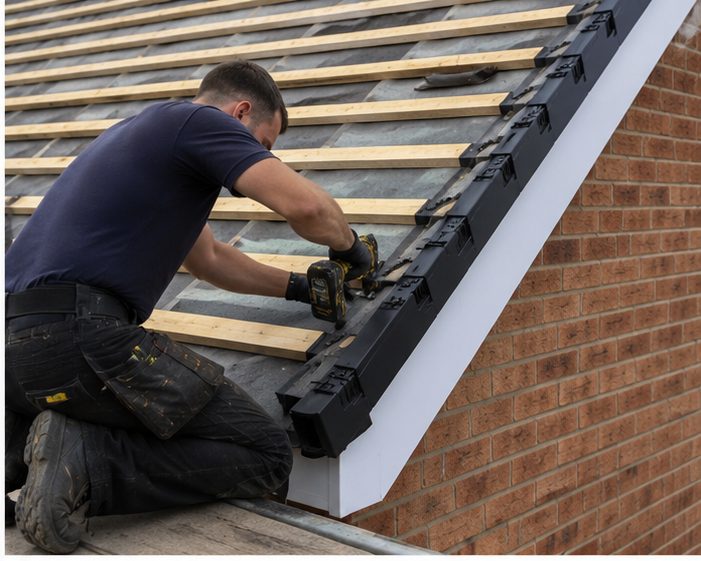
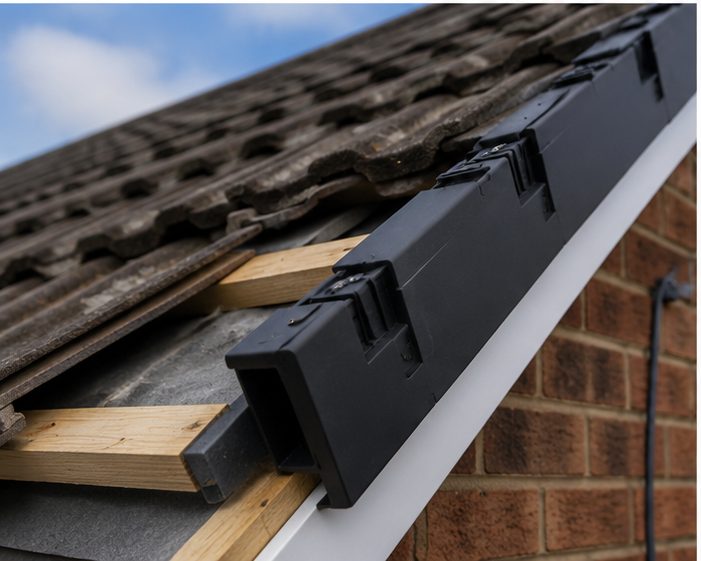
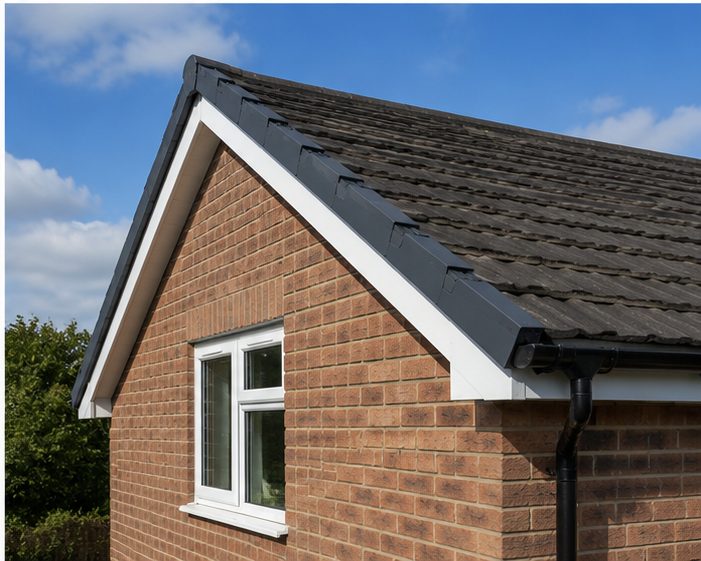
- Dry verge on re-roofs. New or re-laid roofs finished with fixed verge units, where the covering is compatible, so the edge relies on no mortar.
- Replacing failed mortar. Old, cracked verge mortar cleared away and the edge refinished with fixed units and cap pieces.
- Refixing loose edge tiles. Edge tiles or slates that have slipped are refixed or replaced, with battens and felt checked.
- Tile-end and cap pieces. Matching end and cap pieces finish the edge neatly where roof and gable meet.
- Compatibility assessment. We confirm on site whether a dry system suits your covering, and say so if it does not.
- Traditional verge alternatives. Where dry verge does not suit, a traditional mortar or slate-and-cement detail is advised and explained.
How we approach verge work in Clifton
First we identify the covering and its profile, because compatibility decides everything. Units are fixed to the tile maker's guidance where a dry system suits, and the old mortar and any loose edge pieces are removed beforehand. Nothing is ordered until the profile has been confirmed by eye on the actual roof, not from a catalogue.
We look at the rest of the slope too. Dry verge is not a cure for a roof failing elsewhere, so if the slates, felt or battens are tired, we say so before work starts and you can decide how far to go. Our advice stays practical, and the choice of how far to go is always yours.