
Mortar on your path means the roof edge is losing its bedding. Understanding why helps you avoid paying to repair the same thing again.
The verge is the edge of the roof at a gable, traditionally sealed with mortar. On the exposed roofs of Westbury-on-Trym, whether a villa, an inter-war semi or an older stone building, that mortar sits in the full force of the weather. When it keeps dropping, there is a reason, and patching may not touch it.
A tough position
Gable edges catch wind, rain and frost from several directions, and sun dries them hard. Mortar there has to stay bonded while the tiles, the wall and the timbers each move in their own way. Over time the bond tires, small cracks open and water starts to work its way in and break the bedding apart.
Exposed slopes make this worse. Gable ends on open ground face the weather head on, and inter-war semis and villas often have long verges with plenty of mortar to fail. Trees add shade and damp that keep the bedding wet for longer.
How failure builds
Water in a crack freezes, expands and widens it. Pieces loosen and drop, which exposes more material to the weather. Wind then rattles the edge tiles, loosening what remains, and birds and insects pull at the gaps. The cycle repeats and speeds up each winter, which is why one fallen piece usually means more are coming.
- Frost opening fine cracks in bedding
- Wind loosening edge tiles and bedding
- Roof and wall moving at slightly different rates
- Birds and insects picking at open gaps
Why repairs often fail
Fresh mortar sticks poorly to old, weak material, and it is just as rigid as the original. If the cause is movement and exposure, it cracks again for the same reasons. Repeated patching treats the symptom. We look at how much of the bedding is sound before agreeing that a local repair is worth doing.
If your mortar has been repaired more than once and keeps falling, that history tells us the method is not working for your roof. We take that into account and talk through the alternative rather than offer another patch that will not last.
The dry verge alternative
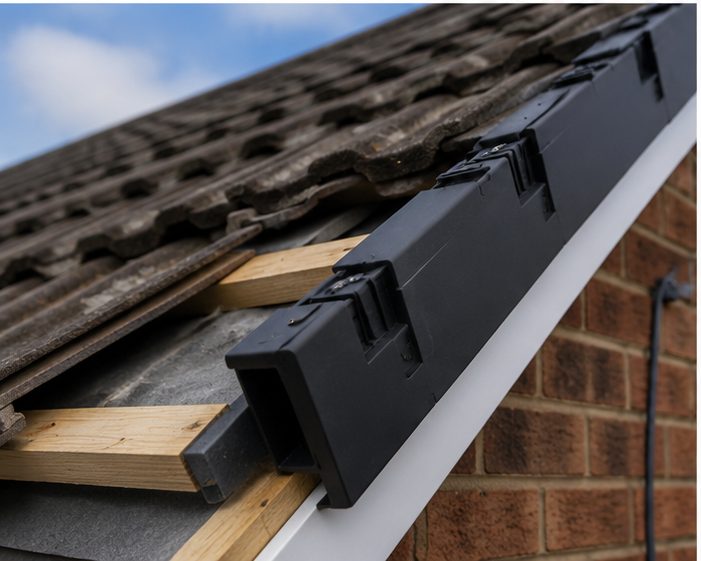
A dry verge removes wet mortar altogether. Mechanically fixed verge units and tile-end or cap pieces hold the edge down and close the gap, so there is nothing to crack or fall onto the path. It is fixed to the tile maker's guidance and suits repairs where mortar has failed, as well as new roofs and re-roofs.
What we check before recommending it
It will not cure a roof failing elsewhere, and compatibility depends on tile profile, which we check on site. We also look at the tiles, felt and wall edge beside the verge. If the roof as a whole is in poor shape, we say so before any verge work is agreed.
Frequently Asked Questions
Is it safe to leave falling mortar?
It is better not to. Falling pieces can hit people or damage paths, and the loosened bedding means edge tiles are less secure. Keep clear, and call us to look at it from the ground before it gets worse.
Why does mortar fall from only one side?
The side facing the prevailing weather takes more wind and rain, so its mortar breaks down faster. It is common for one gable to fail first. The other side usually follows, so it is worth looking at both.
Can I stick the mortar back myself?
Please don't. Reaching a verge means working at height on a roof edge, and a quick patch seldom lasts. Call us, and we will look from safe access and advise on a lasting fix.
Talk to our team about dry verge systems in Westbury-on-Trym
Every roof is different — the fastest way to get an accurate answer is a quick chat with our team.