
Water has to go somewhere. How well a flat roof slopes and drains is the main thing deciding whether the covering stays healthy.
A flat roof should never be flat, and the gentle slope built into it, the fall, steers water to an outlet. Westbury-on-Trym has mature trees all around, which drop leaves onto roofs and into gutters, so drainage matters even more here. When falls or outlets fail, the roof pays.
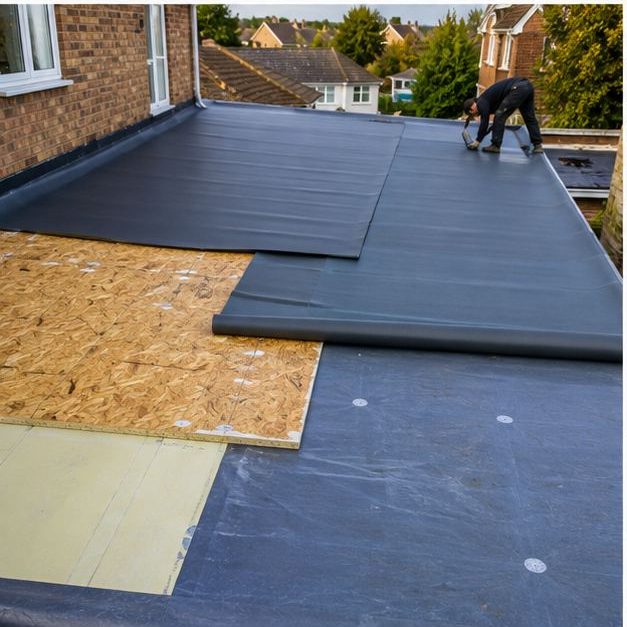
Falls: the hidden slope
The fall is a small gradient formed in the deck or insulation so water runs off towards a gutter or outlet. If the roof was built with too little fall, or the structure has settled, hollows hold water. A roof over a bay, porch or extension may have only a modest slope to start with, so small errors show quickly.
On older villas, flat sections over bays or rear additions were often built with modest slopes that have since flattened further. On inter-war semis, porches and garage tops tend to be small, so a single blocked outlet can affect the whole roof.
What standing water does
Water sitting on a covering adds weight, collects dirt, grows algae and works at joints and seams. Frost then widens weak spots. Over time the covering fails at the lowest points first, and water reaches the deck. That is how a sound-looking roof can turn into a soft one underneath.
- Water lingering for days after rain
- Dirt rings or tide marks showing the pond edge
- Algae or moss growing in hollows
- Joints opening where the water collects
Outlets, gutters and leaves
Outlets and gutters are the exit. Leaf litter and silt from trees close to the house block them, and then water backs up across the roof even if the fall is good. We clear and check outlets, make sure they are connected cleanly and test that edge trims throw water into the gutter.
Where trees overhang, we suggest checking outlets more often through autumn, since a single heavy leaf fall can block them in days. A simple leaf guard over an outlet is sometimes worth fitting, and we advise if it suits your roof.
Putting the flow right
Where ponding is minor and the covering is sound, clearing and sealing may be enough. Where it is severe, we look at tapered insulation to build a fall back in, or at repairing a dropped deck. Putting a new covering over a hollow without correcting it just repeats the problem.
Designing for exposed roofs
On windy, exposed sites, edges and trims need good fixing as well as good drainage, since wind can lift poorly held trims and let water in. When we advise on a replacement, we think about slope, outlets and edge details together, as one system, and we tell you why.
Frequently Asked Questions
How can I tell if my flat roof has poor falls?
Look from an upstairs window a day or two after rain. Water still standing, dirt rings or green growth in hollows suggest poor falls. Inside, check ceilings below for stains. We can then confirm the cause properly.
Do leaves from trees really matter that much?
Yes. They block outlets and hold moisture against the covering. In an area with mature trees, regular clearing is one of the easiest ways to protect a flat roof. We can do it as part of a visit.
Can a flat roof be given more fall afterwards?
Often, yes, using tapered insulation or by correcting the deck. The right answer depends on the condition of the existing roof and the available height at edges and doors. We check on site and explain the options.
Talk to our team about flat roofing in Westbury-on-Trym
Every roof is different — the fastest way to get an accurate answer is a quick chat with our team.