
A flat roof is never truly flat. A slight slope, called the fall, moves water to an outlet, and when it fails the roof suffers. This guide explains how falls and drainage work on Horfield extensions.
Horfield has many extensions, and plenty of them finish in a flat roof over a kitchen, a rear room or a garage. Water has to leave those roofs quickly, or it sits on the covering and works at every joint. That is the job of the fall and the outlet. If either is wrong, the roof will struggle however good the covering is.
What a fall actually is
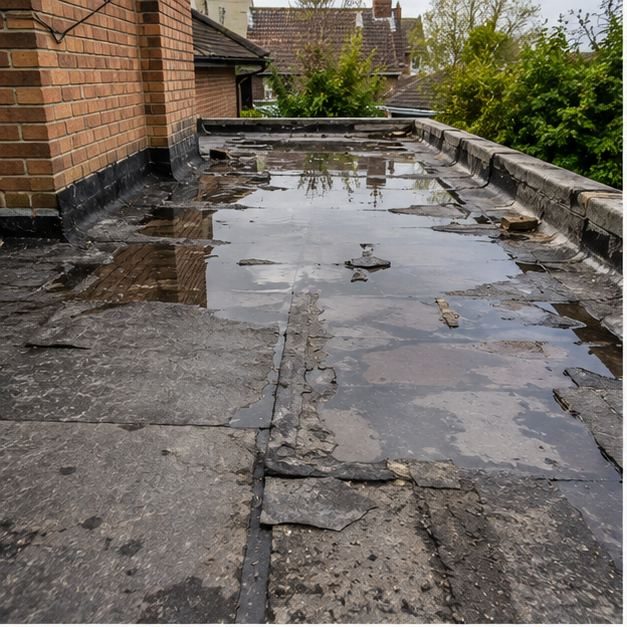
The fall is a gentle slope built into the deck or the insulation layer so that water runs towards a gutter or outlet. It is not visible from the ground, but on a wet day you can see the result: shine and standing water that lingers well after the rain has stopped.
If the fall is too slight, or the deck has sagged since it was laid, water settles in shallow pools. Those pools hold dirt, freeze in cold weather and keep the covering permanently wet, which is where cracks and failed joints often begin.
Where water goes next
Drainage is the second half of the picture. Some flat roofs shed into a gutter along one edge, others into an outlet that feeds a downpipe. A leaf-blocked outlet or a gutter that has pulled out of line stops water leaving and sends it back across the roof.
On extensions built against older terraces and semis, the roof often drains onto or alongside the main house. We check where the water ends up as well as how it gets there, because a wet wall or a stained ceiling can come from a drainage fault rather than the covering.
What we look for on site
We look at the surface first: where the water lies, where the covering has stained or lifted and how the edges and upstands are holding. Then we check outlets, gutters and downpipes for blockages, cracks and poor alignment. Photographs and notes help us show you exactly what we found.
Where we can, we also check the ceiling below and the deck for soft or rotten timber. A roof that has been ponding for a long time often hides damage in the structure. If the deck feels soft, we say so plainly, because that changes the repair.
- Standing water long after rain
- Soft or spongy areas underfoot or visible sag
- Stained ceilings below the roof
- Blocked or slow outlets and gutters
- Cracks or lifting at edges and upstands
Correcting the problem
Sometimes a clear outlet and a repaired section are enough. Where the fall itself is poor, the answer is to build it back with tapered insulation or a re-laid deck, then fit a new covering over it. Adding more covering on top of ponding without correcting the fall just hides the issue.
We explain which route applies and why, and what each means for the roof. Materials such as single-ply rubber, fibreglass or felt systems all work well when laid to proper falls. We would rather you understand the choice than simply accept a price on trust.
Keeping it working
Once water is leaving properly, upkeep is mostly about keeping outlets and gutters clear, particularly where trees overhang or leaves collect. Do not climb up to clear them; ask us to check when you notice slow drainage from the ground. A quick look from a window or the garden after rain tells you a lot.
A flat roof that sheds water cleanly puts far less strain on its joints and edges. Larger rebuilds may need planning or Building Regulations checks — we advise before work starts. That is why we put drainage ahead of the covering when we plan a job.
Frequently Asked Questions
Is a small amount of standing water normal?
A little damp after rain that dries soon afterwards is common. Water that lingers long after the rain stops, or leaves a permanent tide mark, suggests the fall or drainage is not doing its job and is worth having checked.
Can ponding be fixed without replacing the roof?
Sometimes. If the covering is sound and the problem is a blocked outlet or a localised dip, repair may be enough. If the fall itself is wrong, we usually need to correct it as part of a new covering. We will explain which applies.
Who should clear the outlets?
Keep from the ground what you can see, and tell us if water is slow to drain. Going onto a flat roof can damage the covering and is not safe for everyone. We can clear and check outlets as part of an inspection.
Talk to our team about flat roofing in Horfield
Every roof is different — the fastest way to get an accurate answer is a quick chat with our team.