
Blisters, cracks and splits tell you what the flat roof is going through. This guide explains the causes, what each sign means, and when a repair is enough.
A flat roof covering is tougher than it looks, but it is always being pushed around by sun, rain, frost and movement. On Bedminster's rear extensions, lean-tos and bay tops, small faults often start at the edges and joints, then spread. Understanding what causes a blister, crack or split makes it easier to judge what needs fixing.
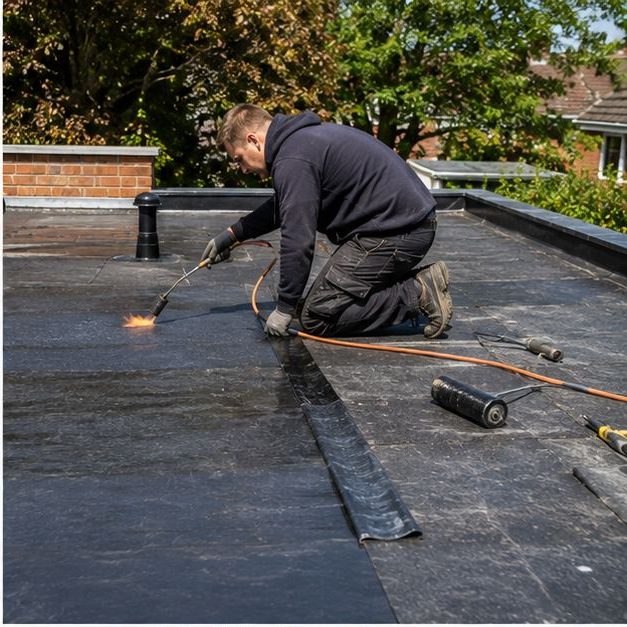
Blisters and trapped moisture
A blister is a bubble in the covering, usually caused by moisture or air trapped underneath. When the sun warms the roof, the trapped vapour expands and pushes the surface up. Small blisters may be harmless for a time, but they weaken the covering and can split. We open one to see whether water has got in.
Cracks from age and movement
Coverings stiffen with age and weather. Sun dries them out, frost makes them brittle, and a roof that has moved can crack along joints or at the edges. Extensions built onto older houses often move slightly against the main wall, which stresses the junction.
Cracks show as fine lines, crazing or open gaps. The surface might still be keeping water out, but it will not do so for ever. Cracks show as fine lines, crazing or open gaps. The surface might still be keeping water out, but it will not do so for ever, and the next cold snap or hot spell can turn a hairline into a proper opening at a joint.
Splits and failed joints
A split is a crack that has gone through the covering. Common places are where sheets overlap, along upstands where the roof meets a wall, and at corners. Poor workmanship, foot traffic and poor drainage all play a part. A joint that opens lets water in, then freezing widens the gap. These are the faults we repair most often.
- Overlaps and laps that have lifted
- Upstands pulling away from the wall
- Corners and edge trims with open gaps
- Fixings and penetrations that have worked loose
What causes damage underneath
Water that gets in does not just stain a ceiling. It soaks insulation, softens the deck and rots timber. Ponding, blocked outlets and poor falls make everything worse. If we lift a blister or split and find wet or soft material, a surface patch will not be enough and we say so.
Repair or replace
Where the covering is mostly sound and the deck is dry, we can repair blisters, cracks and splits. Where they are widespread, or the deck is damaged, replacement is the honest answer. Materials are chosen to suit the roof, from single-ply rubber to fibreglass or felt systems, and we explain why in plain language.
Frequently Asked Questions
Is a small blister a problem?
It may not leak yet, but it is a weak spot. Sun, foot traffic or frost can burst it. We open or check it and tell you whether it can be left or should be repaired. Sun and trapped moisture are the usual reasons it has formed in the first place.
Why do cracks appear near the wall?
The roof and the house move differently, so the junction is under constant strain. Upstands and flashings at walls are common failure points, particularly on extensions and lean-tos. A tidy upstand detail with a proper flashing helps, and we look at it on every visit.
Can splits be patched?
Often, if the surrounding covering and the deck are sound. A patch over a wet or rotten area just hides the fault. We check what is underneath before deciding. Sometimes it needs a larger section replaced, and we tell you plainly when that is the case.
Talk to our team about flat roofing in Bedminster
Every roof is different — the fastest way to get an accurate answer is a quick chat with our team.