
Fitting UPVC over old timber sounds quick and easy, but it can hide problems. This guide covers when it can work, when it should not be done, and why we remove old boards.
It is a fair question, particularly on a long terrace where scaffold is awkward and the old boards still look reasonable. In some situations covering sound timber is possible, but it is rarely the best option. In Bedminster, where Victorian and Edwardian eaves have often been painted for generations, the condition behind the board matters most.
The short answer
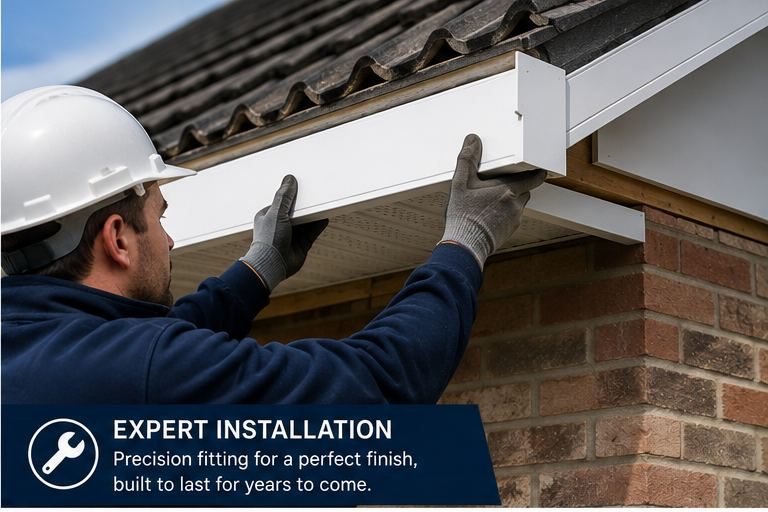
Overboarding means fixing UPVC straight over the existing timber. It can work where the old board is sound, flat and fixed solidly. But it adds thickness, hides the wood from view and leaves any rot or damp inside. That is why we are cautious, and why we normally recommend taking the old boards off.
Problems with covering old timber
Damp timber under UPVC stays damp, because it cannot dry out. Rot can continue unseen and weaken the rafter ends. Insects and moisture also hide behind covered boards. The gutter fixings can also loosen if they are held by decayed wood.
Overboarding also makes it harder to ventilate the roof space, as vents need to be cut through the old soffit, not added to it properly. Overboarding also makes it harder to ventilate the roof space, as vents need to be cut through the old soffit rather than being added to a clean eaves detail. Fitting vents properly means seeing what is behind the board first.
- Rot carries on hidden behind new boards
- Gutters fixed to weak timber can sag
- Ventilation is harder to provide
- Birds and insects can still get in behind
Why we remove the old boards
Taking the old fascia and soffit off lets us see the rafter ends and the eaves. We can repair damaged timber, check the felt and add vented soffits or vent strips so the roof space breathes. New boards are then fixed to sound wood. On older homes we also check what existing soffit boards are made of before disturbing them.
Where overboarding might be considered
Occasionally, where the timber is dry, straight and solid, and access is very limited, covering it may be reasonable. We would examine it carefully first and explain the trade-offs. It is not a shortcut, and we say so if a full replacement is the better job.
Access on Bedminster terraces
Tight rear access can make scaffold and removal harder, but it is not a good reason to compromise the work. We plan how to reach the back eaves, where to stand the scaffold and how to carry materials through. Doing it right once is preferable to repeating it later. The work may need planning or Building Regulations checks — we advise before work starts.
Frequently Asked Questions
Is overboarding quicker?
It can be, but quicker is not the same as better. If the timber beneath is wet or rotten, you may be covering a problem that will return. We look first and then advise. A little more time at the start usually saves a repeat job later.
What if the old soffit looks fine?
Appearances can mislead, especially on older houses. We check the board and what is behind it before deciding. Old soffit materials are handled carefully, and we explain what we find. Old boards are only removed once we know what they are made of and how to handle them.
Will UPVC over timber look the same as a full replacement?
From the ground it may look similar, but the boards sit proud and the detail at corners and gutters can be less neat. A full replacement gives a cleaner finish and a sounder structure. It also lets us fit vents and check the rafter ends properly, which overboarding cannot do.
Talk to our team about UPVC fascias and soffits in Bedminster
Every roof is different — the fastest way to get an accurate answer is a quick chat with our team.