
Blisters, cracks and splits are signs your flat roof covering is under strain. Here is what causes each in Hotwells, what we look for, and when repair is enough.
A flat roof covering has a tough job. It keeps water out, flexes with the building and takes sun, frost and wind on exposed ground. In Hotwells, flat sections sit on modern flats, rear additions and behind parapets, often in open positions near the gorge. When the surface blisters, cracks or splits, there is always a reason.
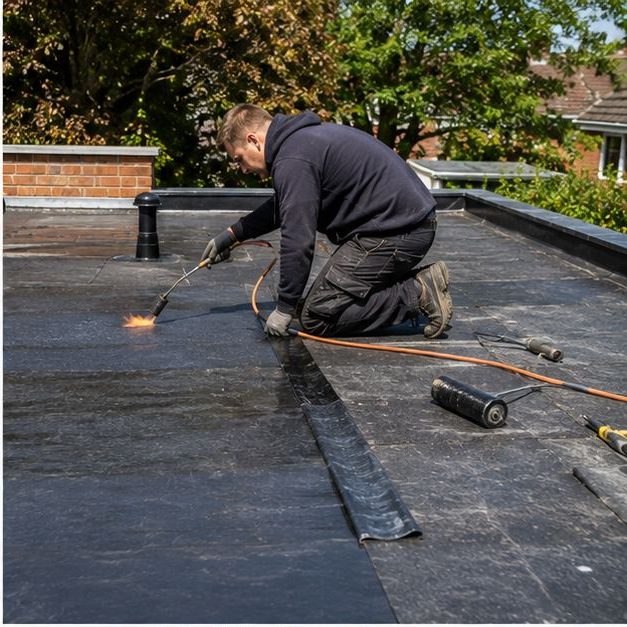
Blisters: trapped moisture and air
A blister forms when moisture or air is trapped beneath the covering and expands in warm weather. It might begin as a soft bump no bigger than a hand, then grow. Once the surface is stretched thin it is more likely to split. Blisters often show that water has already got under the covering, which means the deck and insulation beneath may be damp. We press around them to find out how far it goes.
Cracks: age, sun and movement
Cracking is common in older coverings that have dried out and lost flexibility. Sunlight and temperature swings make the surface expand and shrink until fine cracks open. Exposed positions take more of this than sheltered ones. Building movement adds to it. Where a flat roof joins a wall or a parapet, the two parts move at different rates and put strain on the junction.
- Surface dried out and hardened with age
- Daily heat and cold cycles
- Movement at junctions and upstands
- Foot traffic on brittle material
- Debris or standing water sitting on the surface
Splits: when cracks open up
Splits are cracks that have opened through the covering. They are most common along joints, at upstands and across areas that flex, and they let water straight in. A split may only leak in driving rain, which makes it harder to trace. Wind can also lift edges and open joints, particularly on roofs high up and open to the gorge. That is why edge trims and fixings matter as much as the middle of the roof.
What we check
We examine the whole surface, noting blisters, cracks, splits and ponding. We check the upstands, the edges and the outlets, and press on the deck to feel for softness. If a ceiling is stained below, we look for how the water travelled. Access can be a challenge in Hotwells, with flat roofs hidden behind parapets or high on terraces. We plan access carefully so the inspection is done safely.
Repair or replace
Where the covering is basically sound and the fault is local, we cut out the defect and repair it with compatible material. This works well for a single split, a failed joint or a lifted upstand. Where blisters and cracks are widespread, or the deck is damp, repair after repair is wasteful. We then explain replacement and the options, such as single-ply rubber, fibreglass or felt systems. Larger work may need planning or Building Regulations checks — we advise before work starts.
Frequently Asked Questions
Can a blister just be cut open and sealed?
Sometimes a small blister can be repaired, but cutting it without finding the cause can let in more water. We check how much moisture is trapped and whether the deck is sound before deciding on a repair.
Do all cracks mean a leak?
Not immediately. Fine surface cracks may not go through the covering, but they show it is ageing. Over time they widen and let water reach the deck, so they are worth having checked before they become splits.
Is a split always worth repairing?
If the rest of the roof is sound, yes. A neat repair at a split can restore it. If many splits appear, or the covering is brittle all over, we explain why replacing it makes better sense.
Talk to our team about flat roofing in Hotwells
Every roof is different — the fastest way to get an accurate answer is a quick chat with our team.