
Fitting new UPVC over old timber sounds simple, but it only works in certain cases. Here is when it can be done in Hotwells and when the old boards need to come off.
Covering old fascia boards with UPVC is a quicker route, and sometimes it is the right one. But it can also trap rot behind new boards and hide problems at the eaves. On Hotwells terraces, with Georgian and Victorian rooflines and awkward access, we decide case by case. Here is how we make that decision.
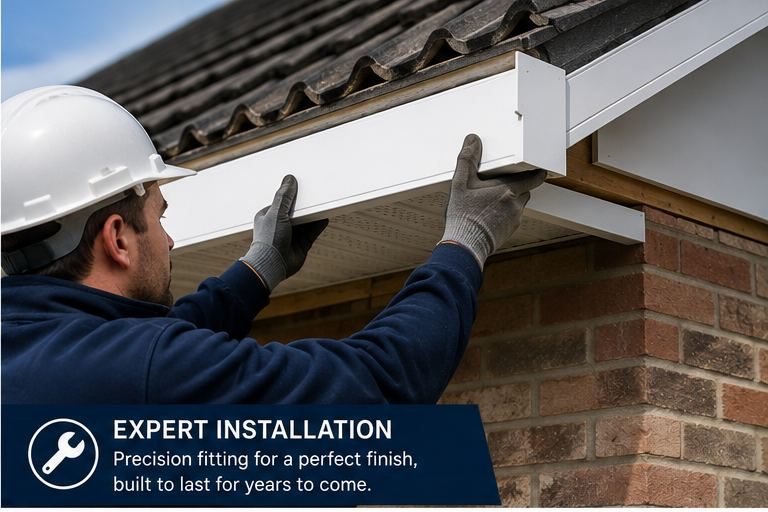
When capping can work
If the existing timber is sound, firm all the way through and well fixed, a UPVC cover can go over it. The old board gives a straight base and the new face does the weather protection. It suits situations where the timber is basically healthy and only the paint has failed. Even then, we check the rafter ends and gutters before agreeing. A good-looking board does not always mean a sound eaves.
A lot depends on how the gutters are held. If brackets are screwed into rotten wood, they will pull away again whatever covers the board, so we test the fixings as well as the face. Fixings that look firm from the front can be weak behind the board, and we would rather find that out now.
When the old boards must come off
If the timber is soft, split or flaking, covering it only hides the problem. Rot continues behind the new face and spreads to rafter ends and wall plates. In that case we remove the old boards, deal with any damage and fit new ones on sound fixings. The same applies where soffits are sagging, where ventilation is blocked, or where gutters are leaking into the eaves.
- Soft, crumbling or spongy timber
- Boards bowed or pulling off fixings
- Rafter ends stained or damp
- Blocked or missing roof space ventilation
- Gutters leaking behind the board
The old Hotwells roofline
Georgian and Victorian terraces often have deep eaves, parapet details or decorative timber that suit careful, individual treatment. A one-size-fits-all cover may not sit well against the house, and we look at how the new boards will meet the existing details. On older houses we check what the existing soffit boards are made of before disturbing them. It is a routine check, and we tell you calmly what we find.
Access on steep streets
Reaching eaves on a tall terrace or a sloping street means planning. Scaffolding or towers have to sit safely on uneven ground and keep pavements clear. We talk through that before work starts so there are no surprises. Good access also means we can see the eaves properly. That is how we decide honestly between capping and full replacement.
Where pavements are narrow, we also think about deliveries and how long equipment sits on the street, and we agree this with you in advance. Narrow pavements and steps mean we think about deliveries, where waste is stacked and how long equipment stays out, and we agree all of that with you first.
What to ask any roofer
Ask whether the old timber has been checked for rot, whether rafter ends will be inspected and how the roof space will stay ventilated. Ask for the plan in writing. If a quote only covers fitting over what is there, ask what happens if a board turns out to be rotten. Work like this may need planning or Building Regulations checks — we advise before work starts.
Frequently Asked Questions
Is capping quicker than replacing the boards?
It can be quicker, but only if the timber is truly sound. If rot is hidden, the saving disappears when the problem returns. We recommend whichever route gives a dependable result, and tell you why. We explain the reasoning before work starts.
Will UPVC over old timber still need painting?
The new UPVC face does not need painting and is cleaned instead, which makes it very low maintenance. The timber behind should stay dry, which is why we check it first. We explain the reasoning before work starts.
Does venting still matter if I cap?
Yes. The roof space needs air movement to stay dry. If the existing soffit has no ventilation, we add vents or a vented section. Blocking airflow can lead to condensation in the loft. We explain the reasoning before work starts.
Talk to our team about UPVC fascias and soffits in Hotwells
Every roof is different — the fastest way to get an accurate answer is a quick chat with our team.