
Water has to leave a flat roof, and the fall and the outlets decide how well it does. This guide explains how that works in Hotwells, where parapets and tight access complicate drainage.
A flat roof should shed water quickly towards an outlet or gutter. If it does not, water lingers, and everything that follows is harder on the covering. In Hotwells, flat roofs on modern flats, rear additions and behind parapets can have drainage tucked away where it is easy to forget. Here is what matters and what we do about it.
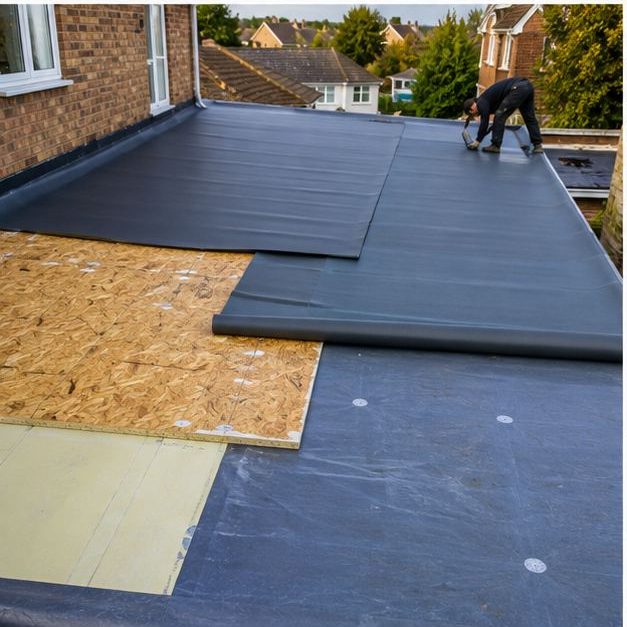
The fall: a gentle slope
A fall is a slight slope built into the roof so that water runs to the outlet. It cannot be seen from below, but you can see it in the way water sits afterwards. Puddles that stay long after the rain mean the fall is not working. Decks sag over time, and insulation boards may be laid without enough slope in the first place. Either way, the covering above sits in water and wears faster.
Outlets, gutters and parapets
Where the roof sits behind a parapet, water drains through an outlet in the wall or a concealed gutter. These details are small and easy to block with leaves, grit or moss, and when they block, water backs up and finds its way into the building. Parapet gutters on terraces need the same attention. A blocked parapet gutter can overflow into the wall, causing damp inside that looks nothing like a roof leak.
- Leaf and grit blockages at outlets
- Gutters sagging or out of line
- Parapet outlets partly choked at the outlet
- Downpipes cracked or disconnected at the outlet
- Water tracking down internal walls
Why it matters
Standing water adds weight, speeds up wear and freezes in cold weather. It encourages algae and debris, and it sits against joints and upstands, where leaks begin. A roof that drains well is simply under less stress. If water cannot escape, it will find another route. That may be a joint, a wall or a ceiling several rooms away.
What we check and correct
We look at where the water lies, check outlets and downpipes, and follow the run of any hidden gutters. We assess the deck for sag or softness. Safe access is planned first, particularly on higher terraces and blocks of flats. Where the fall is the problem, we build it back with tapered insulation or by rebuilding the deck, then re-cover. Where the outlet is the problem, we clear, repair or replace it.
Looking after drainage
Keep an eye on outlets from the ground and inside, and tell us if you see staining or overflow after rain. Do not go onto the roof to clear them yourself. Our job is to check that drainage works as part of any flat roof inspection. Larger changes may need planning or Building Regulations checks — we advise before work starts.
Frequently Asked Questions
Why does my parapet gutter overflow?
Most often it is blocked with leaves or debris, or the outlet is too small or partly blocked. Overflow can run down the wall inside. We clear it, check the fall and look at the lead or lining for damage.
Can drainage be improved without a new roof?
Sometimes. Clearing and repairing outlets and gutters, or adding an extra outlet where suitable, can help. If the fall itself is wrong, we usually need to correct it as part of re-covering. We explain what we find.
Is standing water after rain always a problem?
A little that dries soon after is normal. Water that stays for a long time is a sign that the fall or the drainage is at fault and worth looking into before it damages the covering.
Talk to our team about flat roofing in Hotwells
Every roof is different — the fastest way to get an accurate answer is a quick chat with our team.