
Blisters, cracks and splits are signs that a flat roof covering is under strain. Each points to a different cause, and knowing which one decides whether a repair will do or the roof needs replacing.
A flat roof rarely fails without warning. Blisters, cracks and splits show up first, often on extensions, garages and porches across Keynsham, from older houses to the estates built later. They look alike from the ground, but the causes differ, and that affects what is worth doing about them.
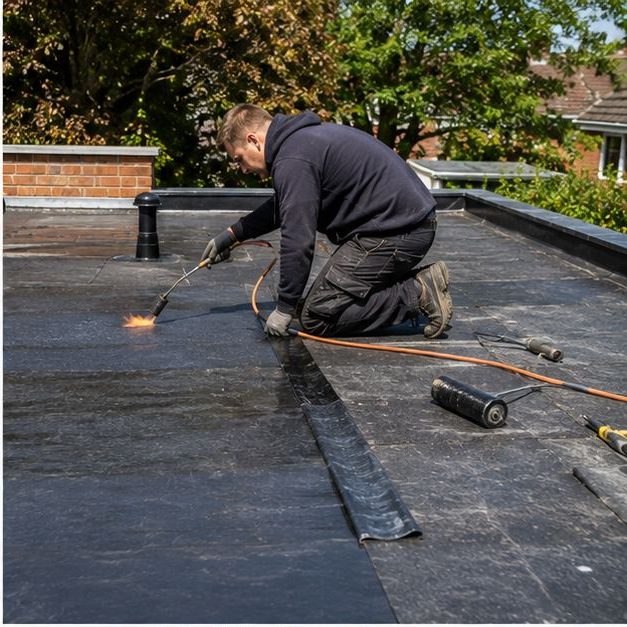
Blisters: trapped moisture
A blister is a bubble where water or air has become trapped under the covering. Sun warms it, the trapped moisture expands, and the covering lifts. It can come from damp in the deck at the time of laying or from a small breach letting water in. Left alone, a blister can burst and open the surface. On extensions, garages and dormers, the blister often sits over a board joint or fixing, where the deck has held a little moisture from the start.
Cracks: age and movement
Coverings stiffen with weather and sun, then crack as the roof expands and contracts. Cracks often appear along the line of boards, at corners and around upstands, where the movement is greatest. A crack on a surface that is otherwise sound can often be repaired, but a roof covered in them is telling you something. Different covering systems crack in different ways, so we look at what the roof is made of before deciding what the cracks mean.
Splits and failed joints
Splits are more serious than surface cracks because they go right through the covering. They tend to open at laps, seams and corners, or where the covering was pulled tight over an edge or upstand and has been under tension ever since.
Poor workmanship in the original job, a deck that has shifted, or a covering struck by branches or walked on can all open a joint. Blocked outlets can add to the load. Even a well laid roof can open at a joint once movement and weather have worked on it for long enough.
- Joints and seams that were not fully bonded or sealed
- Edges and upstands where the covering is under tension
- Movement in the deck or the wall it meets
- Wear from standing water and weather
Ponding and poor falls make it worse
Where water sits, the covering ages faster and the damp finds any weak point. A roof with poor falls can show blisters and splits in the same places each time. Blocked outlets and gutters add to the problem. We check where the water collects before deciding whether the cause is the covering or the shape of the roof.
Repair or replace
Where the damage is local and the deck beneath is firm, a repair is often a sensible answer. Where the fault is widespread, or the deck has gone soft, patching just buys a short delay. We explain what we find, show you photographs where we can, and tell you plainly which route makes sense.
Frequently Asked Questions
Is a blister always a leak?
Not yet, but it is a weak spot. The covering is lifted and thin, and it can split in the next hot spell or hard frost. Having it looked at before it opens is better in damage terms than waiting.
Can a split be patched?
Often, if the surrounding covering is sound and the deck is dry and firm. The patch must be bonded or sealed properly and matched to the existing system. If splits keep returning, the roof is usually past patching.
Why does the same spot keep failing?
Repeat failures at one place usually point to a cause that has not been dealt with, such as poor falls, a rotten deck, tension at an upstand or a blocked outlet. A repair needs to address that cause, not just the surface.
Talk to our team about flat roofing in Keynsham
Every roof is different — the fastest way to get an accurate answer is a quick chat with our team.