
Fitting UPVC over existing timber is sometimes possible, but only when the boards underneath are sound. If the wood is rotten, covering it hides the problem and lets it spread.
It is a fair question, since covering old boards looks quicker and tidier than taking everything off. In Keynsham, where many homes have timber fascias that have been painted for generations, the answer depends on the condition of the wood beneath and how the roof edge is built. Looks alone do not settle it.
When covering can work
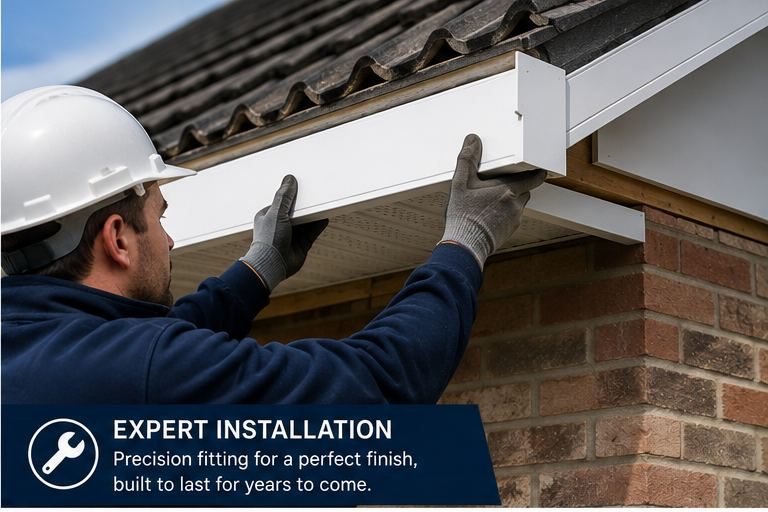
If the existing fascia is sound, straight and well fixed, with no soft patches, a UPVC cover can sit over it neatly. This is often called capping. It suits boards that are dry and solid, where the only complaint is flaking paint and the upkeep that comes with it. It also works best where the new cover can be fixed to a face that is flat and firm, so a board that has bowed or twisted is a poor starting point.
When it should not be done
Where timber is soft, split or showing rot, covering it simply traps damp against the wood and the rot carries on out of sight. Rafter ends behind the board may be affected too. In that case the board has to come off, and the structure behind it needs checking before anything new goes on. We will say plainly if we think a cover would only be hiding a problem.
What we look at first
Before deciding, we look at the whole roof edge from the ground and, where it is safe, from a proper working platform. We are checking for the following, and we will show you what we find so the choice is yours. Each of these tells us whether a cover is sensible.
- Soft, crumbling or darkened wood on the fascia
- Gutter fixings that have loosened or pulled away
- Rafter ends and eaves behind the board
- Whether the soffit and its ventilation are in order
Why full replacement is often better
Replacing means removing the old boards and gutters, checking the rafter ends and eaves, and fitting new fascias and vented soffits so the roof space breathes. It costs more effort than capping, but you start from a clean, sound edge and the gutters go back properly. On older homes we also check what existing soffit boards are made of before disturbing them. Fixings are renewed rather than reused where we can.
Access and finish
Either route needs safe access, usually a scaffold or tower, because work at the eaves is not something to attempt from a ladder. UPVC is very low maintenance, only needing a wash rather than repainting, and it comes in white as well as darker and wood-effect finishes. We will tell you which option we think suits the house. Cleaning is the only upkeep most owners ever need to do.
Frequently Asked Questions
Will UPVC over old timber look the same as full replacement?
From the ground, usually yes. The difference is what is underneath. A capped board relies on the timber being sound, while a replaced one gives you new fixings and a clean check of the eaves behind.
Can painted timber be left as it is?
If it is sound it can, but it will need repainting from time to time to keep water out. If the paint has failed and the wood has softened, that is the point at which replacement tends to make more sense.
Do the gutters have to come off?
For replacement, yes, because the gutters hang from the fascia. They are refitted or replaced as part of the job. For capping, they often need to come off as well so the cover can be fitted neatly behind them.
Talk to our team about UPVC fascias and soffits in Keynsham
Every roof is different — the fastest way to get an accurate answer is a quick chat with our team.