
Replacing a garage flat roof is a straightforward job when it is planned well. Here is what happens from the first look to the finished edges, and what can change the plan on the day.
Garages in Keynsham range from older brick-built ones beside Victorian and Edwardian houses to the flat-roofed garages found on inter-war and later estates. The roof is usually a simple rectangle, which helps, but the work still follows a sensible order. It is the deck underneath, not the covering, that decides most of the detail.
The first look
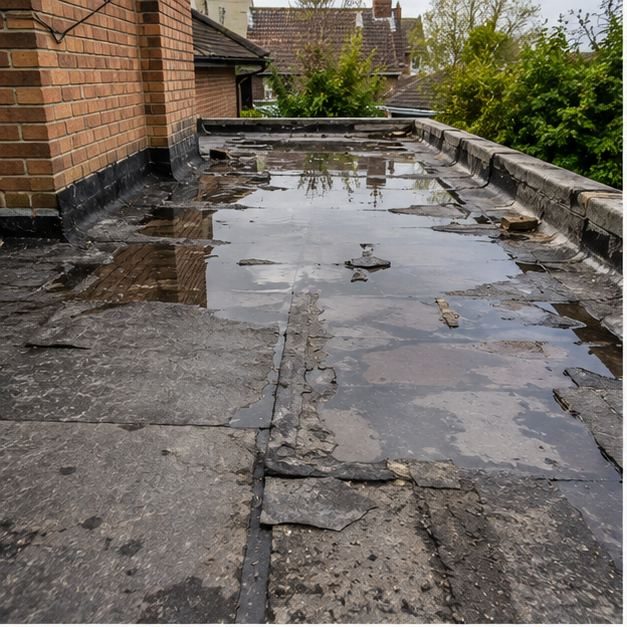
We start by seeing how the roof sits now: where water ponds, whether the covering is split or blistered, and how the edges and walls are finished. From inside the garage we look for stains and daylight. That tells us whether the whole roof has reached the end or a repair would still do. Garages often get less attention than the house, so it is common to find a roof that has been patched more than once, and that history helps us read what has been going wrong.
Stripping back to the deck
The old covering comes off down to the boards beneath. Any layers of old felt are removed rather than built over. This is when we see the true condition of the deck, because a roof that looks sound on top can hide soft or rotten boards where water has sat for a long time. Anything stored against the walls or under the lowest point of the roof is worth checking, since that is where water usually gathers first.
Deck, falls and insulation
Damaged boards are cut out and replaced so the surface is firm and flat. A flat roof still needs a fall so water runs to the outlet or gutter, and we form that with the deck itself or with tapered boards laid over it.
Insulation is not always needed on a garage, but if the space is used as a workshop or store it is worth discussing before the new covering goes down. Where a rear wall or side wall meets the roof, the upstand needs to be tall enough to keep water out.
- Rotten or soft deck boards cut out and replaced
- Falls set so water moves off instead of sitting
- Edge trims and drip details fitted tight
- Upstands at walls formed and sealed properly
Choosing and laying the covering
Typical choices are single-ply rubber such as EPDM, fibreglass GRP, or a felt system. Each has its place depending on the shape of the roof and how it is used. We explain the options and fit whichever suits the garage, with seams, corners and edges done with care because that is where flat roofs usually fail.
Finishing and what to ask
Once the covering is down we fit edge trims, check the gutter or outlet runs clear, and tidy the site. Ask for a written description of the work, how old boards will be dealt with, and what happens if the deck turns out worse than expected. A sensible plan always allows for that. Some alterations may need planning or Building Regulations checks, and we advise before work starts.
Frequently Asked Questions
Can you just cover over the old flat roof?
Usually not. Building onto a worn covering traps moisture and hides a deck that may be rotten. Stripping back lets us see and fix the boards first, and the new covering then lies flat and bonds or seals properly.
Will the garage contents need moving?
Mostly work happens from above, but a few items near the walls or under the worst areas are worth moving or covering. We tell you beforehand if we expect dust, and we agree how we get access.
What affects how long the job takes?
The size of the roof, the weather, whether the deck needs repair, and the covering chosen all play a part. A dry spell helps a great deal, so we plan around the forecast and tell you where we have got to.
Talk to our team about flat roofing in Keynsham
Every roof is different — the fastest way to get an accurate answer is a quick chat with our team.