
Blisters, cracks and splits are the surface telling you something is wrong underneath or around it. Knowing the cause decides whether a patch will hold or whether more of the roof is affected.
Flat roofs in Redfield tend to sit on rear extensions, bay tops and small outbuildings, and the coverings take heat, frost and foot knocks in a confined space. When the surface starts to bubble or open up, the cause is usually moisture, movement or ageing, and often a mixture.
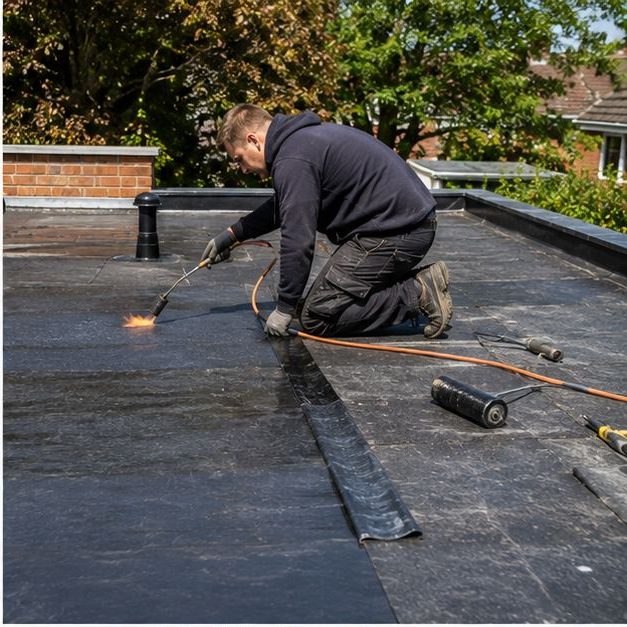
Blisters and trapped moisture
A blister is a raised bubble where air or moisture sits between layers. Sun warms the trapped moisture, it expands and pushes the covering up. Blisters can start where the roof was laid on damp deck or over a poor joint. A small one may be harmless, but a cluster suggests moisture has spread beneath.
Blisters that burst leave a small opening for water, which then spreads under the covering. That is why a blister that looks harmless can lead to a leak after a few wet weeks, and why we like to look at any bubbling surface sooner rather than later.
Cracks and splits from movement
Roof coverings stretch and shrink with temperature. A rear extension also moves slightly against the main house, and a deck can flex under weight. Over time, the surface hardens and splits along those lines of stress, especially at corners, laps and upstands. Splits that open again after repair usually mean the movement has not been dealt with.
- Hairline cracks that widen after frost
- Splits along the joint with the house wall
- Open laps and edges that have lifted
- Crazed surface that has lost its flexibility
Age, sun and foot traffic
Weather wears down every covering. Sunshine dries out surface layers, frost opens small flaws and standing water speeds the process. In small yards, a flat roof is often used to reach other things, such as a window, a bin or a washing line, and foot traffic punches thin points. Walkways or keeping off the roof protect it.
Dirt and leaves trapped against a wall hold damp against the surface, which hastens ageing, and moss lifts edges and laps over time. Keeping the roof clear from the ground side, where you can, helps, but cleaning the surface itself is best left to us.
What we check on the roof
We press and inspect blisters, look at the state of the deck wherever the covering is open, check the upstands and trims, and test whether insulation beneath is wet. We also check the falls and outlets, because standing water makes every other defect worse. This tells us whether a repair would last.
Photographs of the problem areas are included in what we tell you afterwards, so you see what we saw and understand why a patch or a larger repair is recommended. It also gives you something to compare against if the roof changes later.
Repair or replace
Where the covering is generally sound, we cut out and repair damaged areas, reseal joints and renew trims. Where blisters and splits are widespread, or the deck is damp or rotten, we recommend stripping and recovering with a single-ply, fibreglass or felt system. We explain our reasons plainly and put the choice in writing.
Frequently Asked Questions
Is a blister always a leak?
No. A blister may be dry inside, but it is a weak point that can split under foot traffic or frost. We check whether moisture is trapped and judge whether to cut and repair or leave it for now.
Why do splits keep returning after patching?
Usually because the cause, such as movement, poor falls or damp deck, has not been addressed. A patch over a moving joint will open again. Finding why the roof splits is as important as closing the split.
Can I paint or coat over small cracks?
Coatings sometimes cover minor surface flaws, but they will not cure movement or trapped moisture. We check what is underneath first, and tell you honestly whether a coating would help or only hide the problem.
Talk to our team about flat roofing in Redfield
Every roof is different — the fastest way to get an accurate answer is a quick chat with our team.