
On a flat roof, water must be given somewhere to go. If the slope is too slight or the outlet clogs, standing water sets about damaging the covering and the deck beneath.
Many Redfield terraces have a flat-roofed back extension, a lean-to kitchen or a bay top, each handling rainwater from its own surface and sometimes from the main roof above. These small roofs can look simple, but they depend on modest falls and clear outlets to stay watertight.
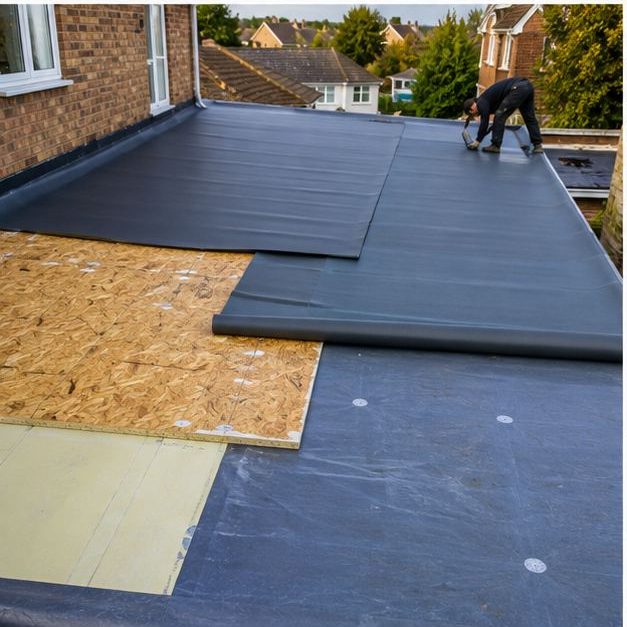
What falls are meant to do
Falls are the slight slope that runs water to a gutter or outlet. On a rear extension, the fall is normally away from the house wall. If the deck has sagged or was laid too level, water gathers in a shallow pool. That pool carries dirt, grows algae and presses on the covering whenever it rains.
Where drainage goes wrong
Small roofs with a single outlet are easily overwhelmed. A few leaves, a ball or silt can stop the flow. Where a pitched roof runs onto a flat one, the extra water from above can overload it. Tight yards also mean downpipes may discharge awkwardly, backing water up the pipe.
Where we find a neighbouring downpipe or roof sending water onto the flat roof, we explain it clearly and show you, since the answer may involve diverting that water as well as repairing the roof itself. Fixing only the covering would leave the cause untouched.
- Gutters or outlets silted with leaves and grit
- Water from the main roof landing on the flat roof
- Downpipes that discharge poorly or are crushed
- Edge trims that are set higher than the surface
Spotting it from where you stand
From an upper window, you can see whether water lingers long after rain, whether there is a green or dark patch, or whether leaves gather in one corner. Indoors, look for staining on the ceiling of the room beneath. These clues tell us where to start, but we only judge after looking closely.
Correcting falls and outlets
Sometimes a clear-out and a new outlet or rainwater head is all the roof needs. Where the deck is sound but too flat, tapered insulation can create the fall. If the deck has rotted or sagged, we replace it and rebuild the slope. Limited rear access means we plan how materials reach the roof before any work starts.
Bay tops often have tiny gutters and short downpipes, and we check those with equal care. A small blockage there can send water behind the lead or into the brickwork, so the whole bay roof is looked at as a system rather than as a surface, and we tell you what we find.
What to ask about the finished roof
Ask where water will go once the job is done and whether the outlet is large enough. Insist on a written description of the work, including falls and the covering. Some alterations to roof form may need planning or Building Regulations checks, and we advise before work starts.
A sensible written description should also say how the roof will be reached across a small yard, what will be done with the old covering, how the outlets will be protected during the work, and how the area will be left clean and clear at the end.
Frequently Asked Questions
How much slope does a flat roof need?
Enough slope that water runs steadily to the outlet and does not sit. We judge it on site by looking at the roof, the deck and the layout, rather than quoting a single measure that might not suit your building.
Why does my extension roof pond only in one corner?
The deck may have dipped there, or an outlet may be partly blocked. Sometimes a pitched roof above is sending water to the same spot. We look at the pattern of water and the structure beneath.
Do outlets need regular clearing?
Yes, especially under trees or where leaves collect. A clear outlet is the simplest protection against ponding. Ask us to clear and check it, rather than climbing up yourself, and we will look at the joints nearby too.
Talk to our team about flat roofing in Redfield
Every roof is different — the fastest way to get an accurate answer is a quick chat with our team.